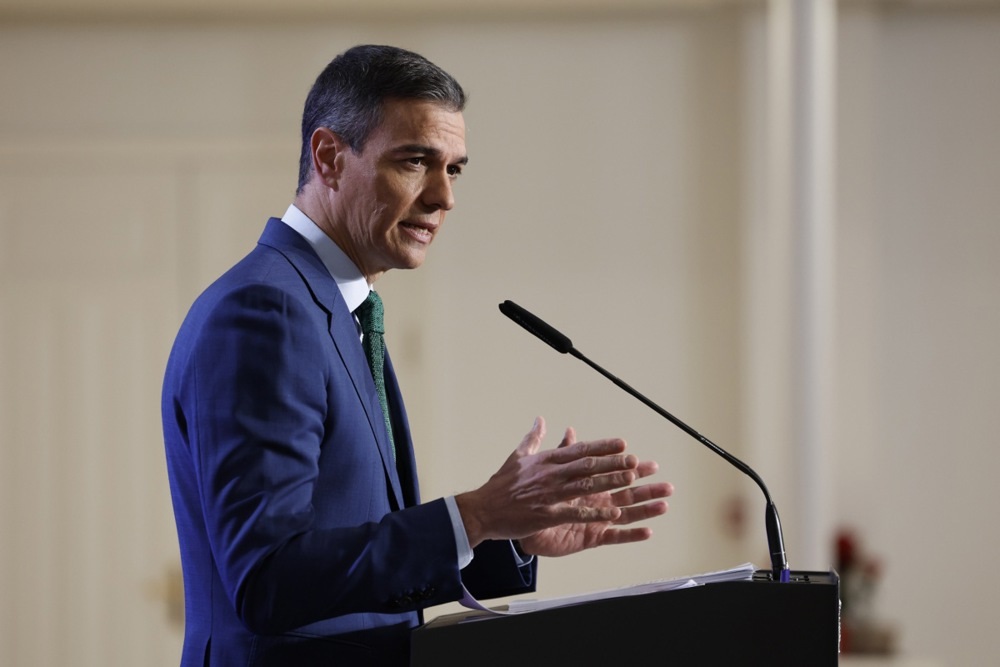
At a pre-election rally of Spain's PSOE party in the Andalusian town of Gibaleón on April 19, Spanish Prime Minister Pedro Sánchez announced that on Tuesday, April 21, the Spanish government will officially propose to the EU the termination of the Association Agreement with Israel, which has been in force since 2000. "I ask those who started this war to stop it and rein in Netanyahu," he said from the podium.
What is this agreement and what has been violated in it
The EU-Israel Association Agreement regulates trade preferences and access to European Union programs, including Horizon Europe. Its Article 2 defines respect for human rights and democratic principles as "essential elements" of the treaty — violations of this clause give the partner the right to take "appropriate measures," up to suspending the agreement. According to Amnesty International, the EU has already established that Israel violated Article 2 in June 2025, although several diplomats believe this will not automatically lead to the termination of the treaty.
"Even without the unanimity required for full suspension of the agreement, a qualified majority of member states can suspend key trade provisions and freeze Israel's participation in flagship EU projects."
Carnegie Endowment for International Peace
The actual mechanism: where the veto is hidden
Complete termination of the agreement requires a unanimous decision of the EU Council — meaning just one "no" from 27 countries is enough to block the initiative. However, trade measures (suspension of preferences, exclusion from programs) are technically adopted by qualified majority — and, as noted by ETUC, "national vetoes cannot stop this process". Analysts consider this path more realistic.
The EU is Israel's largest trading partner — bilateral trade exceeds 45 billion euros per year. Any suspension of the agreement would have significant economic and political consequences. At the same time, no qualified majority for suspending trade provisions has been secured yet, despite repeated calls from several member states and the European Parliament.
Context of venue selection
As Euronews notes, the choice of a pre-election rally for such an announcement is no coincidence: Sánchez seeks to position Spain as a distinct voice on the European stage while strengthening his progressive profile among Andalusian voters. Spain has already banned imports of goods from Israeli settlements and recalled its ambassador from Tel Aviv amid prolonged tensions with the Netanyahu government.
- Spain, Ireland, Slovenia, Belgium, and the Netherlands — five countries most actively pressuring the EU on Israel.
- The Netherlands initiated an official review of Article 2 in May 2025 — supported by 17 member states.
- The European Commission has not yet provided an official response to Spain's proposal of April 21.
If the European Commission, after reviewing Article 2, officially confirms its violation and submits a proposal to suspend trade provisions — Spain's initiative could become part of a broader package of measures. If Brussels again limits itself to "concern," it will turn the association agreement into a document without an enforcement mechanism.





