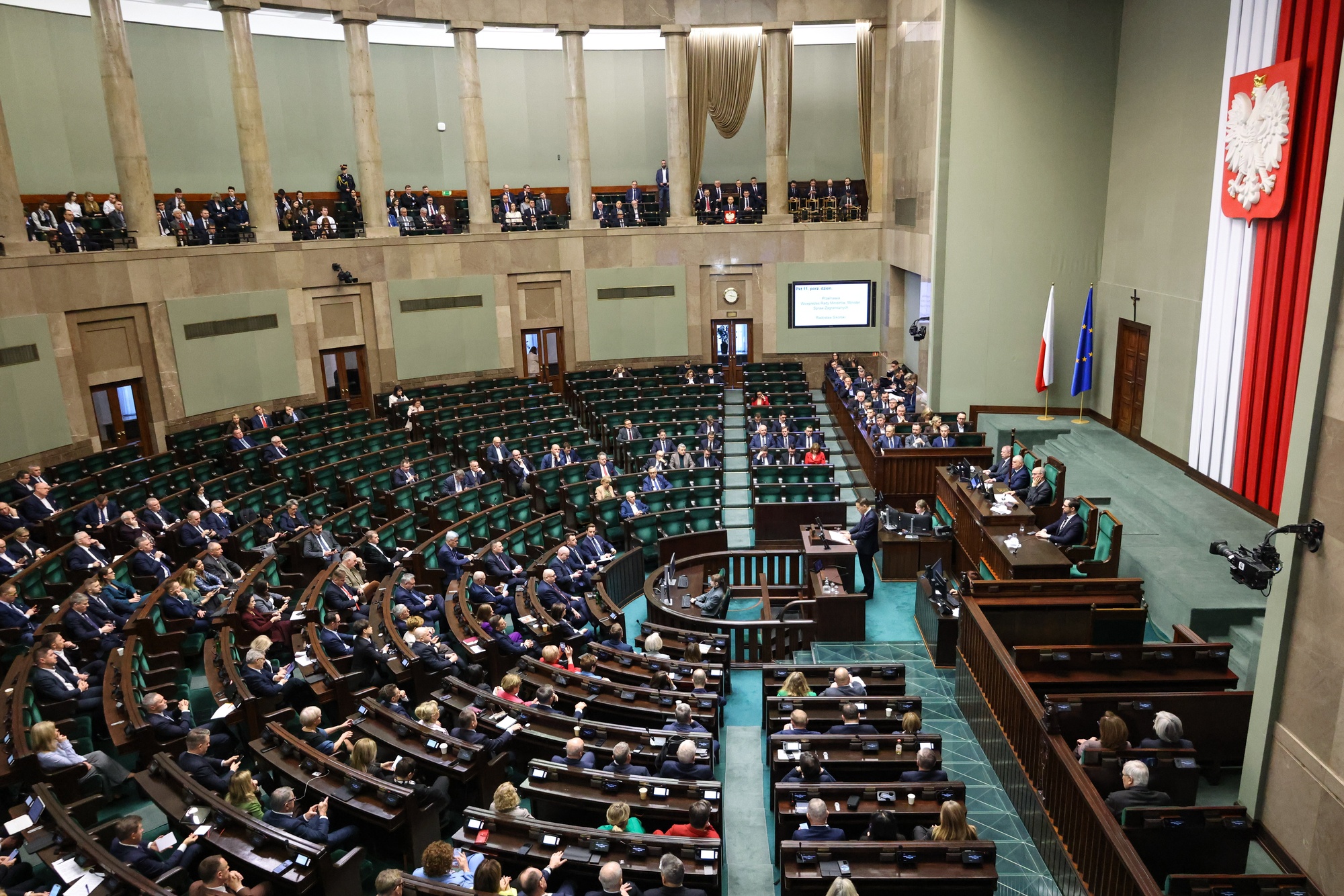
On July 17, the Polish Sejm unanimously adopted a resolution on the occasion of the 83rd anniversary of the Volyn tragedy. The document honors the memory of victims of "genocide committed in the eastern lands of the Second Polish Republic by Ukrainian nationalists" in 1939–1947, emphasizing the search for, exhumation, and dignified burial of the dead. In parallel — and this is a key detail — the Sejm expressed gratitude to Ukrainians who risked their lives saving Polish neighbors.
The unanimity of the vote, however, does not mean unity of positions. Before the final vote, Polish deputies rejected amendments containing direct accusations against Kyiv: obstruction of exhumations, distortion of historical truth, glorification of "perpetrators of crimes." These formulations are absent from the final text — the Sejm confirmed "the desire for friendly coexistence" and called for prioritizing what unites the two countries.
What exactly was not included in the text — and why it matters
The rejected amendments were prepared by the opposition. Their logic fits into a broader campaign: earlier in the Polish Sejm, the first reading of a presidential draft law took place that provides for criminal liability for public propaganda of OUN and UPA ideology. Ukraine's Ministry of Foreign Affairs responded to that draft law by calling on Warsaw to refrain from "escalatory steps."
"Ukraine counts on constructive and professional dialogue with Poland and supports the continuation of joint work by historians, search and exhumation missions."
Ukraine's Ministry of Foreign Affairs, July 17, 2025
The ministry also recalled that on July 11, the Ukrainian side honored at the highest level the memory of all victims of the tragedy — Ukrainian and Polish. The event in Volyn was attended by Polish Defense Minister Władysław Kosiniak-Kamysz.
Context: from an order to criminal code
This resolution is not the first in a year. In June 2025, the Polish parliament passed a law establishing July 11 as the National Day of Remembrance for Poles — victims of what Poland officially calls genocide. Ukraine's Ministry of Foreign Affairs stated at the time that such a decision contradicted the spirit of good-neighborly relations.
The escalation of relations took a new turn at the end of May: Zelenskyy gave the Separate Special Operations Center the designation "in the Name of the Heroes of the UPA." Polish President Karol Nawrocki responded by initiating the deprivation of Zelenskyy of the Order of the White Eagle — Poland's highest state decoration, awarded in 2023. Zelenskyy became the second person in Polish history to be stripped of this honor.
- After a week of escalation, the head of the Presidential Office Kyrylo Budanov made an unannounced visit to Warsaw — for negotiations regarding the situation surrounding the unit.
- In Ukraine, the UPA is a symbol of armed struggle for independence; in Poland — it is primarily associated with mass murder of Polish civilians.
- Exhumation work after the resumption of cooperation continues — including in Lviv region — but the question of its scope remains open.
The formula "noted" — diplomatic neutrality, which is neither condemnation nor approval. The question is whether it will be answered with a specific negotiating format: if the criminal draft law against "OUN and UPA ideology" passes the second reading in Poland, Kyiv's diplomatic neutrality will become significantly harder to maintain.