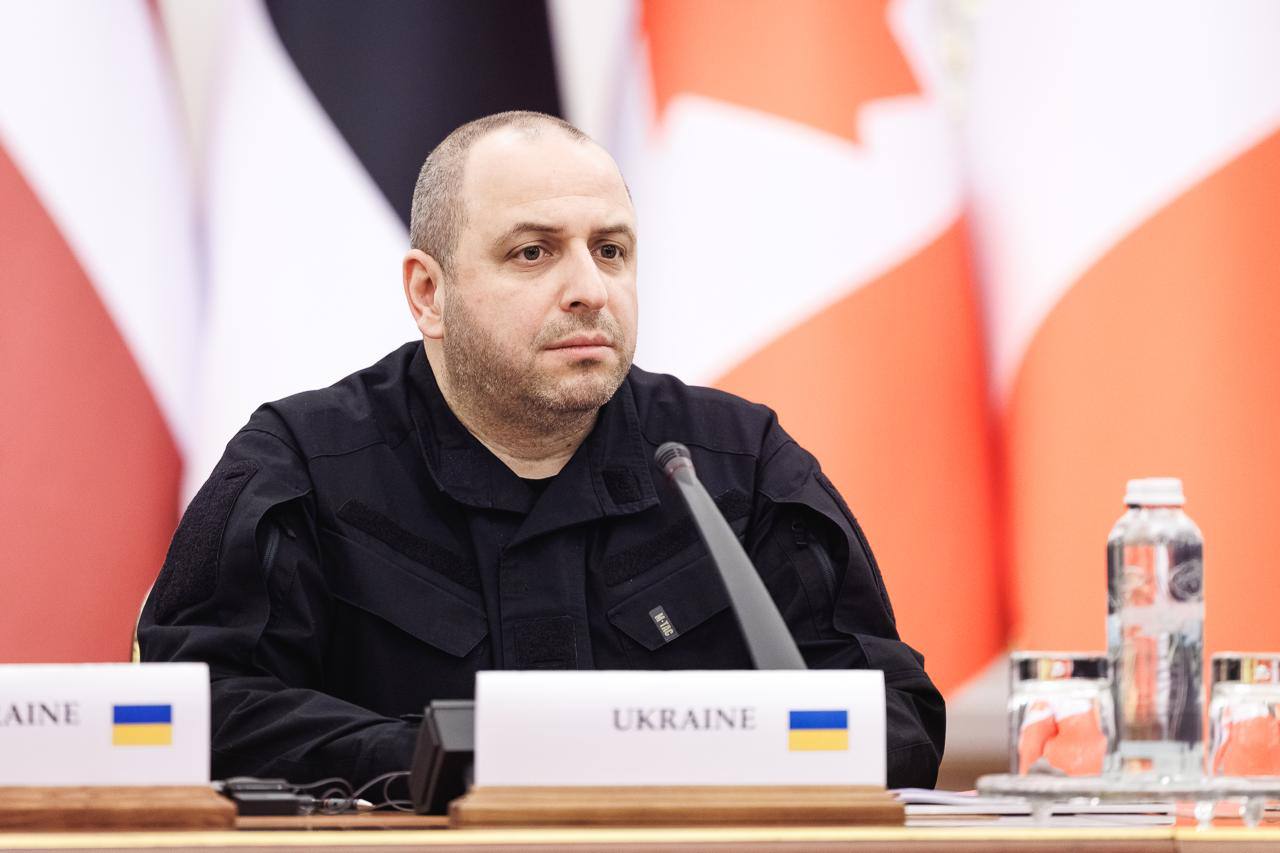
Senior Advisor to the President of Lithuania Deividas Matulonis is personally acquainted with Secretary of Ukraine's NSDC Rustem Umierov. This did not prevent him from remaining convinced for nearly three months that their telephone conversation was genuine. The recording was published by Vovan and Lexus on July 1, 2026 — the conversation took place back in May.
What Exactly Happened
Pranksters Vladimir Kuznetsov and Alexei Stolyarov, known as Vovan and Lexus, called Matulonis posing as Umierov. According to the advisor himself, the voice was reproduced using artificial intelligence — and so convincingly that a person who knows the original in person did not detect the substitution.
"Everything was done very professionally. Judging by everything, they used artificial intelligence to reproduce Umierov's voice. Since I know Umierov, I was almost certain that I was talking to him directly."
— Deividas Matulonis, Senior Advisor to the President of Lithuania, Delfi
Matulonis confirmed the fact of the conversation but refused to characterize it as a "prank" — instead calling it an operation by Russian special services. The difference in terminology is fundamental: a prank is content for an audience, while a special operation is intelligence gathering with an additional discrediting effect.
What They Discussed
The conversation centered on Ukrainian drones entering the territory of Baltic countries during attacks on Russian facilities. According to the pranksters' version, Matulonis expressed concern about these incidents but emphasized that Lithuania deliberately avoids public criticism of Kyiv — fearing provocations from Russia. He also allegedly raised the issue of low-altitude radar purchases and coordination difficulties.
Simultaneously, the pranksters called Madis Roolu, the Estonian President's advisor on national security, also posing as Umierov. According to ERR, the Estonian official also confirmed the fact of the conversation.
Why Voice Is the New Vector
Previously, Vovan and Lexus relied on social engineering: forged letters, fake messenger accounts, intermediaries. The Matulonis case is the first publicly confirmed episode where a victim knew the voice of the interlocutor and was nonetheless deceived by an AI-based clone.
- Voice models are trained on public speeches, interviews, and videos — Umierov has plenty of those available.
- The call took place in May, the recording was released in July: the gap between the operation and publication is typical for maximizing resonance.
- Both countries — Lithuania and Estonia — are NATO members with active discussions about drone incidents over the Baltic, so the conversation topic was situationally credible.
Reaction and Context
As reported by Eurointegration, Ukraine considered the possibility of a more detailed response but ultimately decided that Umierov's own statement would suffice. This suggests a certain tension: acknowledging the scale of the incident means amplifying its effect, staying silent leaves allies without guidance.
Matulonis had already commented in May on escalating Russian provocations against Lithuania, but did not disclose details at that time. Now it is clear that he likely already knew about the conversation — and deliberately did not publicize it.
If AI voice cloning already overcomes the barrier of personal acquaintance, then verification protocols in NATO communications, built on trust in voice and context, require rethinking — the question is only whether this will happen before the next such call, or after it.