"Dysfunction" as a Pretext
In late May 2026, Financial Times published a report citing five senior EU officials: France, Germany, and other capitals are discussing options for a radical overhaul of the European External Action Service (EEAS). The service's budget is €1 billion per year, with over 140 missions worldwide. However, as one of FT's sources is quoted as saying, "the EEAS is clearly not functioning as it should in the modern world. It is dysfunctional. The problem is structural — so the structure needs to be rebuilt."
The French government prepared an analytical document with several scenarios: from limiting the autonomy of the head of the service to the complete absorption of its functions by the European Commission and national governments. The latter option would require unanimous approval from all member states — a legally complex operation. But the mere fact of such a document's appearance and its circulation among capitals signals that dissatisfaction has accumulated.
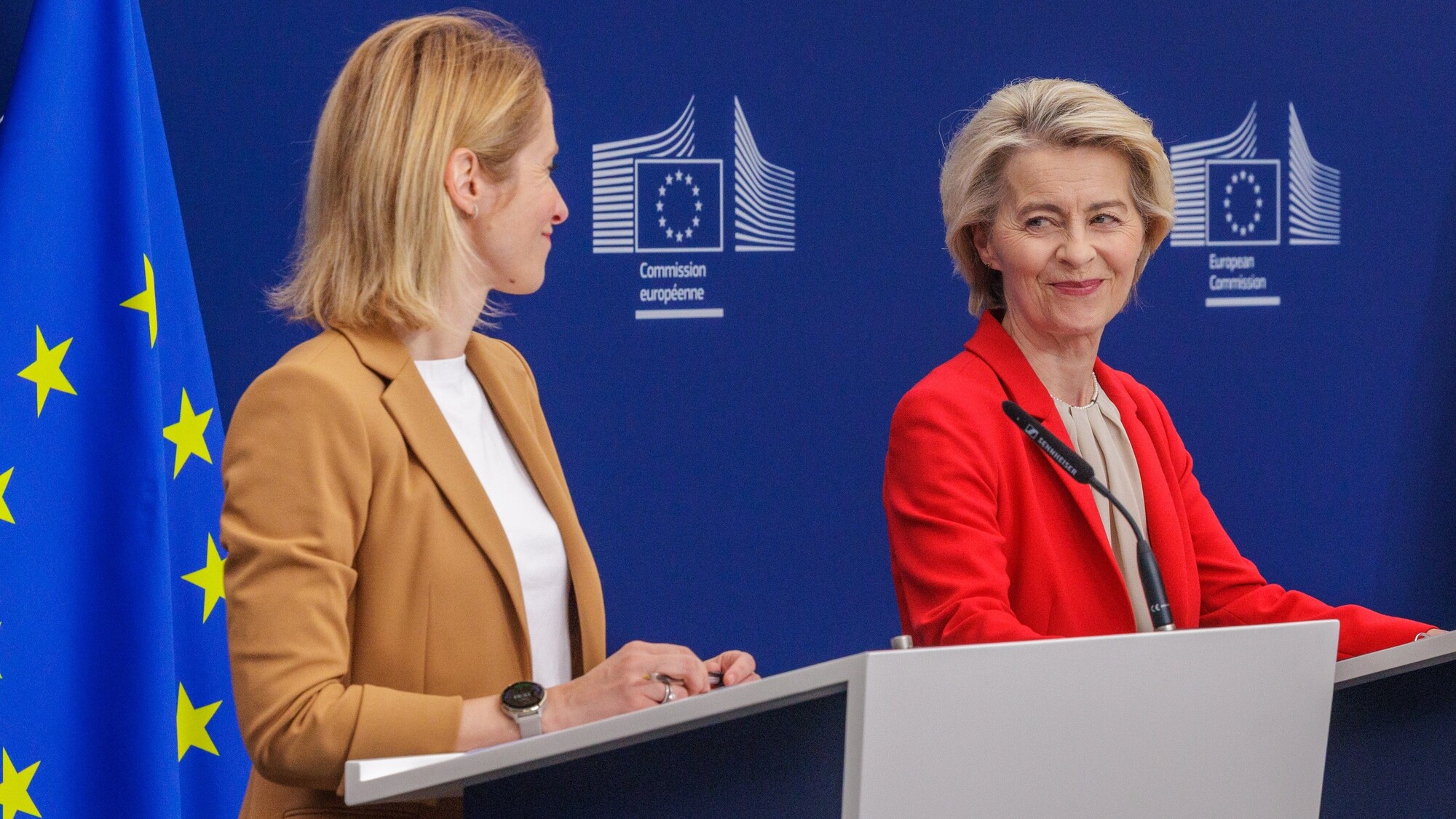
Kaja Kallas Defends Herself with a Staff Memo
On June 11, Kaja Kallas sent a letter to all 5,000 EEAS employees. According to Politico, the tone of the letter is restrained, but its meaning is unambiguous: she emphasized the "added value" of the service and reminded that "the roles and responsibilities of EU institutions are clearly set out in the treaties." The diplomatic translation of this phrase is obvious — hands off the EEAS.
"I want to emphasize the added value we have brought to Europe as a team — especially in a time when full-scale war is devastating the continent"
Kaja Kallas, letter to EEAS personnel, June 11, 2026
Von der Leyen: Quiet Absorption Without Votes
However, the discussion around the EEAS is unfolding against the backdrop of another process — and it is precisely this that explains why reform is being discussed now. As documented in an analytical piece by the Irish Times in March 2026, von der Leyen has effectively taken control of the EU's foreign policy agenda, despite the treaty making this the prerogative of the High Representative. Earlier, the Jacques Delors Institute documented the same trend: centralization of decisions at the level of the Commission President "effectively deprives her vice-presidents of coordination functions provided for by the treaties."
In parallel — personal failures of Kallas. According to the Irish Times, neither U.S. Secretary of State Marco Rubio nor Chinese Foreign Minister Wang Yi are willing to meet with her in person. Rubio has cut off contact due to repeated identical messaging, Wang Yi — after details of their conversation leaked to the media.
Who Gets What From the Reform
The interests of the players do not align:
- The European Commission stands to gain the most from the EEAS absorption scenario — this is institutional expansion without changing the treaties, if a "soft" option of limiting autonomy is chosen.
- France is playing a more complex game: Paris initiated the reform document, but French Foreign Minister Jean-Noël Barrot publicly warned the Commission not to absorb the EEAS into its administrative structures. Paris wants a weaker Kallas — but not a stronger von der Leyen.
- Member states are generally dissatisfied with the lack of coordination, but it was precisely because of their disagreements that the EEAS was created in 2010 as a compromise architecture — and this is precisely why any reform risks reproducing the same problem in a new form.
Structural Trap
According to assessments by analysts at the Swedish Institute for European Policy, the EEAS fell into budgetary constraints even before the scandals: high inflation and growing security costs cut the service's operational resources, and its "complex, overly hierarchical management structure" made it vulnerable in inter-institutional budget negotiations. Kallas introduced austerity measures after taking office in December 2024 — and this only fueled the image of crisis.
As analyst Julien Uitz aptly notes in the French publication The French Dispatch, "reform dictated by spending cuts and capital frustration, rather than strategic logic, risks preserving dysfunction for another decade" — regardless of which institutional form is chosen.
If by the end of 2026 France and the European Commission do not agree on who exactly controls the reformed body — member states through the Council or Berlin/Berlaymont through the Commission — the discussion about "liquidating the EEAS" may freeze precisely when the EU most needs a unified foreign policy voice.