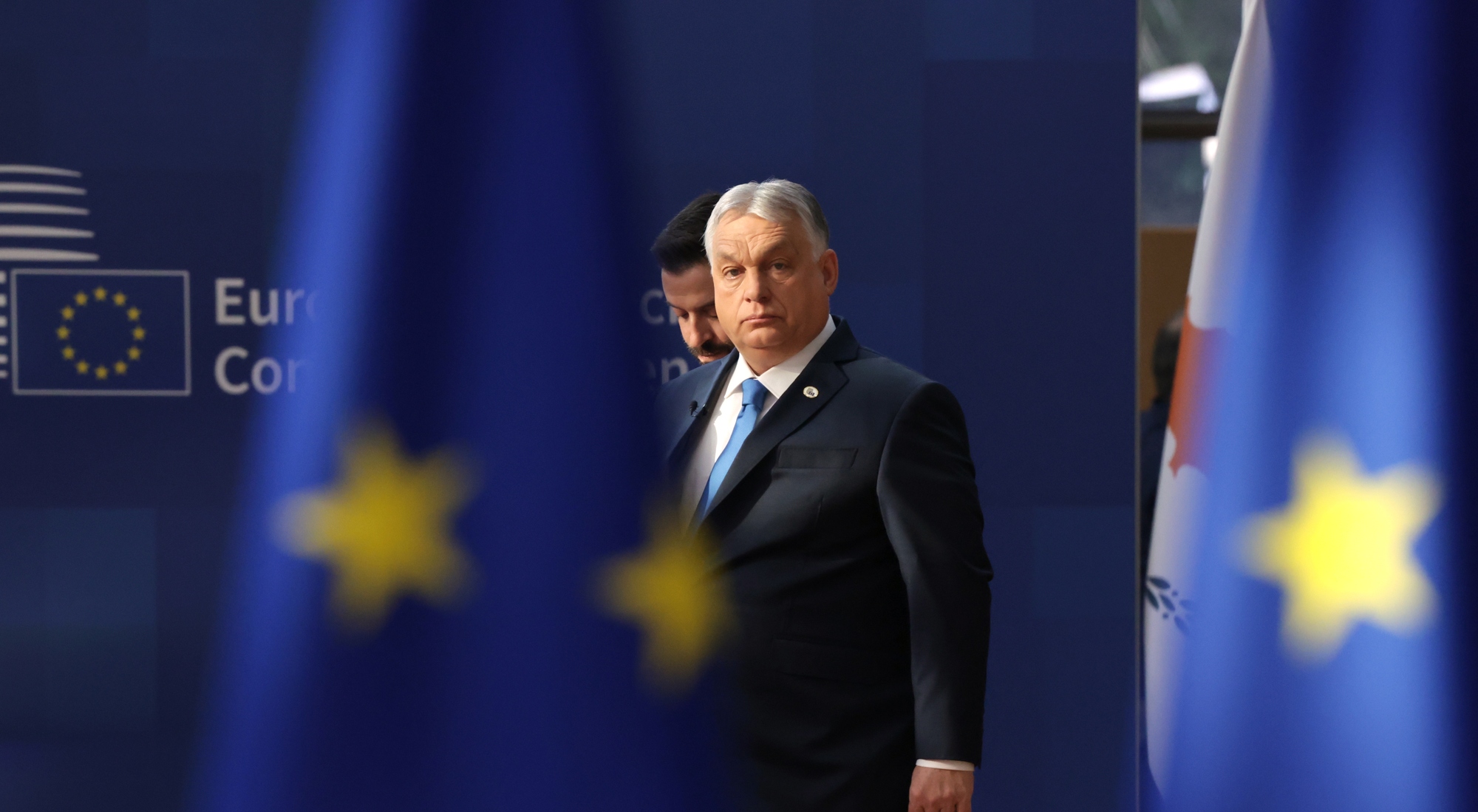
When a member of the club systematically blocks joint decisions — including a loan to an ally at war — the club begins to think about how to change the rules. That is exactly what’s happening in Brussels now.
Politico spoke with ten EU officials and diplomats and found that if Viktor Orbán wins the April 12 election, some member states are ready to discuss steps that until now were considered taboo. These include changing the voting mechanism in the EU Council, suspending Hungary’s voting rights under Article 7 of the Treaty and, as an extreme option, expulsion from the bloc — a procedure that has never occurred in the EU’s history.
“If Orbán wins, everything will be different,” one senior diplomat said, without specifying what would change. Another Politico interlocutor put it more precisely: “Many believe that the red line has already been crossed — by blocking the loan to Ukraine — and that something must be done. But it’s unclear what exactly.”
This vague “uncertainty” is the main problem. The EU has tools on paper — but almost no precedent for their real use. Article 7, which allows the suspension of a violating member’s voting rights, was applied against Hungary and Poland, but never reached its final stage: that requires unanimity in the Council, which means the consent of Hungary itself or of any other state prepared to block the decision.
Changing the voting procedure is a less dramatic but potentially more effective route. Expanding the range of issues decided by qualified majority instead of unanimity technically does not require Budapest’s consent on each specific decision. But it requires treaty changes — and that means years of negotiations and ratifications.
Orbán, for his part, demonstrates that he understands his levers well. Blocking the €50 billion package for Ukraine at the December summit showed that one country can paralyze a mechanism designed for consensus among 27. In the end, the loan was approved — but only after Budapest received part of its own frozen EU funds.
The question the debate is avoiding for now is whether Brussels has the political will to bring any of these plans to actual implementation — or whether talk of “expulsion” and “suspension” will remain a pressure tool ahead of the April 12 vote?





