What it's about
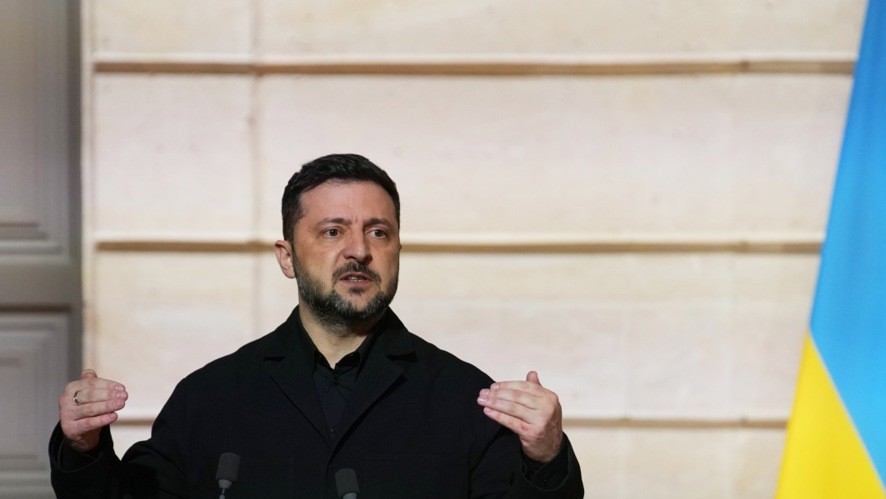
In an interview with CNN, President Volodymyr Zelensky reported differences with U.S. President Donald Trump over the order of arranging peace with Russia. Trump, according to Zelensky, considers it appropriate to sign a peace agreement with Russia simultaneously with agreements on security guarantees from the United States and European partners — at one large ceremony. Ukraine's position is fundamentally different: the guarantees must first be agreed and ratified in the U.S. Congress.
What Kyiv is seeking and why
"Security guarantees must first be agreed and ratified by the U.S. Congress. This will give the Ukrainian people confidence that they will be able to rely on their allies in the future"
— Volodymyr Zelensky, President of Ukraine
The point of the demand is to turn political declarations into legally backed commitments. Ratification in the partner's parliament (in the case of the U.S. — in Congress) creates mechanisms for oversight, funding and a legal basis for sanctions or assistance in the event of breaches. For Ukrainian society this is a question of trust: many remember how international guarantees in various formats have lost force or been interpreted differently.
Difference in approaches: symbol vs. guarantee
A public simultaneous signing at a large ceremony has a powerful symbolic effect — it is the "moment of closure." However, symbolism does not replace enforcement mechanisms. Experts note: without prior ratification the document may remain politically binding but legally difficult to implement.
Context and sources
Key facts to remember:
- The interview about the differences was published on CNN; Zelensky detailed Ukraine's position on the sequencing of the signings.
- On February 10, 2026, the U.S. ambassador to NATO Vitaker linked the absence of a signed guarantees agreement to unresolved territorial issues in the negotiations.
- In January Zelensky spoke about the possibility of rapid approval of agreements on guarantees and reconstruction in the parliaments of Ukraine and the U.S.
- Sybiga reported that Ukraine had received a signal from the U.S. about a willingness to ratify the guarantees in Congress.
What next: scenarios and risks
The most important thing is to turn political declarations into legislative acts. If the guarantees are ratified before or simultaneously with the peace agreement, this will significantly increase the chances of their implementation. If the process is reduced to a ceremonial signing without clear legal implementation, there is a risk that after the ceremony the control mechanisms will be insufficient.
Urgent advice for Kyiv: keep the focus on two things — the legal force of the documents and transparent mechanisms for funding and oversight. Partners may seek a symbolic end to the war; for Ukraine it is more important that the end be durable.
Conclusion
This is not only a matter of protocol. It is about whether peace for Ukraine will become a solid, legal guarantee, and not an episode in the foreign policies of other states. Whether partners can turn declarations into laws and financial mechanisms will determine the security of millions of people.





