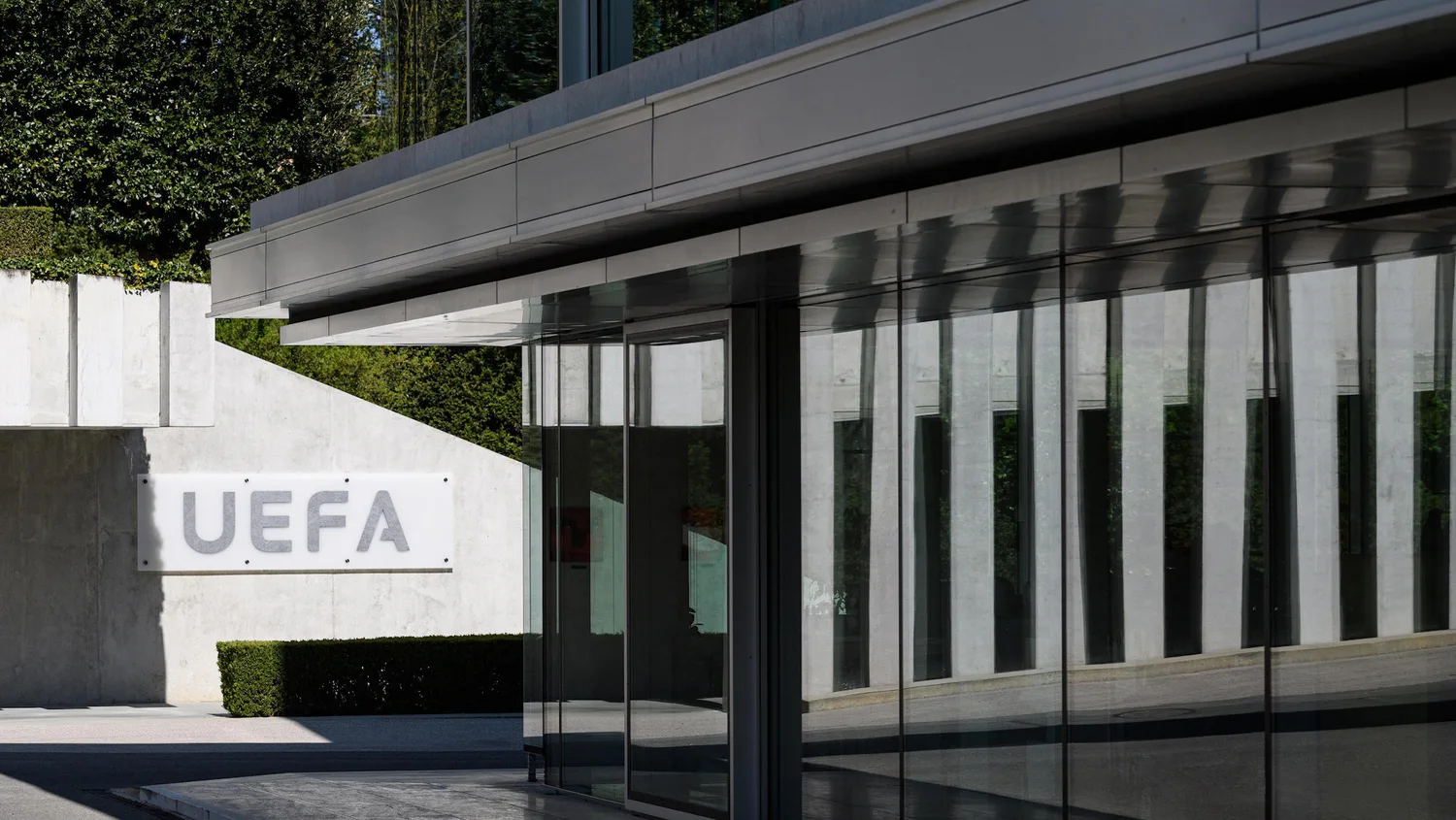
A technical decision, but symptomatic: UEFA's Executive Committee has amended the regulations for participant admission to the European Cup season 2026/27, and in the updated tables for Russia — zero quotas. Neither in the Champions League, nor in the Europa League, nor in the Conference League. Additionally — absence from the Nations League, futsal championships and the Regional Cup.
Five seasons — and the count of losses grows
Sanctions took effect in February 2022 simultaneously from UEFA and FIFA — immediately after the start of the full-scale invasion. Since then, Russia has missed the fifth consecutive European Cup cycle. Following the 2025/26 season, the country ranks only 28th in the UEFA coefficient table — an indicator that continues to decline due to the absence of any results in continental competitions.
The financial consequences are paradoxical. As The Guardian reports, citing data from the organization, UEFA has paid Russian clubs over €10.8 million in "solidarity" funds after introducing the suspension: €3.3 million in 2022–23, €3.38 million in 2023–24 and €4.22 million in 2024–25. At the same time, five Ukrainian clubs — including Chornomorets — did not receive similar payments: the Swiss bank blocked the transactions, citing "a zone of military operations."
"The ban for Russian teams, I think, has been in place for three and a half years already. I see no reaction from politics."
Aleksander Čeferin, UEFA president, interview with Politico, September 2025
Transfers — a separate grey zone
While clubs are not playing in Europe, players continue to leave and return from there. According to data from investigative publication Follow the Money, in summer 2024 Russian clubs conducted 49 paid transfers with foreign teams worth approximately €100 million — a record since the invasion. About half of the deals were with EU clubs, including teams from Germany, Spain and France. At least 11 of them risked violating EU sanctions legislation.
FIFA, in turn, obligated European clubs to fulfill existing contracts — and most complied. The exception was West Ham, which in May 2025 won an appeal at the Court of Arbitration for Sport (CAS): it ruled it "objectively impossible" to pay the second tranche due to sanctions.
The condition for return — one and the same
Čeferin, back in April 2025 at the UEFA Congress in Belgrade, clearly answered the question about lifting the ban: the organization will only consider this decision after the end of the war in Ukraine. No mechanism for phased return, no interim criteria have been announced.
- Season 2026/27 — the fifth consecutive year without Russia's participation in any UEFA tournaments
- €10.8 million — the amount of "solidarity" payments by UEFA to suspended Russian clubs over three seasons
- 28th place — Russia's current position in the UEFA association ranking, which directly determines the number of quotas after a possible return
- €100 million — the volume of external transfers by the RPL in summer 2024, despite the suspension
UEFA's formula is simple: the ban remains in effect until the end of the war, but the lower Russia's rating coefficient falls — the longer it will take to restore its position even after a hypothetical return. If sanctions last another two or three seasons, Russia risks losing the right even to direct participation in the Champions League group stage — and will have to return through qualifying, which it has not played since 2021.