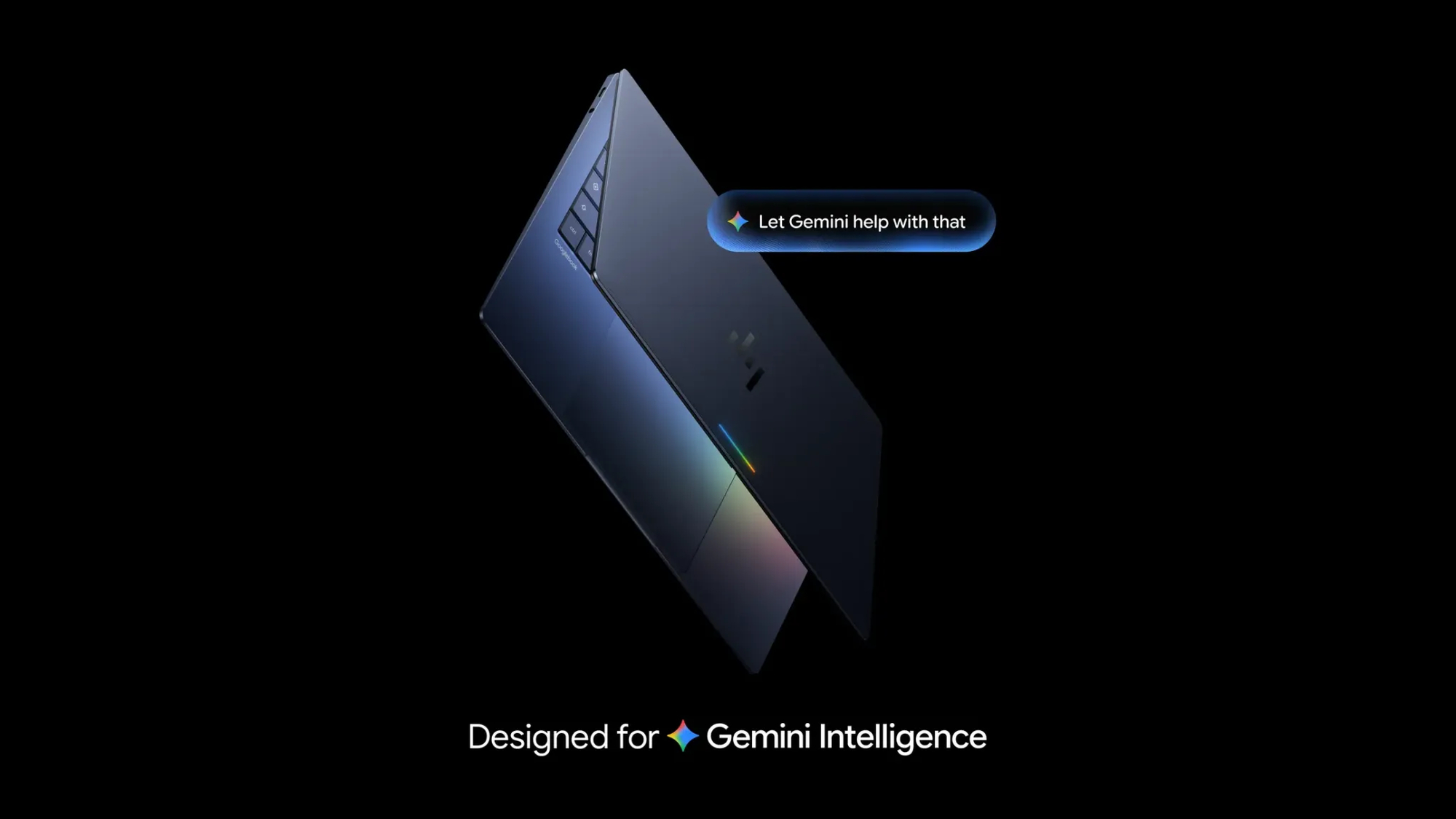
Google has opened pre-orders for Googlebook – a new line of notebooks that the company previously presented as the next stage in Chromebook's evolution. The devices run Android with a desktop version of Chrome and integration of Gemini features. The price starts from $900.
The unexpected moment here is not in the name, but in the fact that Google has essentially admitted that Chromebook as a brand has exhausted itself. Cheap school notebooks with limited functionality no longer sell the idea – now the company is trying to compete for the same buyers who are looking at MacBook Air or Dell XPS, and it's doing this through artificial intelligence rather than hardware.
What's really new and what's marketing
Among the new features is Magic Cursor, which allows you to transfer selected elements from the screen to Gemini for analysis. The notebooks also received Rambler to transform voice notes into edited text and the ability to create widgets using AI.
This is more evolution than revolution: similar features already exist in Microsoft's Copilot and Apple Intelligence. The difference is that Google is embedding Gemini at the operating system level rather than as an overlay on top of existing software – and this is where the practical benefit for the user lies, if it works stably.
Hardware and the most important promise
Googlebook will be released by Acer, Asus, Dell, HP and Lenovo. Depending on the model, the notebooks will have OLED displays with resolutions up to 2.8K, Intel or Qualcomm processors with NPU, and up to 14 hours of battery life. Google announced support for devices with updates for 10 years.
The ten years of support – that's a practical argument that's easy to overlook among screen specifications. Until now, Chromebooks were criticized for short update cycles: a device would become unsuitable for work in 3-5 years, even if the hardware was fine. If Google keeps its promise, Googlebook will become one of the longest-lasting budget notebooks on the market – longer than the average support cycle for Windows devices in the same price segment.
The annual subscription to Google AI Pro included with the purchase essentially adds another $200 in service value to the notebook's price, making the starting $900 less "budget-friendly" than it appears at first glance.
Pre-orders are already available at the Google Store and other retailers. In the US, sales start on October 4, and on October 5 the notebooks will appear in Canada, the UK, Ireland, France, Germany and Austria.
The question is whether users will be willing to pay for Google's ecosystem as eagerly as they pay for Apple's – because so far it's precisely the lack of such loyalty that has prevented Chromebook from becoming anything more than a school gadget.