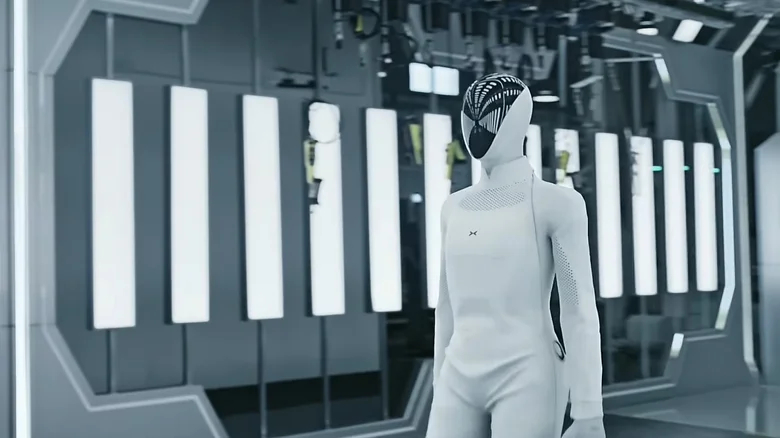
Chinese automaker XPENG has released a video showing its humanoid robot Iron independently walking off a new production line after assembly completion. According to Engadget, the company views this moment as a symbolic start of the transition from prototypes to mass production, which it plans to begin by the end of 2026.
Automotive industry instead of robotics
The practical nuance here is more important than the spectacle: XPENG built the Iron production line using quality control technologies from its automobile manufacturing. The new line is more than 80% automated — a figure typical for electric vehicle conveyors, not robot assembly, which has largely remained a manual or small-batch operation.
The company's logic is straightforward: if they managed to bring complex electric vehicle production to an industrial level, the same quality control processes can be transferred to robots. This is a bet that scaling humanoid machines will follow the automotive industry path rather than the path of manual assembly in laboratories.
What's inside
Iron has 76 degrees of freedom, including 21 for each arm — a figure intended to provide sufficient flexibility for working with objects and people. Three Turing chips handle computation, with claimed combined performance of up to 2,250 trillion operations per second. XPENG claims the robot is capable of performing complex tasks using AI without constant remote operator control.
Independent verification of these claims is not yet possible: the company has not disclosed either current production volumes or results of extended real-world testing.
Where Iron will work first
Before the robot appears on the market, XPENG will test it on its own territory. Iron's first workplaces are company stores and campuses, where it will greet visitors, conduct tours, and assist customers. This approach allows the company to test the robot in a controlled environment before releasing it to third-party clients.
Commercial supplies to Chinese and international markets are planned only for 2027 — meaning there remains a year of testing between the robot's symbolic exit from the production line and its actual appearance in outside hands.
XPENG emphasizes that mass production of Iron will start by the end of 2026, and first commercial deliveries to China and international markets are expected in 2027.
The main question is whether the humanoid robot will maintain the same level of reliability that the automotive industry has developed over decades for machines with much simpler mechanics. If XPENG manages to confirm its stated characteristics in practice over the next year, this would become the first example of an automaker successfully transferring assembly line culture to service sector robots.