After Russia's full-scale invasion, Ukraine faced the necessity of mass-producing its own rocket engines for new types of weapons - cruise missiles, jet-powered unmanned aircraft, and interceptor drones. Although Ukraine's engine-building school was one of the most powerful in the region, before the Russian military attack, the country had no market that would require thousands of rocket engines. War changed the demand, and dependence on imported engines transformed from an economic issue into a strategic risk.
Facing massive missile strikes on Ukrainian cities, the authorities understood that to mount a worthy defense, they needed to increase production of their own long-range weapons - missiles and strike UAVs. However, manufacturers faced a problem: mass production of turboreactive engines in Ukraine did not exist, and dependence on imports remained critical.
How Ukraine Ended Up Without Mass Production of Turboreactive Engines
At first glance, the situation seems paradoxical. Ukraine inherited from the Soviet Union a powerful aviation industry, engineering schools, and enterprises that had been involved in engine-building for decades - among them Motor Sich and Ivchenko-Progress.
The problem was not that the country did not know how to build jet engines, but that there was no established mass production of precisely those types needed for the new war - for missiles, jet UAVs, and interceptors.
Anton Zemlianyi, senior analyst at the Ukrainian Center for Security and Cooperation, cites among the key reasons the complexity of production, financing, the resource base remaining from Soviet times, and the ability to scale the technology. According to him, the presence of competencies does not necessarily mean the ability to quickly organize mass production - this requires equipment, materials, suppliers, specialists, financing, and protected production facilities.
There is another factor at play here - war. Large specialized enterprises are potential targets for Russian strikes, and part of the historically formed base of Ukrainian engine-building is located near the front lines in Zaporizhzhia.
Therefore, for Ukraine, I would highlight three main problems - production capacities that can be damaged in wartime, insufficient resource base, and a shortage of necessary materials and components.
There Was No Such Demand for Missiles
Before the full-scale war, Ukraine simply had no market that would justify mass production of jet engines of the classes needed today. Yuri Hudimenko, chairman of the Anti-Corruption Council under Ukraine's Defense Ministry, points to the economic component: it makes sense to invest large sums in serial production only when there is a projected demand for a large quantity of products.
We have a free market, and before the full-scale war, Ukraine simply did not have sufficient demand for jet engines in such quantities. Objectively, why were they needed? We don't have our own Boeing or another large aviation manufacturer that would require thousands of such engines. Demand was met by purchases from Czechia, China, and before 2014 - also from Russia. This was sufficient for the market that existed.
The full-scale war completely changed that economy. Ukraine now needs not tens, not even hundreds, but thousands of engines for various types of weapons. It is precisely the scale of this new demand that makes investment in domestic production economically justified.
According to Hudimenko's assessment, if production starts completely from scratch - without documentation, specialists, equipment, and financing - creating an industrial base could take about five years. But Ukraine is not starting from zero: the presence of engineers, technical documentation, production competencies, investments, and guaranteed orders can significantly shorten this process.
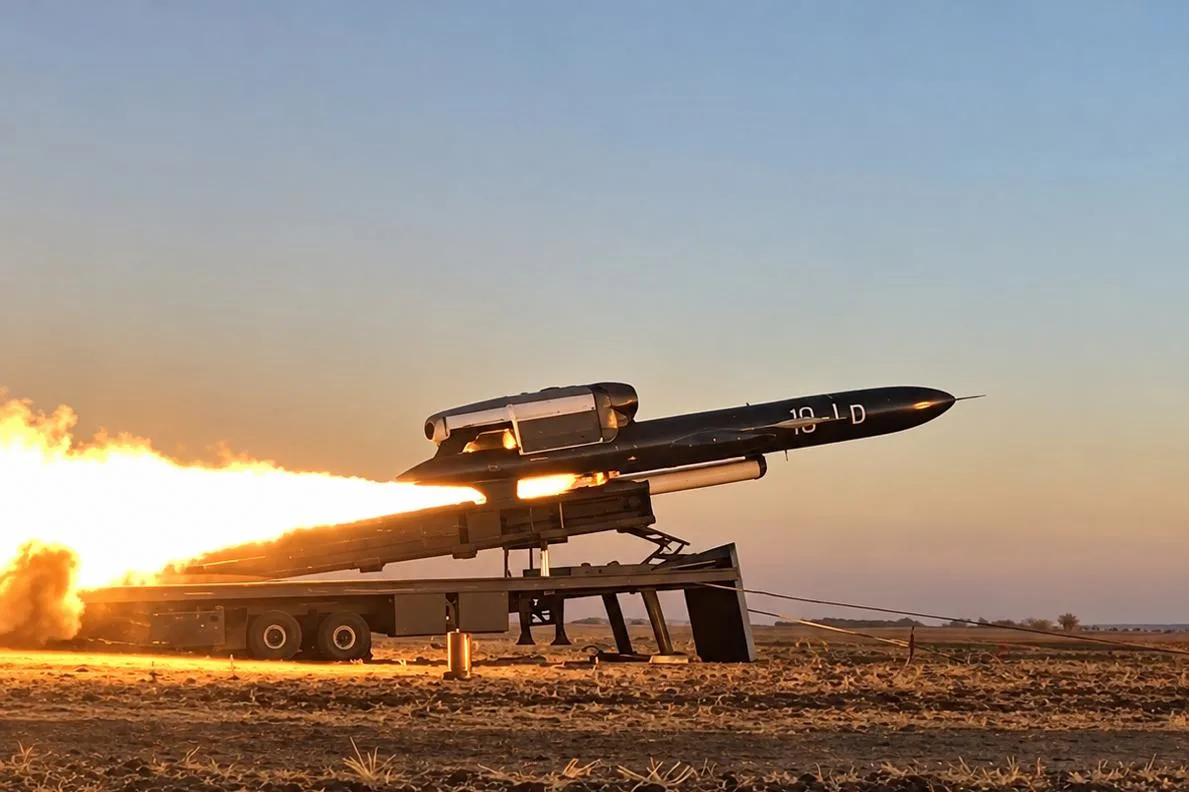
Currently, companies manufacturing long-range strike systems are working on their own developments to meet this need. One such project is a proprietary turboreactive engine developed by Ukrainian company Fire Point for the FP-5 Flamingo cruise missile. The company has already created the engine, is preparing to scale production, and is conducting tests of the first samples.
A Custom Engine for "Flamingo"
As Fire Point CEO Irina Terekh explained, work on the turboreactive engine was conducted jointly with a design bureau that had previously developed the AI-25 aircraft engine. The AI-25TL modification was used on the first versions of Flamingo. The missile itself was designed from the outset as a platform capable of working with various power plants - during testing, five different types of engines were used.
Development of the custom engine took more than six months. Fire Point is now preparing its production and testing the first samples. The company plans to complete testing and necessary improvements by the end of 2026, after which it will move to serial production.
We are moving towards this, the engine has already been made. Production preparation and testing of the first samples are currently underway. There have been no applications yet, but there are certain plans and a course of action. Actually, making an engine for such a missile is much more difficult than making the missile itself. It is very high-tech, complex production involving many subcontractors. But Ukraine's independence in turboreactive engines, especially of this size and class, is a very important strategic capability not only for the company but for the country.
According to Terekh, a number of Ukrainian manufacturers are currently working in different areas of this industry, while Fire Point focuses on engines for large and medium-sized strike weapons.
Creating an Engine is Half the Battle
Experts emphasize that the main challenge lies not even in developing a functional engine, but in learning to stably produce them by the thousands - establishing assembly-line production.
The problem is not only in creating one functional engine. It is much more complex to transition to its serial production in the quantities necessary for war. This requires stable financing, materials, equipment, personnel, technological supply chains, and protected production facilities.
The scale of need is particularly evident in the example of interceptor drones, which require small turboreactive engines. According to military expert Konstantin Kryvolapov, if it is necessary to intercept approximately three thousand Russian unmanned aircraft per month, the number of interceptors themselves must be significantly larger.
Therefore, the question here is not only whether we can create one good jet engine. The question is whether we can stably produce thousands of such engines every month. The very transition from individual samples to serial production is now one of the main challenges.
Why Jet Engines When Ukraine Has Long-Range UAVs?
Ukrainian long-range unmanned aircraft with piston engines are already capable of striking targets at significant distances. However, as strike systems develop, so do the means to intercept them. Jet propulsion became the next important direction: significantly higher speed reduces air defense reaction time and complicates target interception.
At the same time, a jet unmanned aircraft will likely be more expensive than a conventional one.
We essentially have two figures: how much money was spent on the products we launch, and what portion of them actually reached the target. A jet drone will likely be more expensive than a conventional one. But if, due to greater speed, it has a significantly higher probability of breaking through Russian air defenses, the economics of such application may turn out to be better.
The difficulty of intercepting targets with jet engines makes their interception more expensive, thus creating additional strain on the enemy's economy.
A Custom Engine as Insurance Against External Dependence
Technological sovereignty is equally important. Ukraine can independently create a missile or unmanned aircraft, but if its critically important component can only be imported, the possibility of scaling depends on an external supplier. The risks here are obvious: limited production capacity of the supplier, political decisions of governments in manufacturing countries, export restrictions, competition for products, logistics problems, or simply insufficient quantity of needed engines.
The enemy is also dependent on imported components. However, according to Irina Terekh, Russia's access to Chinese turboreactive engines currently gives it an advantage in developing jet systems.
At the same time, experts believe that complete independence does not necessarily mean localizing absolutely all of the production cycle within Ukraine. Due to the threat of Russian strikes, it is advisable to place part of production in partner countries. According to Zemlianyi, an optimal model could be one where Ukraine retains key technologies, engineering competencies, and product control, but uses the resource and industrial base of European partners.
It is precisely such a model combining Ukrainian technologies and engineering competencies with the production capabilities of European partners that can now be the most practical way to increase production.
What Domestic Jet Engines Will Mean for Ukraine
Serial production of domestic jet engines will allow Ukraine to develop long-range cruise missiles, high-speed strike UAVs, missile drones, and jet interceptors simultaneously. The manufacturer will gain control over modernization: if all weapon components are produced within one technological ecosystem, changing its characteristics will not depend on the capabilities of a third-party supplier or someone's political will.
The success of engine-building will depend not only on creating an effective turboreactive engine, but also on the availability of stable long-term orders that will allow forecasting financing and scaling production.
If the transition from prototypes to assembly lines occurs, Ukraine will be able to close one of the most critical gaps in its own production of rocket and unmanned weapons. And then the question will no longer be whether the country is capable of creating its own jet engine, but how many such engines Ukrainian defense industry can produce every month.