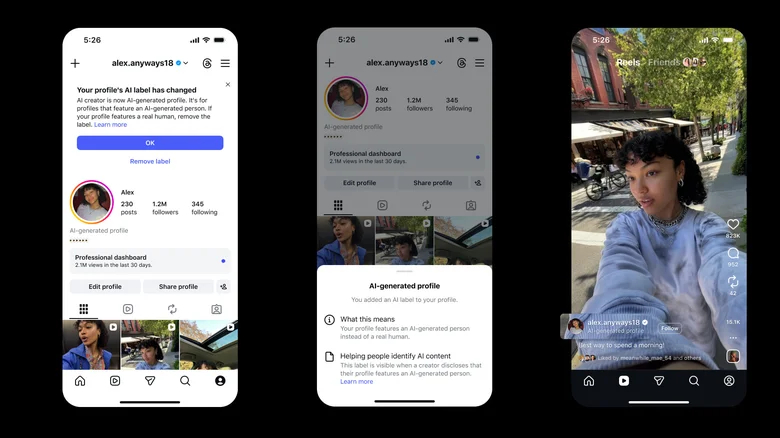
Instagram is introducing a mandatory "AI-generated profile" label for accounts featuring fictional characters. This is reported by Engadget. If the author does not add this status, the platform will reduce the reach of such profiles — essentially penalizing the concealment of the artificial nature of the "person" in the photos.
A practical nuance: the new label applies not to any content created with AI, but specifically to characters — fictional "people" who look like real authors, giving advice or promoting products. The previous "AI creator" status was broader and confused users, so Meta narrowed the definition.
Why this is not purely an ethical decision
The company directly explains its motivation in business terms: people do not want to subscribe to a "real" blogger only to discover that skincare or financial advice was given by a generated character. Trust is an asset that is monetized through advertising integrations, and fake influencers undermine this asset for the entire platform, not just for specific brands.
So the logic is simple: without a label — less reach, less money from advertising, less reason to hide the artificial origin of the account.
What to do while labels are not yet everywhere
- Check whether the account has a history of posts before the appearance of the "perfect" image — real people rarely appear online immediately with a stable style and without early failed photos.
- Pay attention to the uniformity of lighting and background in different videos — AI generation often "gives itself away" precisely on this.
- Look for genuine responses in comments: an artificial character either does not respond at all or responds with templates.
Authors who believe the label is incorrect can appeal the decision through the Account Status section — so there is no full automation here, there is manual review.
This decision comes against the backdrop of a series of lawsuits against Meta over harm to users: the company agreed to pay $16.7 billion in a lawsuit over damage to Instagram and Facebook for children, and a New Mexico court in August ordered an additional $567 million to be paid. The issue of content trust is becoming for Meta not only a reputational but also a direct legal risk.
If the label truly reduces the reach of fake influencers, the logical next step would be to extend similar requirements to TikTok and YouTube — otherwise, artificial characters will simply migrate to where labeling is not yet mandatory.