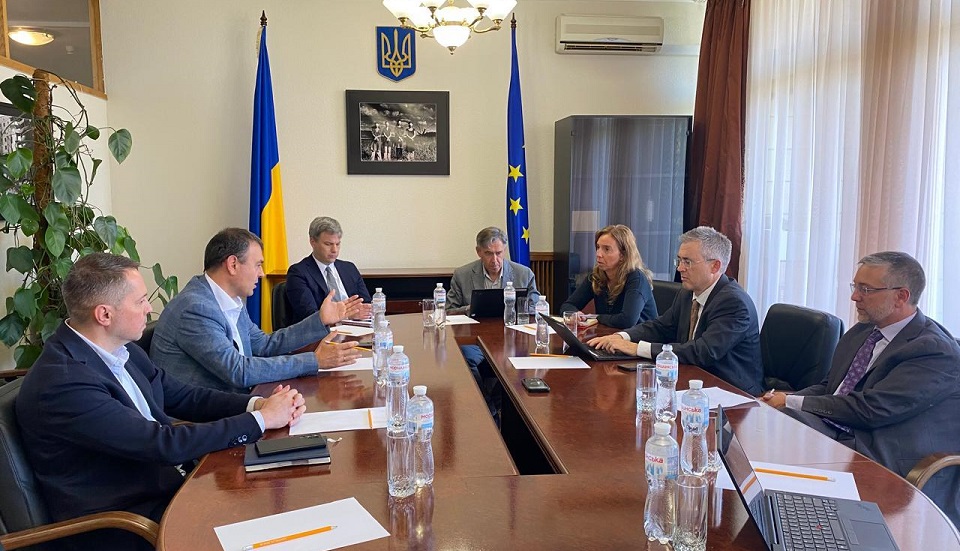
Danilo Hetmantsev met with an IMF mission and left without optimism. But it's not that the fund is refusing to give money. The issue is that the money has already been allocated — and the Verkhovna Rada cannot pass the necessary laws in time.
"The conversation is extremely difficult. The state of public finances leaves no room for optimism," wrote the head of the financial committee in Telegram after meeting with the IMF delegation currently working in Ukraine.
This is an unusual statement for negotiations with international creditors. Usually, complexity concerns sums and conditions. Here, complexity is about the arithmetic of votes in the chamber.
534 billion already allocated
Head of the budget committee Roksolana Pidlasa named a specific figure: $12 billion in international financing depends on Rada votes. In hryvnia, this is approximately 534 billion — and this money is already included in the 2026 budget expenditures.
In other words, this is not hypothetical assistance that still needs to be requested. These are funds already factored into state calculations for social payments, education, and healthcare. If the laws don't pass — the shortfall appears not in the future budget, but in the one already being executed.
"To cover expenditures on social welfare, education, and healthcare in the last four months of the year, we need at least 330 billion hryvnia," Pidlasa explained.
Meanwhile, defense spending increased by 20% year-on-year: 1.63 trillion hryvnia for January-July 2026 versus 1.36 trillion hryvnia for the same period in 2025. In other words, the financial space for maneuver is narrowing on both sides simultaneously.
Law passed, but not signed
A telling example is the law on taxation of income from digital platforms. This is one of the "structural benchmarks" that the IMF fixed in the memorandum of July 21. The Rada passed it. But it has not been signed yet — due to an amendment on financial monitoring of politically significant persons. Another benchmark — the abolition of benefits for small postal shipments — the Rada rejected altogether, though a second attempt is expected.
This is not a question of parliament lacking will in principle. It's a question of each law on the IMF list affecting someone's specific interests — and that's precisely why "votes have to be gathered essentially for each systemic decision," as Hetmantsev noted.
The cost of delay — 7.35 billion euros
According to calculations by the analytical project RRR4U, due to untimely reforms, Ukraine already risks losing 7.35 billion euros. This is not an abstract penalty — these are tranches tied to specific legislative steps that simply didn't happen within the agreed timeframes.
On September 1, a new parliamentary week begins, and the agenda consists almost entirely of draft laws under IMF, World Bank, and EU programs. "There are no simple draft laws left there," Pidlasa admitted.
Meanwhile, separate negotiations between the Finance Ministry and IMF experts have been ongoing in Kyiv for three days — this time about the 2027 budget. This creates an odd picture: the government is discussing financing for next year while it hasn't fulfilled obligations under the current one.
The question is not whether the IMF will give money. The question is whether the Rada will manage to vote on the laws faster than time runs out on already signed agreements.