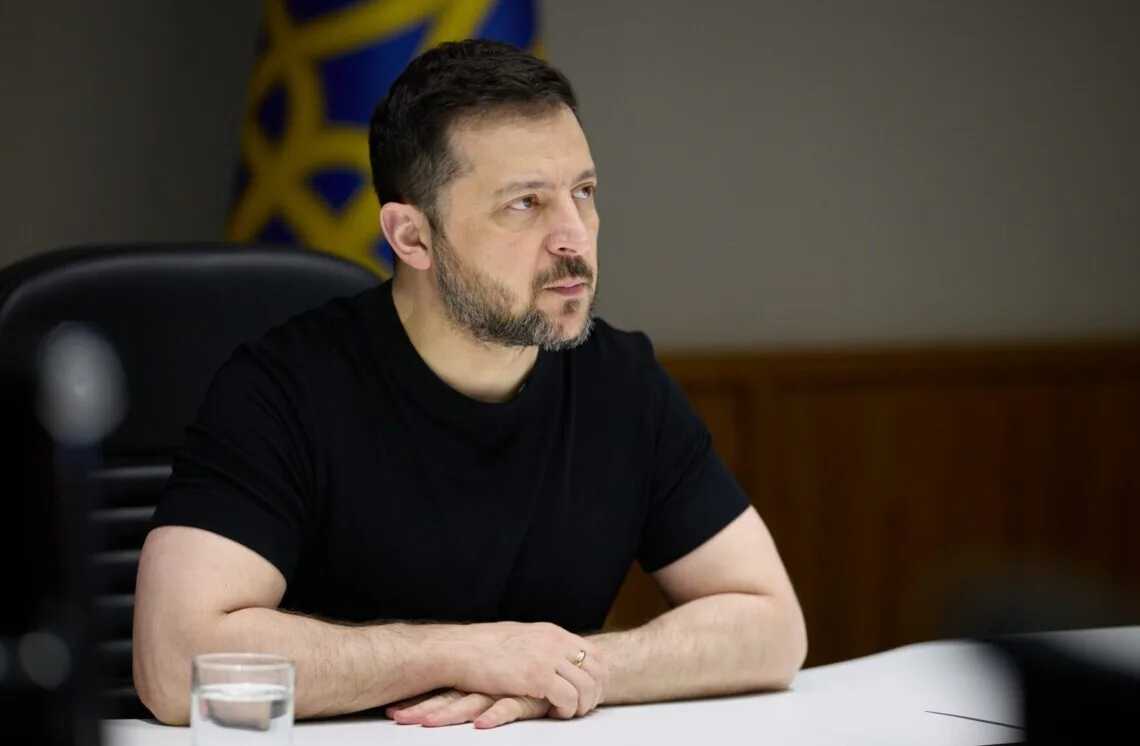
Ukraine will stop striking Russian oil refineries if Russia stops hitting Ukrainian energy infrastructure. President Volodymyr Zelensky laid out this condition, UNN reports. It is not a unilateral gesture but an exchange: any de-escalation steps, he stressed, must be mutual and backed by real guarantees.
Zelensky also said that strikes on the energy sector could be stopped today, but in his view Putin does not want that.
The week in numbers
The president accompanied his proposal with statistics on Russian attacks. According to him, in just one week Russia launched about 1,450 guided aerial bombs, 75 missiles of various types and more than 1,640 attack drones. Roughly 60% of the drones are jet-powered.
The past day, according to the head of state, looked like this:
- in Zaporizhzhia, search and rescue operations were completed only in the morning: 23 people died, four of them children;
- in Kharkiv, the Russians struck a medical facility;
- overnight, civilian infrastructure, residential buildings and energy facilities came under attack;
- in Sloviansk, a stairwell of a five-story apartment building was destroyed, and people may be trapped under the rubble.
Why refineries
The proposal concerns two campaigns that differ in nature. Russia strikes Ukraine's power system en masse, combining bombs, missiles and drones. Ukraine responds with precise long-range strikes on refining capacity that supplies fuel, including for the army. Both sides are thus trying to undermine the enemy's ability to wage war, so a "refineries for energy" exchange looks logical. However, it is hard to verify: the list of facilities covered by the ban and the monitoring mechanism have not yet been named.
Washington between two positions
The proposal came against the backdrop of pressure from the American side. According to data cited in the UNN report, representatives of Donald Trump's administration threatened to stop sharing intelligence with Ukraine if Kyiv continues to ignore Washington's demands to halt strikes on oil refineries. For long-range strikes, intelligence is of practical importance: the choice of targets and routes depends on it.
At the same time, Trump thanked Putin for agreements on supplying Russian diesel fuel to the United States. The American administration has allowed the sale of Russian diesel on the global market for six months. This decision was sharply criticized by influential Democratic senators.
So Kyiv offers reciprocity where it is being asked for unilateral concessions. This is a more honest framework than a simple refusal: it leaves Ukraine a pressure tool and shifts the conversation to what exactly Moscow is willing to stop.
The defense side
Zelensky added that coordination with partners will continue the same day, including talks with European leaders. Work on additional defense packages, primarily for air defense and munitions for combat aircraft, goes on daily at various levels. Air defense remains the main answer to strikes on the energy sector as long as there are no agreements.
Any de-escalation steps must be mutual and come with genuine guarantees.
This wording from Zelensky is what determines whether the proposal makes practical sense. If Moscow accepts the exchange, the question will arise of who will record violations and whether Kyiv will have enough intelligence and air defense in case the deal fails. If Moscow does not accept it, Ukraine will be able to show that the rejection of an energy truce was not its choice, and that is already an argument in talks with Washington, but not a substitute for protecting the skies.