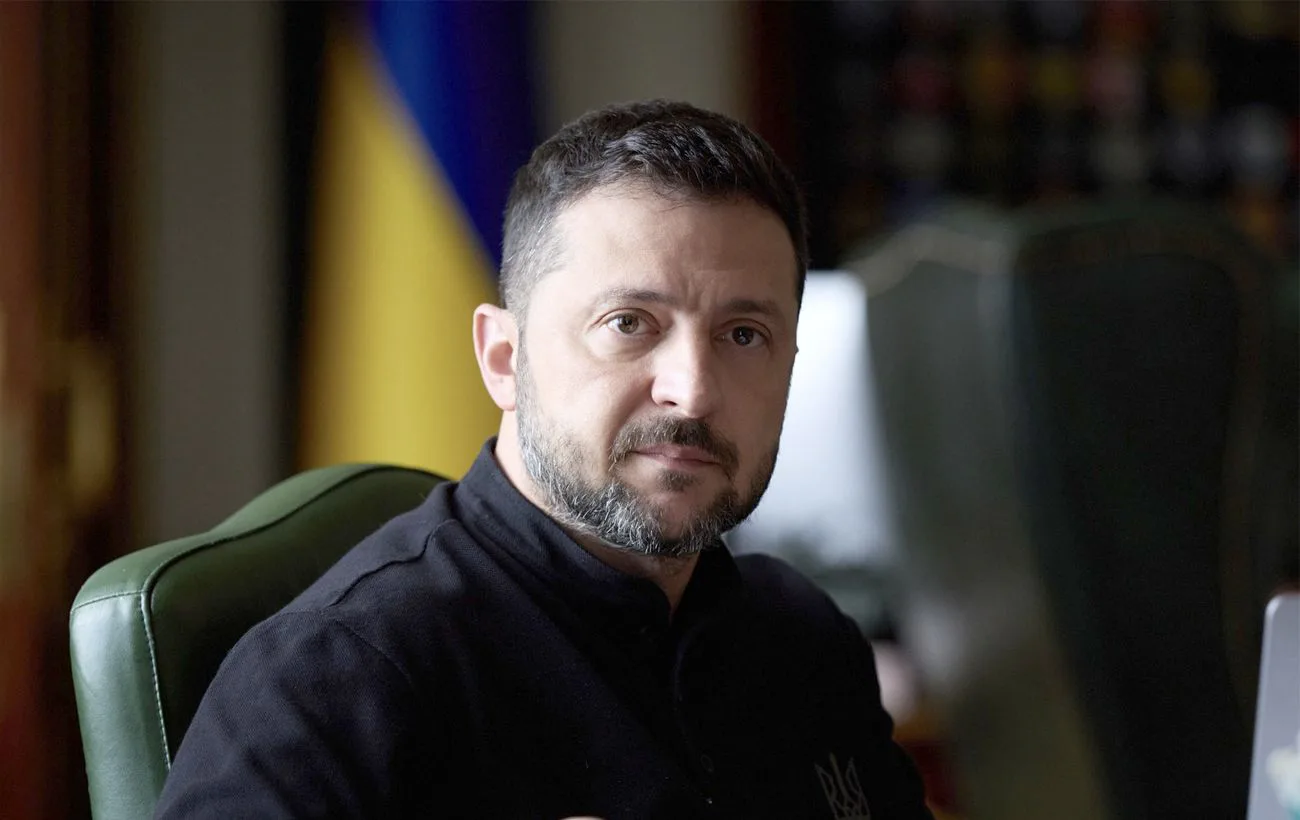
President Zelensky opened the first meeting of the Anti-Ballistic Coalition in Paris with a specific deadline: 12 months — and FREYJA must intercept a ballistic target. "The threat of ballistic missiles in the world is only growing. That's why FREYJA must become a reality," he said before the leaders of nine countries.
What was signed and who signed it
The Declaration on the creation of an Integrated Air Defense Coalition was signed by Ukraine together with Denmark, France, Germany, Italy, the Netherlands, Norway, Spain, Sweden, and the United Kingdom. According to the Élysée Palace, the goal is to "build a common anti-ballistic capability for Europe" that will complement, rather than replace, existing SAMP/T, IRIS-T, and NASAMS systems.
Zelensky also announced the companies participating in the project: alongside the Ukrainian Fire Point, Thales, HENSOLDT, Diehl Defence, Saab, Kongsberg Defence & Aerospace, Weibel, Leonardo, MBDA, Eurosam, Safran, and Destinus will cooperate.
What is FP-7.x and why price is discussed louder than specifications
The heart of FREYJA is the FP-7.x interceptor missile produced by Fire Point. It is made of carbon fiber and epoxy resin, measures 7.25 meters in length, and reaches speeds of 1,500–2,000 m/s — comparable to the Patriot PAC-3, which flies at around 1,700 m/s. The guidance warhead is an infrared semi-active system developed jointly with Diehl Defence. Saab Giraffe 8A/4A, Thales Ground Master 400, or Hensoldt TRML-4D radars are planned for targeting.
Structurally, the FP-7.x inherited the aerodynamics of the Soviet 48N6 missile, which was used on the S-300/S-400, but received new electronics, modern materials, and Link-16 protocol integration.
"This will be more reliable and cheaper than analogues."
Volodymyr Zelensky, Paris, July 13, 2025
The key argument in favor of FREYJA is the cost of interception. Fire Point values one FP-7.x missile at approximately $700,000, while a full Patriot PAC-3 interception costs several million dollars. This very mathematics was reproduced by the U.S. Army in May 2026, when it announced a tender for a "budget Patriot supplement" with a target price of up to $1 million per unit.
Main caveat
- FP-7.x has no confirmed interception of a real ballistic target. First launches were demonstrated in February 2025.
- For comparison: PAC-3 has combat use in Ukraine, Israel, and during Iranian strikes.
- The coalition declaration contains no public mechanism for financing or verification of implementation — only a commitment to develop a common architecture.
Zelensky emphasized that Patriot missiles will continue to be purchased, and FREYJA does not replace but complements the existing layered defense.
Twelve months is the timeframe that the president himself set publicly. If by mid-summer 2026 Fire Point does not demonstrate the interception of a ballistic target in flight, the question of the realism of the entire coalition architecture will arise not in the halls of the Élysée Palace, but in the budget committees of nine parliaments.







