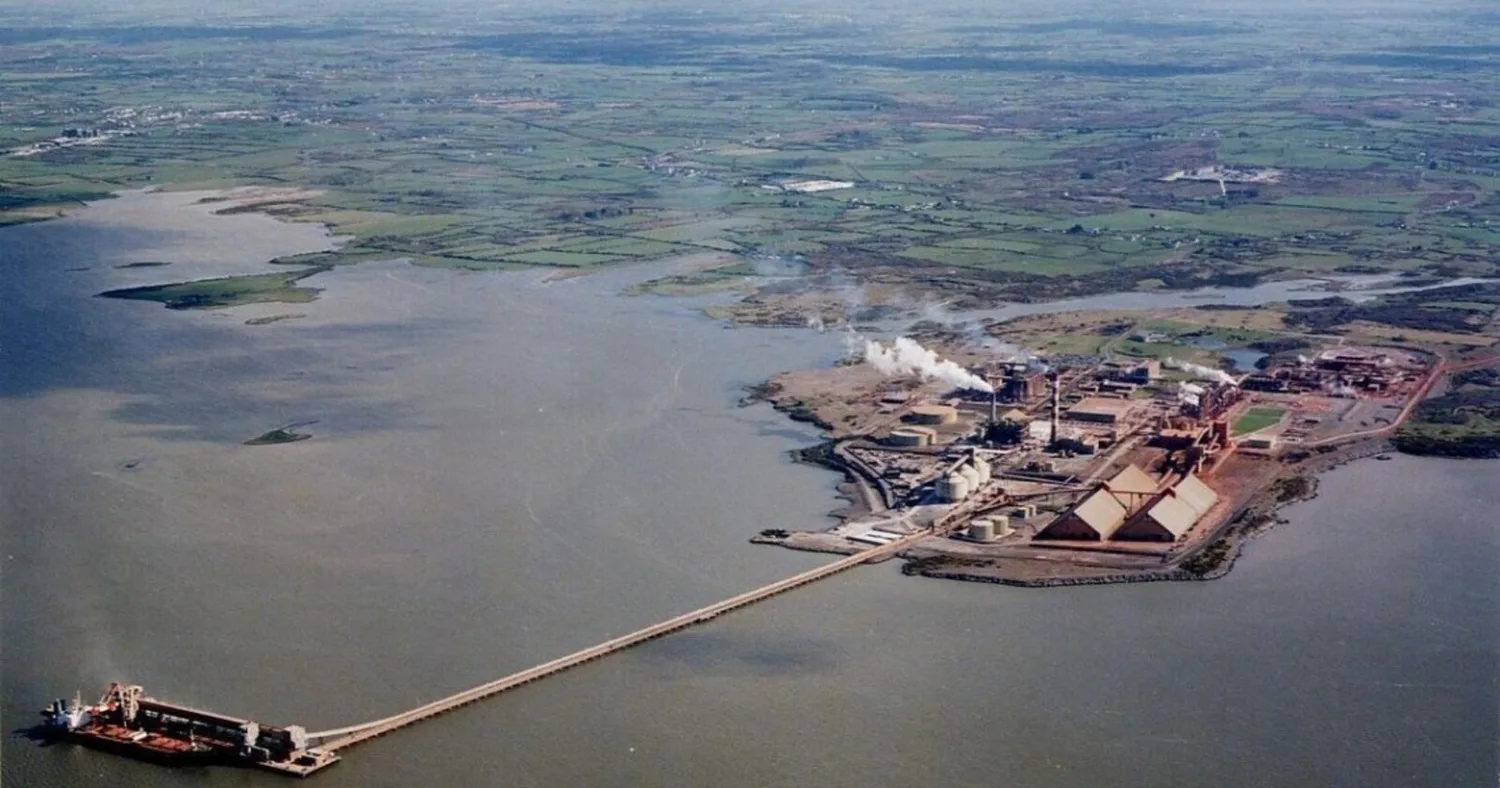
In 2024, Aughinish Alumina — Europe's largest alumina plant located in southwestern Ireland — shipped approximately half of all its alumina production to Russia. This raw material, valued at approximately $400 million, went to two smelting facilities in Krasnoyarsk and Sayanogorsk, providing nearly 40% of their alumina imports.
The shipments themselves are legal: the plant has not been subject to EU sanctions. However, an OCCRP investigation, involving dozens of media outlets, traced the supply chain further. After processing alumina into aluminum, Moscow-based trader ASK paid Rusal over $650 million and resold the metal to clients, including dozens of sanctioned Russian weapons manufacturers. Among them are companies from the Rostec defense conglomerate, which produces air defense missiles, multiple-launch rocket systems, and long-range bombers.
A Rusal guarantee instead of a control mechanism
The plant responded to the accusations with a letter to the Irish government. In it, Aughinish director Ciaran Kelleher claims that in 2025, 55% of alumina went to European and global consumers, with only 45% going to Russia. However, Irish government statistics paint a different picture. Data from Ireland's Central Statistics Office shows that in 2025, the country shipped 66.8% of its alumina exports to Russia — more than 20% higher than the company claimed.
Regarding the use of raw materials for military purposes, the plant also provided a "guarantee" — but a specific one. In a briefing document, it is stated that Aughinish "received assurance from Rusal that aluminum from Irish alumina is exported and not used for military purposes." No one can verify this assurance: Rusal does not publicly disclose to whom it sells the metal.
Why Brussels backed down
In May 2025, the European Commission began preparing the 21st sanctions package against Russia. Aughinish was at the center of the discussion — but emerged without restrictions. The European Commission decided not to recommend sanctions against the plant, citing risks to the European aluminum market, as Aughinish is the main supplier of alumina for several EU smelting facilities.
The argument proved concrete. Aughinish's largest customer is French Aluminium Dunkerque, Europe's largest smelting facility: in 2025, it received 68% of its alumina from the Irish plant, nearly 400,000 tons. Another major buyer is Swedish Kubal Smelter, approximately 250,000 tons.
Irish Prime Minister Micheál Martin publicly supported this logic.
"The principle of sanctions is not to harm ourselves more than Russia."
Statement by Micheál Martin, May 29, 2025
Along with trade arguments, the plant played another card. Aughinish warned the government that sanctions would have consequences for Ireland's electrical grid and gas infrastructure: the plant supplies electricity to the grid sufficient for approximately 200,000 households and invests up to €25 million annually in gas network maintenance.
A scale that is hard to ignore
The figures grow with the war. By 2024, the volume of alumina shipments from Aughinish to Russia had increased to 826,000 tons — a 55% increase compared to 2022, when Russia launched its full-scale invasion.
- $400 million — the value of alumina shipped to Russia in 2024 alone
- $650 million — the amount Moscow-based trader ASK paid Rusal for aluminum between February 2022 and April 2025
- 66.8% — Russia's actual share of Irish alumina exports in 2025 (according to government statistics, not company claims)
- 475 — the number of direct jobs at the plant, which lobbying efforts emphasize
Ireland has held the presidency of the EU Council since July 1, 2025 — and each sanctions measure requires unanimous voting of all member states. This means Dublin can formally block any decision regarding Aughinish in the next sanctions package.
The question is not whether Irish alumina ends up in Russian missiles — OCCRP investigators have already shown what this supply chain looks like. The question is whether the European Commission will change its position by June 15, when the finalization of the 21st sanctions package text is planned, if Kyiv or third countries provide documented evidence of specific batches of metal in specific weapons.