When an aircraft manufacturer — Airbus or Boeing — establishes warranty life for an aircraft, it is not a recommendation. It is a threshold after which international standards require either a complete technical audit by certified personnel or the removal of the aircraft from service. In Russia, a significant portion of the fleet has already crossed these limits — and planes continue to fly.
Figures that explain the scale
According to the Main Intelligence Directorate of Ukraine's Defense Ministry, 95% of all passenger transportation in Russia is carried out by aircraft of Western manufacture — primarily Airbus and Boeing. Medium and long-range routes depend 100% on these aircraft.
2022 sanctions cut Russia off from official spare parts supply channels and certified technical maintenance. According to RFE/RL, citing a Russian aviation safety expert who spoke anonymously, 2025 will be the last year of legal operation for most aircraft in the Russian fleet.
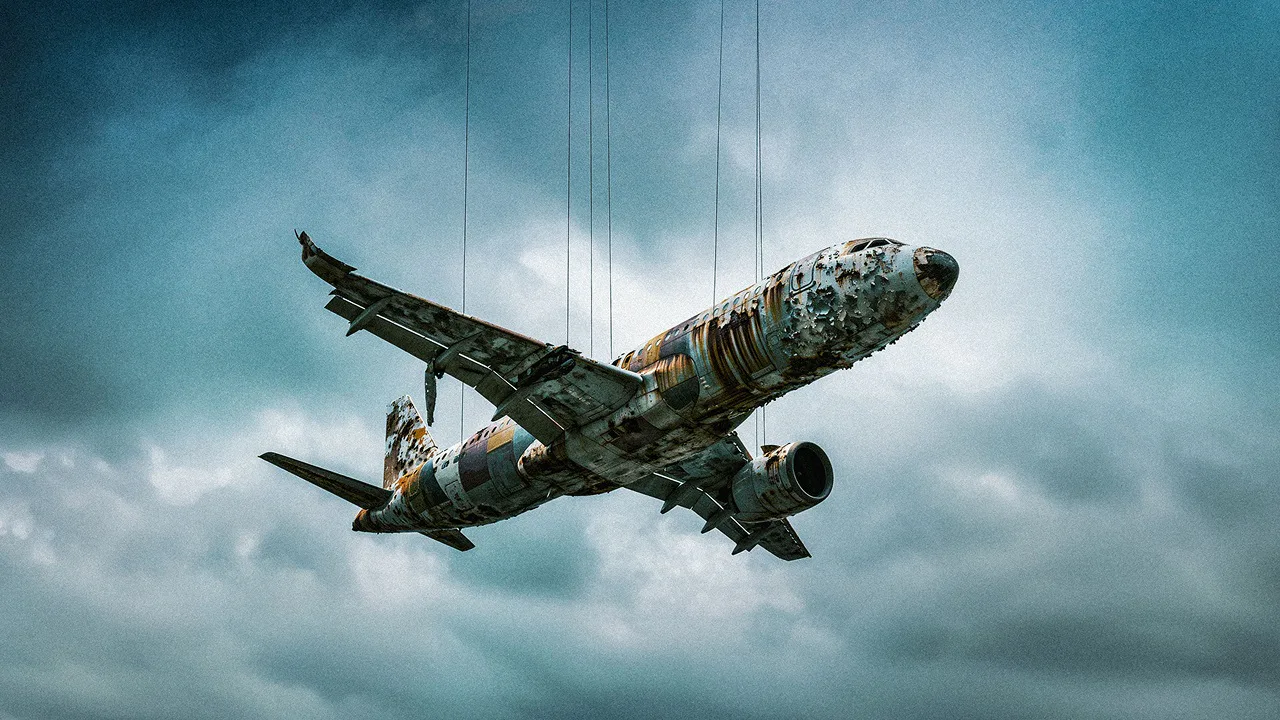
What is "aircraft cannibalization" and why it doesn't save the situation
Without access to new certified parts, Russian airlines dismantle some aircraft to keep others flying. According to estimates from the Russian Ministry of Transport cited by UATV, up to one-third of the foreign-made fleet has already been "cannibalized".
"An airline from a third country buys new spare parts and supposedly writes off old ones — and actually resells them to Russia. But even this approach is dangerous because Russians use old parts."
Aviation expert, OBOZ.UA
In parallel, a smuggling channel is developing. According to RFE/RL, despite sanctions, American aircraft parts reach Russia through third countries — and none of the intermediary companies have faced punishment so far.
Consequences are already visible in statistics
- From December 2024 to January 2025, Russian civil aviation recorded 11 engine failures — compared to five in the same previous period.
- 2024 became a six-year maximum for the number of aviation incidents in Russia.
- ICAO assigned Russia a "red flag" status — a flight safety level comparable to Liberia and Bhutan.
- According to the GUR, approximately 109 foreign aircraft that cannot be properly maintained will be withdrawn from service, as well as 230 outdated Soviet-era aircraft aged 40–60 years.
- Of 15 commercial airliners planned for production in Russia in 2025, only one has actually been delivered.
China as a backup option — still theoretical
Moscow is trying to compensate for the degradation through domestic production and Chinese imports. But the internal program has failed: plans through 2030 have been cut in half due to lack of funding. China is developing its own aircraft engines, but as RFE/RL notes, their reliability and compatibility with the existing Russian fleet remain open questions.
Meanwhile, Russia is attempting to obtain sanctions relief through ICAO, arguing that aviation restrictions contradict international flight safety standards — essentially acknowledging what the GUR describes as a critical state of the industry.
If smuggling channels for spare parts supply are cut off and China does not provide compatible engines by 2026–2027, the question is no longer whether flights will be reduced — but what catastrophe will force Russia to officially acknowledge the inadequacy of its fleet.