Russia launched one of the most massive combined attacks on Kyiv in three years of full-scale war: 90 missiles of various types and 600 drones. According to the confirmation of the Air Force of the Armed Forces of Ukraine, the capital was the main target. Air defense forces destroyed 604 targets — but what broke through struck symbols, not military objects.
What Was Destroyed
Culture Minister Tetiana Berezhna called the attack the largest series of damage to Kyiv's cultural institutions during the full-scale invasion. Among the affected sites:
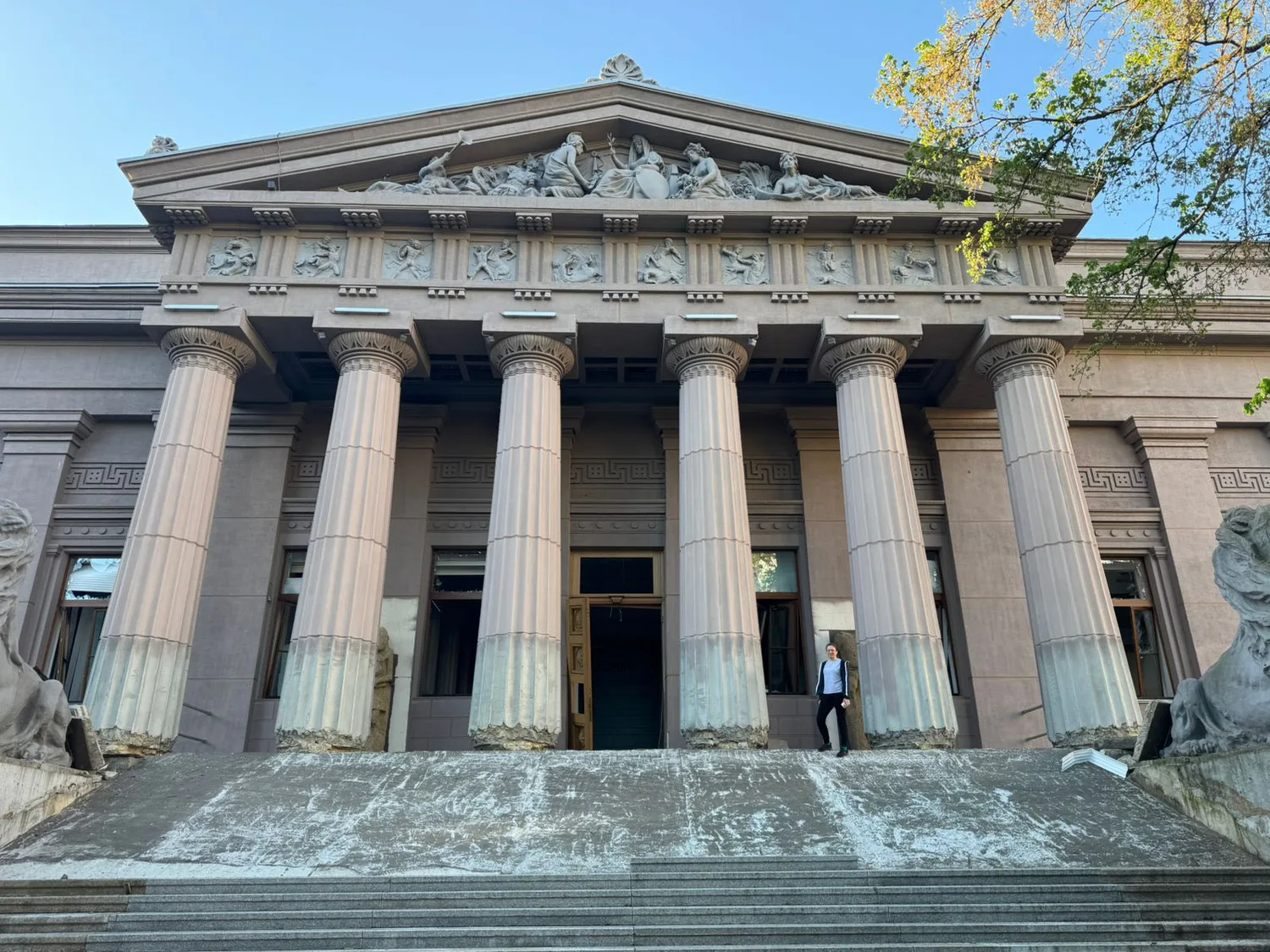
- National Art Museum of Ukraine — damaged by blast wave, closed for an indefinite period; collection and staff unharmed
- National Philharmonic of Ukraine
- National Music Academy of Ukraine
- National Library of Ukraine named after Yaroslav the Wise
- Kyiv Opera — cancelled performances due to building damage
- National Center "Ukrainian House"
- Architectural monuments — Kontraktovy House and Post Station on Podil
Separately — the National Museum "Chornobyl". It was reopened after lengthy restoration only at the end of April. According to the Ministry of Internal Affairs, approximately 40% of the exhibition was destroyed. Minister Igor Klymenko called the strike on the museum "a conscious attack on history and truth": "Once Russia hid the truth about Chornobyl, and today — it strikes at places that preserve it."
The building of the Ministry of Foreign Affairs was also damaged — an architectural monument built by Yosyp Langbard in 1939. According to Minister Andrii Sybiha, it suffered damage from hostilities for the first time since World War II.
What Analysts Say
The Institute for the Study of War (ISW) recorded that the Kremlin had previously threatened strikes on "decision-making centers" in Kyiv — if Ukraine attacked the May 9 parade in Moscow. The parade took place without incident. However, the attack occurred. In practice, the "decision-making centers" turned out to be museums, a market, and residential buildings. ISW views the strike as Putin's attempt to "erase humiliation" after May 9.
"Most of the missiles were precisely against the capital. On ordinary residential buildings, on schools, they burned down a food market. The Russian strike practically destroyed the Chornobyl Museum"
President Volodymyr Zelensky
Head of the Kyiv City Military Administration Timur Tkachenko confirmed that this attack became the largest in terms of number of locations with damage since the beginning of the full-scale invasion. The enemy, according to him, for the first time resorted to systematic strikes on the city's historical architecture and monuments.
Scale and Context
According to Radio Free Europe citing the UNESCO National Commission, Russia has already destroyed or damaged 1,783 objects of cultural heritage and 2,540 objects of cultural infrastructure throughout Ukraine. According to AP, more than 2.1 million museum items have been removed from occupied territories and included in the Russian registry.
Deaths: at least four across the country, two in the Kyiv region. In Kyiv itself, according to city authorities, about 69 people were injured, about 30 residential buildings damaged or destroyed.
Berezhna separately noted the timing coincidence: while the shelling was underway, at the Cannes Film Festival, Russian artists were being awarded — those who are trying to distance themselves from the Kremlin's actions. "Their attempt to whitewash themselves, shifting blame solely to the dictator, looked particularly cynical," the minister said.
If Russia truly aimed at "decision-making centers" — and hit a recently restored museum and philharmonic — one question remains: will international justice recognize systematic destruction of cultural heritage as a separate crime, or will it continue to dissolve it into the general statistics of war crimes?