The reform of the State Customs Service of Ukraine (SCS) officially costs approximately 1.2 billion euros. This figure is included in the program documents of the national revenue strategy through 2030. Most of it is expected to come not from the state budget — from donors.
The main change in the donor map is the disappearance of USAID. According to Vladyslav Suvorov, deputy head of the SCS, USAID was previously a key donor, but after its closure by the Trump administration in August 2025, "now the European Union acts as the key donor, Japan is actively involved, and Norway is helping with anti-corruption measures."
The EU finances — and sets conditions
Here a structural paradox emerges: the European Union is simultaneously the main donor of the reform and the main creditor demanding this reform as a precondition for disbursing money.
To receive the first tranche of macro-financial assistance of 3.2 billion euros in June 2026 as part of the EU's 90-billion euro credit, Ukraine had to, among other things, submit an updated Customs Code and appoint a permanent head of the Customs Service.
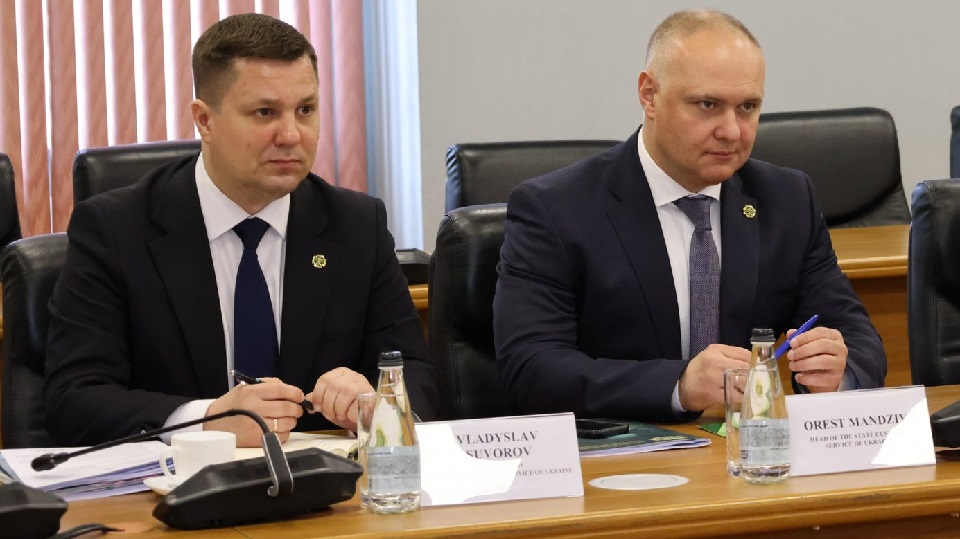
As for the head — the obligation was fulfilled with a delay of almost a year. On April 10, 2026, the Cabinet of Ministers appointed Orest Mandziy as head of the SCS — based on the results of an open competition, with the submission made by Finance Minister Serhiy Marchenko. The SCS received for the first time in years a full-fledged head without acting status. Before this, the agency had been without a permanent leader since November 2021.
As for the Code — the process is still underway. The draft of the new Customs Code, containing 781 articles, was at the final stage of refinement after the government committee at the end of May 2026. The Ministry of Finance planned to complete the text preparation in April and submit it in June for assessment by DG TAXUD experts.
Why 1.2 billion if customs already collects hundreds of billions
The scale of losses explains why a billion-plus is being allocated for reform. According to estimates by Danylo Hetmantsev, head of the Verkhovna Rada's Finance Committee, due to the customs service's inefficient work, the state budget loses 100 to 120 billion hryvnia annually. His deputy Yaroslav Zheleznyak provides dynamics: the first year of full-scale war — approximately 100 billion hryvnia in losses, from the beginning of 2024 to October — approximately 40 billion hryvnia.
Research by CASE Ukraine and the Institute for Socio-Economic Transformation with support from CIPE shows that annual potential volumes of smuggling and "gray imports" in monetary terms amount to 270–450 billion hryvnia.
"Tax evasion schemes that an updated quality customs service could minimize cause the state budget losses of 120–150 billion hryvnia per year."
— economist Oleh Hetman, ZN.ua
So even if the reform returns only one-third of shadow flows — it will pay for itself in less than a year.
What has been done — and what is slowing things down
- Based on the results of 2025, the Ministry of Finance recorded progress in the customs sphere at the level of 96% compliance with the Association Agreement with the EU.
- In 2025, within the Ukraine Facility instrument, Ukraine received up to 9 billion euros in financing from the EU.
- The IMF mission in November 2025 confirmed significant progress and recommended granting the SCS the status of a law enforcement agency.
- As of the end of 2025, only about 5% of customs brokers received mandatory authorizations — despite the deadline in April 2026.
The last point is an indicator of the actual state: the legislative framework is being built faster than the executive system can manage to adapt.
Orest Mandziy, appointed in April 2026, is a former NABU detective and the first full-fledged head of customs in five years. Among his tasks are personnel overhaul: dismissal (if necessary) and appointment of heads of territorial divisions, attestation of officials, integrity checks and lifestyle verification.
The question is not whether customs will be reformed — it will be. The question is whether the new head will maintain the pace after the EU gets its structural markers and external pressure eases: it is at this moment that Ukraine's previous agency "reboots" typically stopped.







