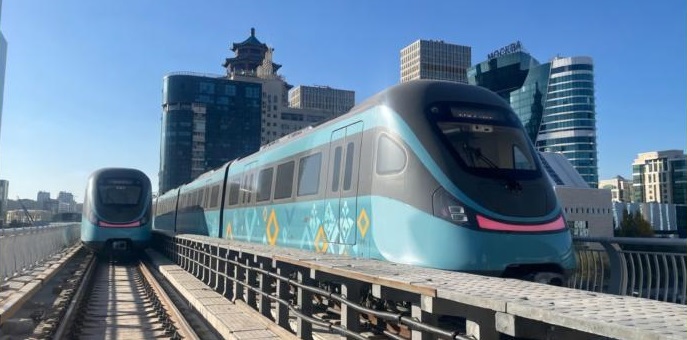
Concrete supports in the shape of the letter Y stood in Astana for more than ten years without a single rail on top. Locals called them a "monument to corruption" — and they were right: in 2021, a court sentenced the city's former deputy akim and project director to 7–10 years in prison for embezzlement. Now those same supports carry 22.4 kilometers of tracks, on which the first passengers will ride starting May 16–17.
From Nazarbayev's Vision to Chinese CRRC Trains
The idea of light rail transit in what was then Akmola was included in the city's development plan back in 2005 — on the personal directive of first president Nursultan Nazarbayev. Construction started in 2011 with a deadline of 2020. In 2013, the project was frozen due to costs that couldn't or wouldn't be publicly justified. Two years later, it became clear why: the funds were being stolen.
A restart followed with a different contractor. Trains are supplied by the Chinese corporation CRRC — the world's largest manufacturer of rolling stock. The line will operate 19 four-car trains 60 meters long, each accommodating over 600 passengers. Fifteen will be in regular rotation, four in reserve.
GoA4: What It Means in Practice
The system received certification for automation level GoA4 — the highest possible. The train independently controls acceleration, braking, door opening, and headway maintenance. There is no driver physically present — only a dispatch center at the depot covering more than 16 hectares near the airport.
"We plan that within the next couple of months, the work will be fully completed, and we will launch the LRT in operational mode."
Akim of Astana Zhenis Kasimbek, December 2024
Test runs since September 2024 proceeded in stages: first between two stations at 10 km/h, then gradual acceleration to operational speed of 60 km/h (maximum — 80 km/h).
Route and Tickets
- 18 stations: 11 ground-level and 7 elevated — from the airport to Nurly Zhol railway station
- Among the stops are Baiterek, Astana Arena, National Museum, Ministries
- Cable-stayed bridge across the Ishim River 155 meters long — part of the route
- Ticket price: 200 tenge (~0.4 USD)
- Platform screen doors prevent access to the tracks
System capacity — over 2,400 passengers per single trip across all trains. Announcements in three languages: Kazakh, Russian, and English.
Twenty Years — Is This a Verdict or the Norm?
For comparison: London's Elizabeth Line took 13 years to build and also experienced cost overrun scandals. The difference lies in accountability: British parliamentary hearings were held openly, while Kazakhstan's criminal proceedings were closed after sentencing without disclosing the full extent of the embezzlement.
Astana's LRT opens without a publicly disclosed financial audit of the final construction stage. If city authorities want this launch to be perceived as an infrastructure success rather than a triumph over their own previous failures — the next step should be a public report: how much the restart cost and who financed it. Until then, 200 tenge for a ticket is the price of a ride, but not the answer.







