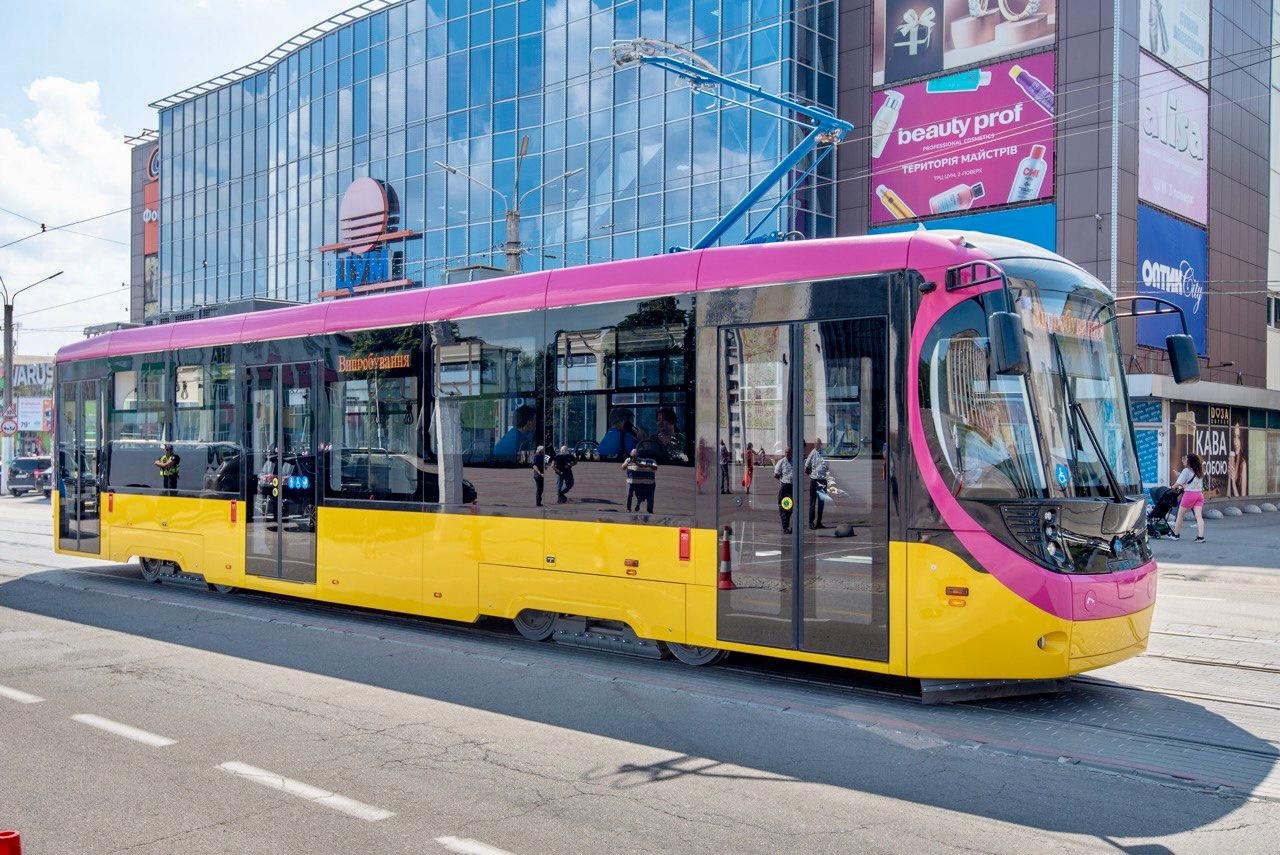
In Kamianske — the third most populated city in Dnipropetrovsk region — the first of 17 new trams manufactured by Tatra-Yug completed technical testing. Soon it will enter regular service. By the end of 2025, the city is expected to receive five more cars, with the remaining 11 arriving during 2026–2027.
Where the money comes from — and why it matters
The contract worth 16.99 million euros was concluded under the state program "Municipal Public Transport of Ukraine — II," financed by the European Investment Bank. The scheme is straightforward: the EIB covers 80% of the tram costs, with the remaining 20% coming from Kamianske's city budget. Upon completion of deliveries, the city will modernize approximately 85% of its tram fleet.
Important context: annually, Kamianske's trams are used by approximately 10 million passengers, of whom about 70% are in privileged categories. That means most travel for free or at a discount through budget compensation. The modernized rolling stock enters a system where tariff revenue covers only part of operational costs.
What kind of trams
Tatra-Yug is an Odesa company that has manufactured trams since 1993 using Pivdenmash facilities and is the intellectual heir of Czech ČKD Tatra, which ceased operations in 2003. Manufacturing localization reaches 95%, with trams operating in 22 Ukrainian cities.
"By the end of this year, Kamianske will receive 5 more new trams, and next year — 11 more. Upon completion of deliveries in 2026–2027, the city will modernize approximately 85% of its tram fleet"
— Kamianske Mayor Andriy Bilousov
The new 15-meter single-section trams are low-floor models with wide doors, climate control systems, surveillance cameras, and wheelchair ramps. They will operate on all four city routes.
War as context, not background
Kamianske is located 70 km from Nikopol — one of the most heavily shelled cities in Dnipropetrovsk region. Public transport procurement during active hostilities is not merely a utility decision but a signal that the city plans to function in a long-term perspective. The EIB, for its part, continues to finance civilian infrastructure in a country where some routes operate according to air raid alert schedules.
The open question here is not about trams — it's about economics: if 70% of passengers travel for free, and fares already had to be raised in June 2026 through public discussion, will there be enough operational funding for the municipal enterprise "Transport" to maintain 17 new trams without another cycle of external subsidies?







