When a country's central bank incorporates zero economic growth into its base scenario — this is not a technical forecast revision. It is an acknowledgment that the model that worked for four years is approaching its limits.
What was decided on July 24
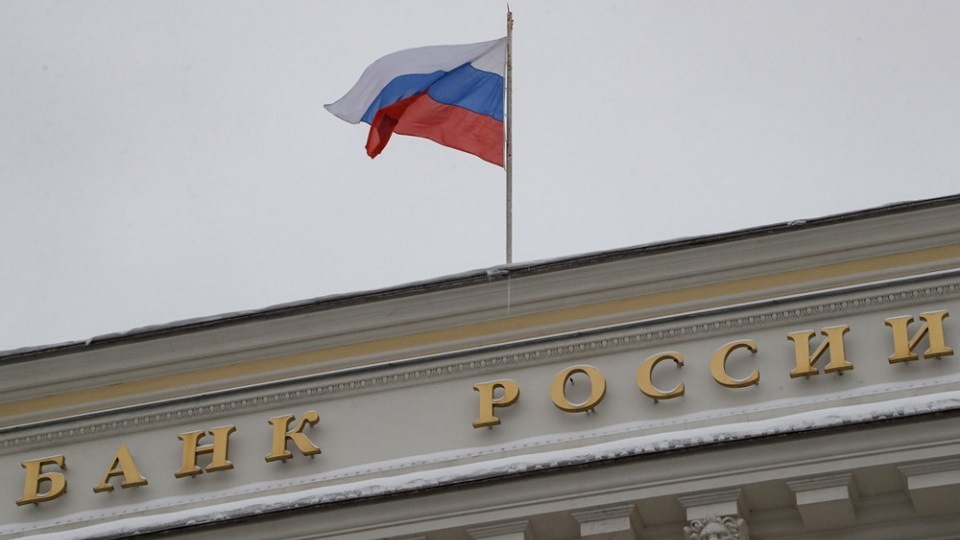
At a meeting of the Board of Directors on July 24, the Bank of Russia cut its key rate by 25 basis points — to 14% per annum. At the same time, the regulator revised its forecast for GDP growth in 2026: from the previous 0.5–1.5% to 0.0–1.0%. In the fourth quarter of 2026 on an annualized basis — from zero to 1.5% versus the previous 1.0–2.0%.
In parallel, Central Bank Governor Elvira Nabiullina announced a figure that in peacetime would have caused a political crisis: the primary structural budget deficit for 2026 is 2% of GDP. In 2027 — 1%, in 2028 — 0.5%. According to Nabiullina, this is the Central Bank's own assessment, which will be clarified after the government updates its own forecast.
For comparison: when the Kremlin drafted the 2026 budget, the planned deficit was 3.8 trillion rubles (1.6% of GDP). But just after the first four months of the year, the cash deficit reached 5.9 trillion rubles — approximately 2.5% of GDP, the largest figure since the 2022 invasion.
Where the "hole" comes from
The answer is simple in numbers and complex in consequences. In the 2026 budget, 16.84 trillion rubles are allocated for defense and security — almost 40% of federal spending. Together with debt servicing (8%), these two items account for approximately half of all state expenditures. Civil infrastructure, healthcare, education — everything else divides the other half.
Finance Minister Anton Siluanov, according to the Financial Times, appealed to the government requesting a halt to 2.9 trillion rubles of planned non-military spending in the current year, 5.4 trillion — in 2027, and 7.1 trillion — in 2028, to cover rising war expenses.
What this means for people inside Russia
A high rate — 14% even after the latest cut — makes credit inaccessible for civilian business. According to Meduza, overdue debt of Russian enterprises exceeded 8 trillion rubles (3.8% of GDP) — versus 2.4% of GDP at the beginning of 2022. This concerns viable companies that cannot service their debts because of the cost of money.
Industry is split into two unequal parts: the military-industrial complex receives state orders and grows, civilian production — stagnates or shrinks. According to Meduza's estimate, production volumes in the civil sector of manufacturing have remained approximately 5% below December 2024 levels for several months.
"Any easing of the key rate will cause rapid, almost lag-free, acceleration of price growth"
Oleg Vyugin, economist, former first deputy governor of the Bank of Russia
This is a trap: the rate needs to be lowered to avoid choking the civilian sector, but lowering it is dangerous because inflationary expectations among the population consistently remain at around 13%. The July 24 decision — a cut of only a quarter of a percentage point — illustrates the narrowness of the room for maneuver.
What is not accounted for in the base forecast
The Bank of Russia lowered its forecast oil price for tax purposes for 2026 from $65 to $60 per barrel, and for 2027–2028 — from $55 to $50. Even a temporary spike in oil prices due to the Iran-related conflict did not change this conservative stance: the regulator believes the oil gain is insufficient to cover growing military spending in the long term.
Forecasts for 2027–2029 remain unchanged — growth of 1.5–2.5% annually. But these figures are built on the assumption that spending will stabilize. So far, there is no mechanism for such stabilization: the 2027 budget has not yet been passed, and the Finance Ministry is asking to freeze civilian spending for years ahead.
If by the Central Bank's September meeting the government does not present an updated budget trajectory with real cuts to military spending — the zero growth forecast could become not the lower bound, but the upper limit.