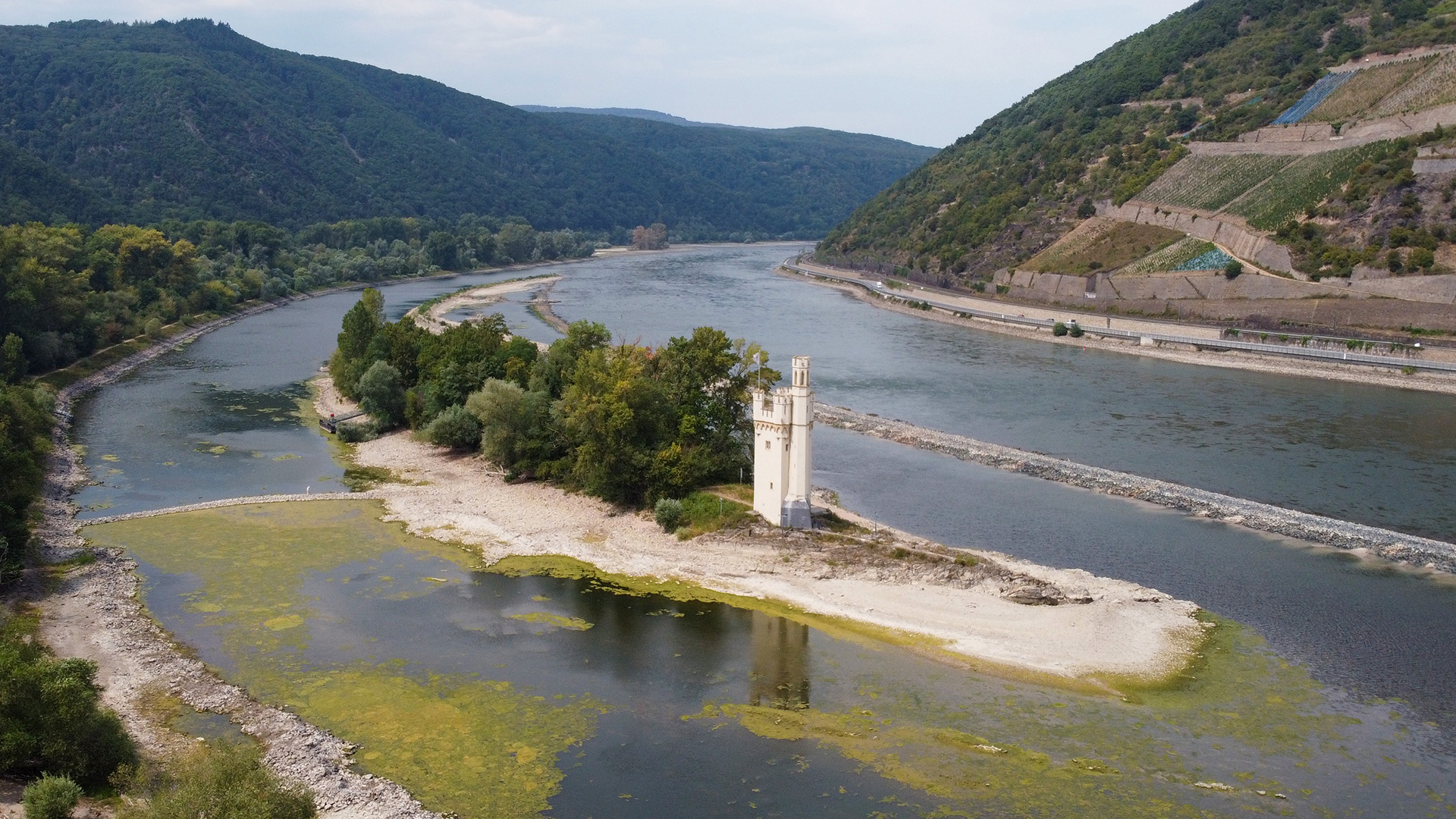
A Rhine barge captain these days counts cargo not in tons, but in centimeters under the keel. At a control section near the city of Kaub, water levels have fallen to almost 25 centimeters — a mark worse than the river has seen since 2018. For a vessel, this makes the difference between a voyage and idle time: instead of a full hold — a quarter of the cargo, instead of one barge trip — three or four.
This arithmetic has already transformed into a price tag. Last spring, transporting a ton of cargo on the Rhine cost around 20 euros. Now, according to Bloomberg columnist Javier Blas's calculations, delivering a ton from Rotterdam to points south of Kaub costs nearly 150 euros — a historical maximum for this route.
Chemistry on the Brink of Force Majeure
It is not coal plants or oil traders that depend most on the Rhine, but chemical conglomerates whose factories stand directly on the banks: BASF, Covestro, Evonik. Raw materials and semi-finished products travel to them by barge, and when a barge cannot pass — the assembly line stops.
BASF CEO Markus Kamitz this week did not attempt to reassure analysts with diplomatic phrases. According to his words, "it would be unwise to exclude the possibility of declaring force majeure or... a shortage of certain types of products," and acute raw material scarcity could trigger a chain reaction at major chemical sites.
The comparison with 2018 here is not rhetorical, but financial: that drought cost BASF 250 million euros in operating profit. The difference is that now the conglomerate has prepared in advance — and this is the main story to follow in the coming weeks.
Who Had Time to Prepare
Covestro several weeks ago began building up raw material reserves and switching to barges with shallower draft, capable of passing through even shallow areas. Thyssenkrupp, which due to supply disruptions was forced to limit pig iron production at its Duisburg plant, temporarily took its own fleet out of service and chartered vessels under new river conditions — and so far assures that customers will have sufficient products.
This is the difference between a company that has adapted to climate as a permanent risk and a company that reacts to each incident after the fact. The second model is more expensive — and the bill for it is paid either by shareholders in the form of lost profit, or by the end consumer in the form of higher prices.
The River as Europe's Common Denominator
The Rhine is not the only river showing its bottom this summer. Romania on July 29 shut down the second reactor of its only nuclear power plant "Cernavoda" due to a critical drop in Danube levels caused by drought — the first reactor was shut down a day earlier. And Hungary's "Paks" nuclear power plant due to record-low Danube levels must stop for a day or more — for the first time in 44 years of the plant's operation.
Rivers that for decades were considered reliable infrastructure are simultaneously becoming a bottleneck for industry and energy in several EU countries. This is no longer a local weather anomaly, but a stress test of supply chains built on the assumption of last century's climate.
Economists are already factoring into forecasts a loss of 0.2 percentage points of German economic growth due to disruptions caused by low water. The question for the coming weeks is simple: will German chemical industry withstand the heat without force majeure, or will 2026 become the year when BASF repeats the 2018 scenario — only this time with a bill higher than 250 million euros.







