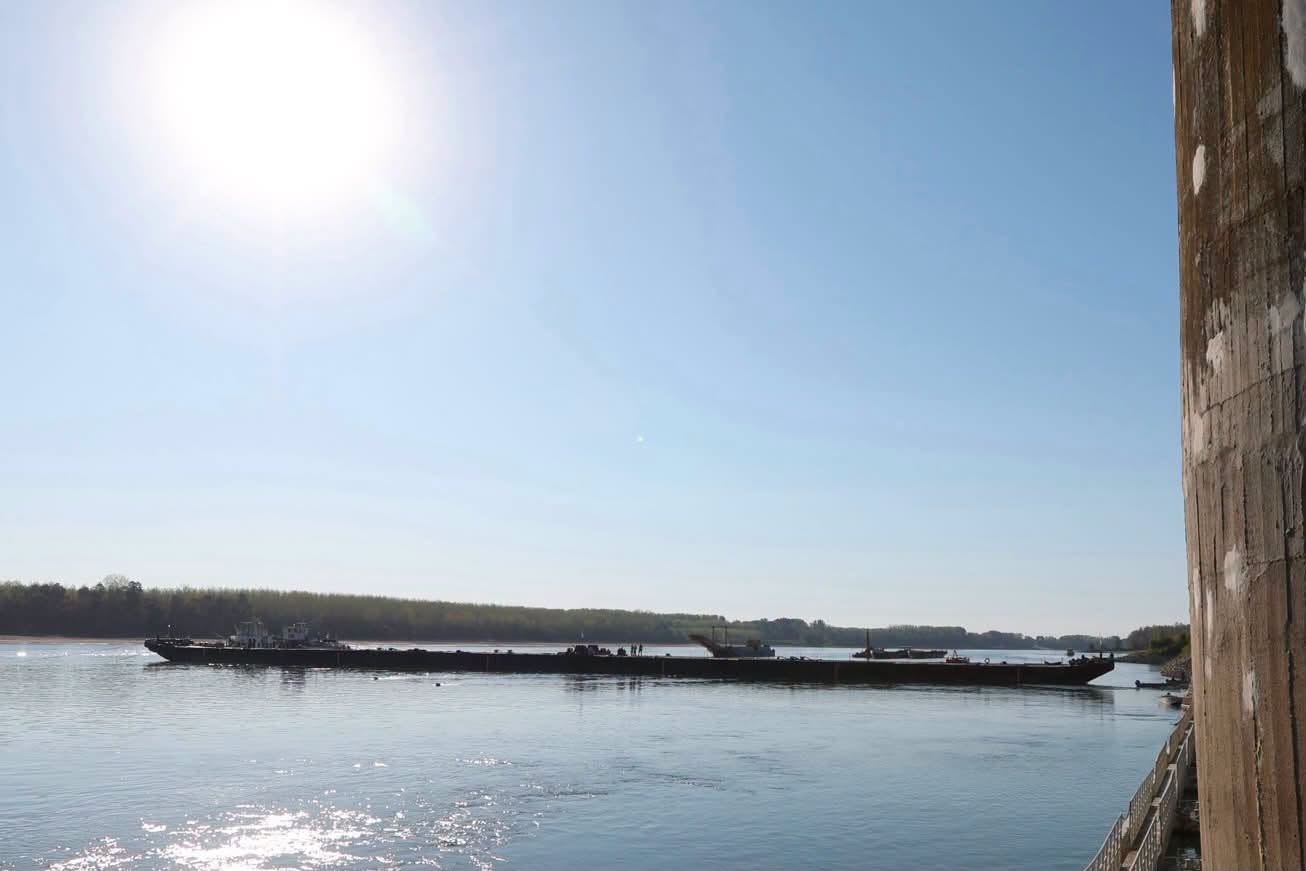
Near the city of Paks in Hungary, machinery is now operating that hasn't been seen there for decades: helicopters are dropping concrete blocks into the Danube, hundreds of tons of stone are going into building an artificial weir, and in the coming days, two 80-meter barges are planned to be sunk in the river. The goal is simple — to raise the water level enough so that the pumps cooling the country's only nuclear power plant don't stop.
This is no longer a preventive measure. According to Hungarian media, the situation is so critical that the water level near the plant could fall to a mark of "minus" 132–137 centimeters within days — far beyond the previous low-water record of 2018. This is why Prime Minister Peter Magyar is personally coordinating the work, calling it the most complex project of this scale in the past thirty years.
Why this isn't just "weather"
Paks is not an ordinary power plant. It provides approximately half of all electricity consumption in Hungary. When in autumn 2018 low water already forced reducing the plant's capacity, the problem was resolved with considerably less effort — and it was precisely for this inaction after 2018 that Magyar criticized Viktor Orbán's previous government: back then, he said, preparations could have been made in advance to avoid the current crisis.
Now the stakes are measured not only in megawatts but in money that every Hungarian electricity consumer will feel. A complete shutdown of the plant, by estimates, would cost the country's economy at least 50 billion forints — nearly 160 million dollars — per month. This is the amount that will somehow be compensated either by raising tariffs or by purchasing more expensive electricity from other countries, because there's no way to conjure alternative generation "out of thin air."
Racing against the river
The first stage of work — building a weir from stone and sinking barges to block the main channel — should take about a month. But even after completion, additional time is needed to stabilize the water level before even thinking about restarting the shut-down reactors. In other words, even in the best-case scenario, Hungary risks operating without part of its nuclear generation for at least two to three months in the middle of the heating season.
In neighboring Romania, a similar tactic of sinking barges on the Danube didn't work: they had to shut down the Cernavodă nuclear plant despite the measures taken. This is a hint to Hungary that engineering solutions simply may not keep pace with the rate of shallowing — and that a "plan B" in case the weir fails hasn't been publicly announced by anyone yet.
What Ukraine has to do with this
The Danube is more than just a reactor coolant. For Ukraine, it's a critical export artery: after Russia renewed its sea blockade, the Danube waterway remains virtually the only alternative channel for exporting grain past the blocked Black Sea ports. The lower the water level, the smaller the draft of vessels and the more expensive and slower each ton of harvest makes its way to world markets — and this is already a matter not of Hungarian energy, but of Ukrainian farmers' revenues and the country's foreign currency inflows at a time when every export channel is worth its weight in gold.
The question for the coming month is simple: will the artificial weir withstand the pressure of the shallow river before the water level falls below the critical mark — and what will Budapest, Bucharest, and Kyiv do if the Danube sets a low-water record for the second consecutive year this summer.