When Whirlpool cut its annual forecast in half and suspended dividend payments, CEO Mark Bitzer explained it in one sentence: "This level of decline in the industry is similar to what we observed during the global financial crisis". The washing machine manufacturer is not an exception. It is an illustration of a systemic shift.
$25 billion in documented losses — and this is just the beginning
According to a Reuters analysis covering corporate reports from companies in the USA, Europe, and Asia since the start of the conflict, total documented losses for global business from the USA and Israel's war against Iran exceeded $25 billion. At least 279 companies cited the war as a direct catalyst for "defensive actions" — price increases, production cuts, fuel surcharges, or appeals for government assistance.
Most affected companies are based in the United Kingdom and Europe, where energy costs were already elevated. Nearly a third are from Asia, reflecting the region's deep dependence on Middle Eastern oil.
The Strait of Hormuz: 20% of world oil through one chokepoint
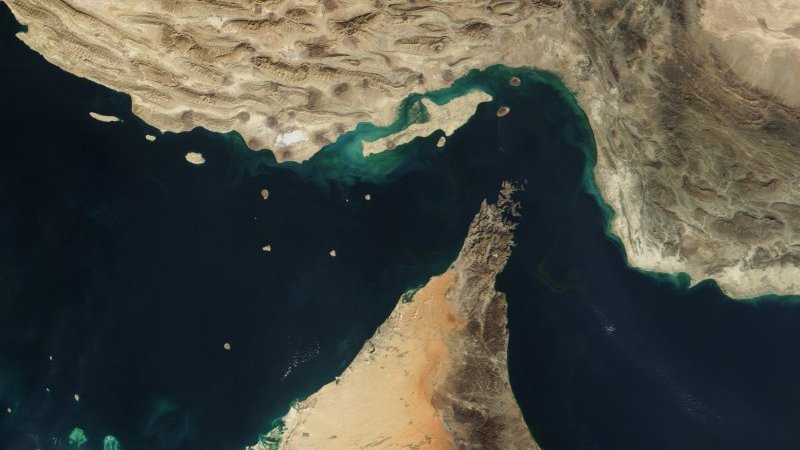
The key mechanism of destruction is the Strait of Hormuz blockade. Before the conflict began, approximately 21 million barrels of oil passed through it daily — roughly a fifth of all global supply. No alternative route is capable of absorbing such volume at comparable cost.
Result: oil crossed the $100 per barrel mark — more than 50% above pre-war levels. This is not just a number on the exchange. According to Newell Brands CFO Mark Erceg, every $5 increase in barrel price adds $5 million in costs to the company. For German Continental, a tire manufacturer, the second quarter promises at least €100 million in additional losses due to soaring raw material prices.
"In the absence of a clear US strategy to open the Strait of Hormuz, investors are likely to orient themselves toward Iran's actions as the primary market signal".
Paul Donovan, UBS
Aviation, household appliances, fast food — the list keeps growing
Airlines bear the largest documented share: approximately $15 billion of the total — due to nearly doubled aviation fuel prices. But the list of affected industries extends beyond energy-intensive sectors.
- Toyota warned of a $4.3 billion impact.
- P&G estimated net loss after taxes at $1 billion.
- About 40 companies in manufacturing, chemicals, and materials reported price increases due to dependence on Middle Eastern petrochemicals.
- One of the largest fast-food network operators noted that "elevated fuel prices are a key issue we are seeing right now".
KPMG's chief economist Diana Swonk warns: if the conflict drags on for another six months, oil could cross the $130 per barrel mark — and some analysts do not rule out $200.
The real impact lies ahead
Despite the scale of the figures, financial reports for the first quarter do not yet reflect the full extent of losses. As Rami Sarafa, CEO of Cordoba Advisory Partners, noted: "The real blow to profits has not yet materialized in the results of most companies". Continental confirms this logic: the impact on profits and losses is expected to materialize "in full" only in the second half of the year.
In other words, $25 billion is not a final count. It is an advance payment.
If negotiations fail to produce a "confirmed commitment" from Iran regarding its nuclear program — and this is precisely what became the stumbling block at the latest round in Islamabad — will consumers in Europe and Asia feel the full bill of this war before companies announce their second-quarter results?