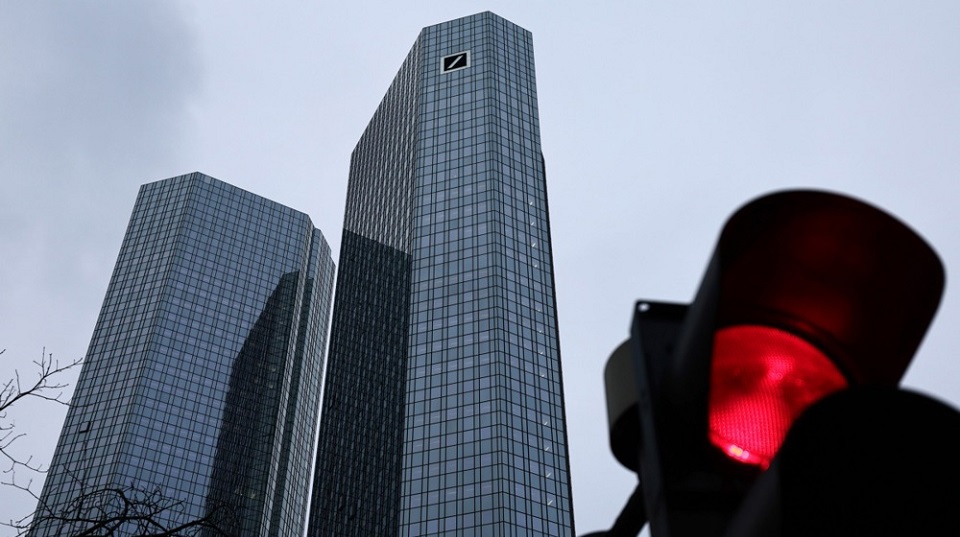
In the summer of 2022, the London office of Deutsche Bank twice transferred funds to a Russian company affiliated with the streaming service Okko. The total amount was approximately $852,746. The British Office of Financial Sanctions Implementation (OFSI) classified this as a violation and issued a fine of £165,000. However, Deutsche Bank is not the only party involved in this case.
A recipient overlooked by two
During the same period — June and July 2022 — Apple's Irish subsidiary, Apple Distribution International, also transferred funds to Okko's account: £635,618 in payments to developers through the App Store. OFSI fined Apple £390,000. The coincidence in timing and recipient is no accident: this was precisely when a scheme launched by Sberbank in March 2022 came into effect.
According to OFSI and analysts from the Democracy Protection Foundation, on March 24, 2022 — one month after the invasion — Sberbank registered a company called JSC New Opportunities with authorized capital of 10,000 rubles (~$130). In May of that year, Okko, along with other digital assets of the bank, formally came under its control. British sanctions against JSC New Opportunities took effect in June 2022 — but the payments had already been made.
Why the fine is so small — and why it matters
£165,000 is less than 0.02% of what Deutsche Bank spends annually on compliance departments alone. However, the mechanism of the fine is revealing: OFSI applied the principle of strict liability — meaning intent is not required for liability, only the fact of payment. This standard has been in effect since June 15, 2022.
"Despite failures by external screening providers, responsibility for compliance with sanctions remains with the company that initiates the payment"
— OFSI, Penalty Notice in the case of Apple Distribution International
Deutsche Bank, according to OFSI, independently notified the regulator of the violation — this mitigated the sanctions. Apple acted similarly. Voluntary disclosure became the only real tool for reducing fines: in Apple's case, the base fine was £600,000, reduced to £390,000 after taking circumstances into account.
What changed after these cases
- In January 2026, OFSI announced a doubling of the maximum fine — to £2 million or the full amount of the violation (whichever is greater).
- For the reporting year 2024–25, the number of active investigations reached 240, with frozen assets totaling £37 billion (compared to £24.4 billion the previous year).
- The financial and legal sectors generate the largest number of suspicious transactions, most of which are related to Russia.
- The Apple case set a precedent: routing payments through British banks creates a "UK nexus" — and falls under British sanctions law even for Irish or American companies.
It is notable that the JSC New Opportunities scheme, which cost Sberbank 10,000 rubles and 24 days of registration, forced two global institutions to pay fines, conduct internal investigations, and rewrite compliance procedures. Not out of malicious intent — but due to the standard delay between a change of ownership and updating sanctions databases.
If OFSI is truly transitioning from reactive to active monitoring — as stated in its annual report — the next question is practical: can banking screening systems keep pace with corporate restructuring in real time, or will the industry continue to trade fines as operational expenses?