Legal Theory in a City Where Law Was Tested for Strength
Irpin is not a neutral context for launching legal education. After the occupation and deoccupation of 2022, the city became one of the centers of mass property disputes, lawsuits for compensation for destroyed housing, and cases concerning the inheritance of the deceased. It was here that the Department of Education and Science of Irpin City Council, the State Tax University, and the law firm "Yuriy Denysenko" launched the "Legal Choice" course for high school students.
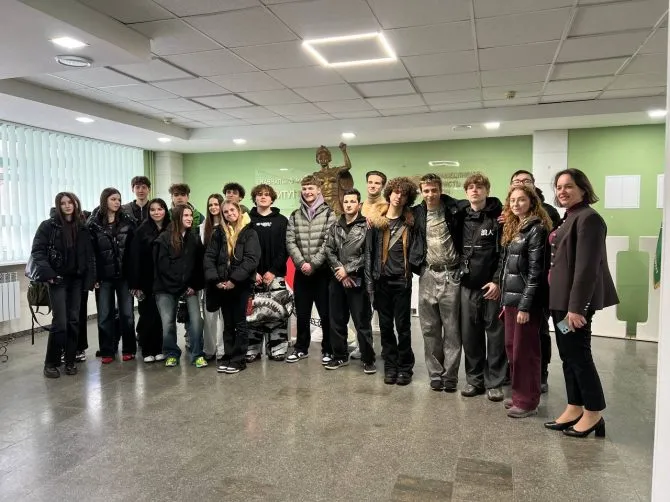
The first practical step was a familiarization tour of students from Irpin Lyceum of Innovative Technologies to the educational and scientific institute of law at the State Tax University. Students saw the academic environment from the inside and heard about real trajectories for entering the legal profession.
What's Behind the Memorandum
A three-party agreement is not merely a declaration of intent. According to the signed document, the partnership provides for combining the university's academic base with the practice of a law firm: joint seminars, trainings, and workshops. The course covers substantive and procedural law — that is, not only "what is written in the law" but also "how it works in court."
"It is important for us that students not only gain theoretical knowledge but also understand how it is applied in practice."
— from the organizers' comments
The program also targets educators — meaning the stakes are not just about one generation of students, but about changing how law is taught in schools overall.
Why the "University + Practitioner" Model Is Rare in Ukrainian Schools
Standard school legal education in Ukraine is mostly a textbook-based course without practical application. Involving a law firm as a third party (alongside the university and city administration) is an attempt to bridge the gap between "knowing the norm" and "being able to defend a right." Such three-party partnerships at the school level are rare in Ukraine.
- Substantive law — what a person owns and what rights they have
- Procedural law — how to defend that right through court or negotiations
- Practice from lawyers — real cases, not just articles from legal codes
For a city where some residents are still pursuing cases for compensation for destroyed property, legal literacy is not an abstract competency.
An Open Question
If within a year the course produces measurable results — for example, a share of graduates who will enter legal specialties or be able to independently navigate basic legal situations — the model could be replicated in other deoccupied communities with similar legal burdens on their populations. If not, the question remains: is a memorandum sufficient without fixed outcome metrics to call this a systemic project rather than a one-time initiative?