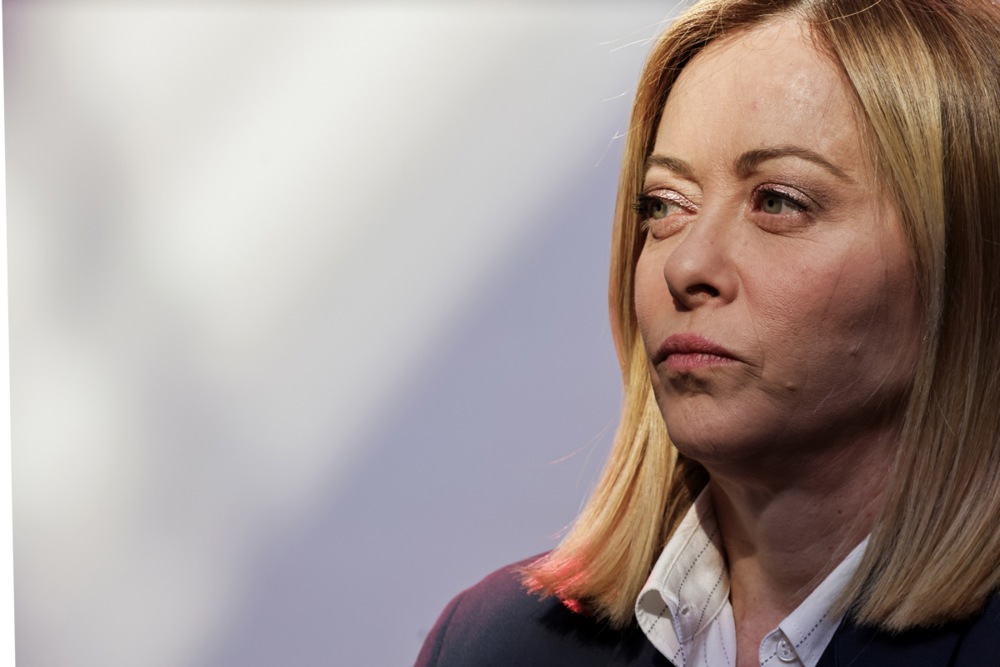
On April 3, Good Friday, Italy's prime minister Giorgia Meloni flew to Jeddah without prior announcement. Over two days she toured Saudi Arabia, Qatar and the UAE — and became the first EU and NATO leader to appear in the region since the start of the U.S.-Israel war against Iran on February 18.
Why now
A week before the visit, Edison, one of Italy's key gas suppliers, received notice from QatarEnergy: force majeure has been extended. Qatar will not send 10 LNG cargoes between April and mid-June — due to the de facto closure of the Strait of Hormuz. Iranian attacks have already destroyed 17% of Qatar's LNG capacity, Reuters reported, citing the CEO of QatarEnergy.
Before the war Qatar covered 10% of all of Italy's gas consumption, and oil from the Middle East accounted for about 12% of the country's oil imports. These figures explain why the flight to Jeddah could not wait until Monday.
What Meloni carried in both directions
Reuters, citing an unnamed Italian official, reports the visit had two goals: to support Gulf countries suffering from Iranian attacks and to protect Italy's own energy supplies. Italy is already supplying defensive weapons to partners and does not rule out further deliveries on request.
On the corporate side: state energy company Eni SpA confirmed its intention to continue investing in the region. No concrete deals were signed as a result of the tour — only declarations of intent.
"The two-day visit was primarily aimed at demonstrating support for Gulf partners facing Iranian attacks and at protecting Italy's own energy supplies."
Unnamed Italian official, Reuters
The cost for the ordinary consumer
The Dutch gas benchmark TTF almost doubled by mid-March — to over €60/MWh. Gas prices in Europe have risen by roughly 80% since the start of the year, and Brent oil has exceeded $110 per barrel. According to the European Commission's estimate, the EU's additional costs for importing energy have already amounted to €13 billion.
Chemical and steel plants across Europe are applying surcharges of up to 30% to cover rising electricity costs. Eurozone inflation for March jumped from 1.9% to 2.5%, and the ECB postponed a planned rate cut, raising its inflation forecast.
ING economist James Smith, who specializes in developed markets, believes the situation is fundamentally different from 2022: then the crisis hit an economy with an overheated labor market and broken supply chains; now these factors are less pronounced. By contrast, BNP Paribas economists Stefan Colliac and Guillaume Derien warn: if the blockade of Hormuz lasts until the end of the second quarter, and Brent remains above $100, the ECB will face a choice between fighting inflation and supporting growth.
Insurance plan: American gas
Alongside the visit it emerged that from June Italy will start receiving LNG from the U.S. terminal Golden Pass LNG — as a partial replacement for the lost Qatari volumes. This eases the severity of the crisis in summer, but does not solve the problem of the storage refill season: Europe is entering it with a record-low stock — about 30% of capacity after a harsh winter.
If the Strait of Hormuz remains effectively closed until the end of June, Meloni will return home not with deals but with empty storage facilities — and then the question will no longer be for Qatar, but whether Golden Pass will be able to compensate the deficit before the heating season.





