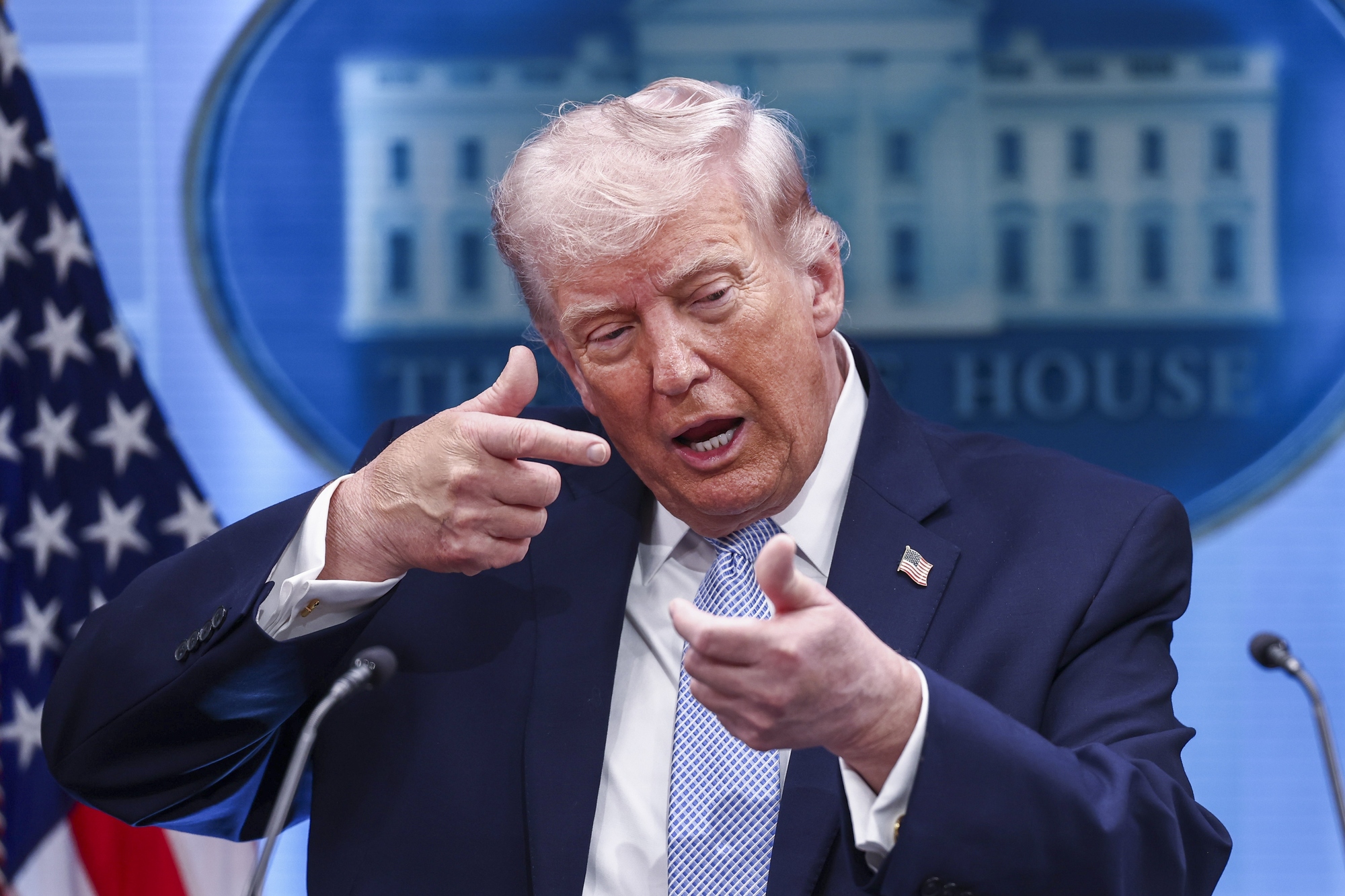
When Donald Trump announced a deal with Iran, diplomats in Brussels opened expense spreadsheets — not champagne. The pattern that emerges is simple and painful: the US makes decisions, Europe finances the consequences.
The Strait That Needs Clearing
The first line item is the Strait of Hormuz. French, German, and British budgets are already allocating funds for maritime operations in the region. Berlin and Brussels have publicly stated their readiness to send minesweepers after hostilities end. But Boris Pistorius, Germany's defense minister, makes no secret of his skepticism:
"What does the world expect, what does Donald Trump expect from two dozen European frigates in the Strait of Hormuz — to achieve what a powerful American fleet cannot do there on its own?"
Boris Pistorius, Germany's Defense Minister
The technical picture is not reassuring. The Washington Institute calculated before the conflict that clearing the strait would require up to 16 minesweepers. The US Navy has seven, and according to Reuters, the fleet refused to provide escort in the Gulf. According to American intelligence, Iran has preserved 80 to 90 percent of its small vessels and mine-laying operations.
A Gas Bill of €1,100 Per Person
The second line item is energy. The Brussels-based analytical center Bruegel warned: although only 8% of the EU's liquefied gas imports come from Qatar through Hormuz, intensified competition in the global market will hit all importers. In 2025, the EU spent 396 billion euros on fossil fuel imports — roughly 1,100 euros per capita. A new price shock repeats the mechanics of 2022: money flows from European households to energy exporters.
The irony is that Trump partially "solved" the expensive oil problem by temporarily lifting sanctions on Russian oil. Chancellor Olaf Scholz and President Macron reacted sharply: "In no way should rising oil prices force us to change our position on Russia," Macron insisted. Zelensky noted the direct consequence: Russia will get more money — and more drones.
Ukraine Support Budget: The Queue Gets Longer
This is where the circle closes. Brussels officials are already warning governments against excessive energy subsidies — not out of cruelty, but out of arithmetic. As Pravda EU reports, commissioners warn of "serious fiscal consequences": the pandemic, the war in Ukraine, and the leap in defense spending after 2022 have already exhausted the buffer. Italy's budget deficit exceeded 3% of GDP; finance ministers from five countries — Germany, Spain, Italy, Portugal, and Austria — called for introducing an EU-wide windfall tax on energy company profits.
Nathalie Tocci, director of the Italian Institute of International Affairs (IAI), formulates the systemic problem starkly: "When Europeans straighten their backs — the sky doesn't fall. When they bend the knee — they simply invite new intimidation from the White House." This is not a moral maxim — it is a description of financial logic: concessions do not reduce bills.
Chatham House proposes a concrete way out: a joint financing instrument for defense and Ukraine support of 300–400 billion euros — modeled on NextGenerationEU. Without such a mechanism, analysts warn, Europe will react to each new crisis with a separate emergency package, having neither influence over decisions nor strategic depth.
The Key Question
If by autumn 2025 France, Germany, and Poland do not agree on a mechanism for joint financing of defense and reconstruction — Ukraine support resources will realistically compete with gas subsidies and maritime operations in Hormuz. Is Europe ready to pay all three bills simultaneously while having no say in signing any of them?





