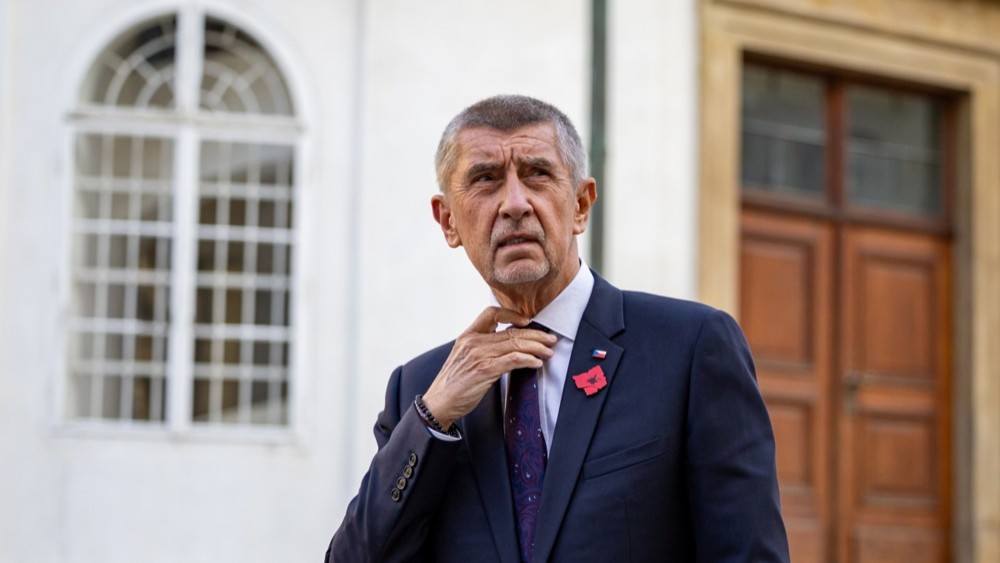
Before departing for the EU and Western Balkans summit in Montenegro, Czech Prime Minister Andrej Babiš publicly named the person who, in his view, should speak with Putin on behalf of the European Union. This is German Chancellor Friedrich Merz.
«In my view, it is clearly German Chancellor Merz who should somehow, based on a mandate from the Council and the Commission, lead a certain diplomatic mission».
Andrej Babiš, Prime Minister of the Czech Republic, June 4, 2026
Babiš's logic is understandable: Trump is focused on the Middle East, American mediation efforts have stalled, and Putin continues his attacks — therefore, Europe must act on its own. The question is whether this logic has a real mechanism behind it.
Where the discussion is — and where it is stuck
The debate over the EU's negotiator with Russia has been ongoing for several months. In mid-May, Politico reported that three candidates were being discussed in Brussels — Angela Merkel, Finnish President Alexander Stubb, and former ECB head Mario Draghi. None of them was formally considered as consensus.
Putin, for his part, publicly proposed former Chancellor Gerhard Schröder — a longtime personal friend and well-known lobbyist for Gazprom. EU foreign policy chief Kaja Kallas responded tersely: Schröder is a «well-known lobbyist for Russian companies». Berlin called the Kremlin's initiative «unconvincing».
Merz formulated his position as early as May 14 in Aachen: «We ourselves decide who speaks on our behalf» — and nothing more. He gave neither confirmation of his willingness to become a negotiator nor a refusal of this role.
What exists and what does not
The actual picture looks like this:
- Exists — a public proposal from one prime minister out of 27 member states.
- Does not exist — a decision by the European Council or the European Commission to create such a mission.
- Does not exist — an agreed mandate: what exactly to discuss, within what limits, with what red lines.
- Does not exist — a public response from Merz himself to Babiš's proposal.
European Council President António Costa previously stated that the EU would speak with Russia only at the «right moment» — a formulation that leaves everything open and commits to nothing. According to Radio Free Europe, the key question among EU diplomats is not who will go, but whether all 27 members can even agree on a common mandate.
In parallel, Merz proposed in a letter to EU leadership to grant Ukraine the status of «associated member» during negotiations on full accession — a step rejected by Zelenskyy, who insists on full membership.
Why this matters beyond the headlines
Babiš is not a random voice. He leads a country — an EU and NATO member bordering Ukraine — and reflects a real demand from part of Europe's capitals: to give crisis diplomacy a face and structure. But publicly naming a candidate before the position even exists is pressure on the process, not its launch.
If the summit in Montenegro fails to produce even a framework decision on a negotiation mechanism, Babiš's proposal will remain the personal opinion of one prime minister — no more than Putin's opinion on Schröder.
The real test will come when the European Council tries to agree not on a name, but on a mandate: if 27 countries cannot agree on red lines for negotiations with Moscow — the question of who the negotiator is becomes rhetorical.





