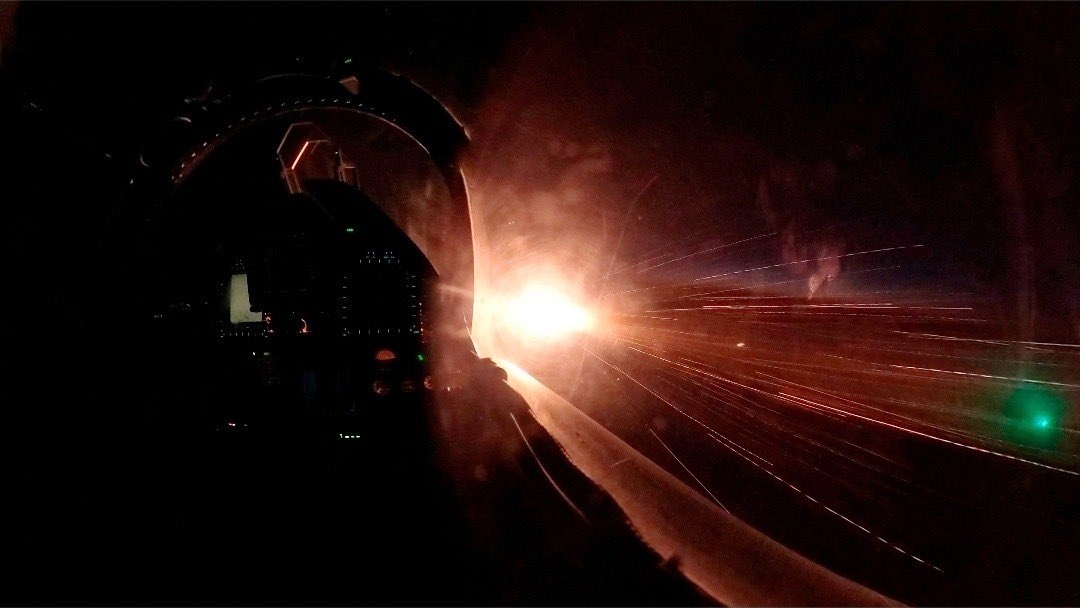
NATO released footage of a night operation in which two Spanish F-18s shot down a drone that crossed Romania's border from Moldova. The aircraft was flying without an explosive charge — and this fact deserves special attention, as the path to intercepting an "empty" drone proved no less complex than fighting an armed one.
A Route That Shouldn't Have Existed
According to Moldova's Defense Ministry, a Shahed 136 (Geran 2) drone started from the village of Kotlovina in the Renyi district of Odesa region, crossed Moldova through Gagauzia, and only then entered Romanian airspace 24 km from Galati. This is three countries and two borders crossed in mere minutes of flight — a route that no single country's air defense system covers completely.
This is why the response was not national but collective: fighters took off from the "Mihail Kogălniceanu" air base, where Spain maintains a full-fledged contingent — seven F-18s, three NH-90 helicopters, an A400M tanker aircraft, and approximately 200 military personnel. To destroy a single device without a warhead, infrastructure designed for a massive attack was deployed.
Why "Without a Charge" Doesn't Mean "Safe"
Drone debris was found 1.5 km from Modern Beach in Constanța — a popular vacation spot. The absence of explosives in this case is more likely a coincidence or technical malfunction than intent: the Shahed is structurally designed to carry a warhead, and its presence or absence cannot always be predicted in advance during interception.
U.S. Colonel Martin O'Donnell confirmed to Reuters that the drone's origin was most likely Russian, but the circumstances of the incident are still being investigated. For residents of the coastal area, this means one thing: the decision to scramble fighters is made within minutes, without knowing for certain what exactly is flying toward them.
The Price of One Violation
The July incident with three destroyed drones and the May strike on a residential building in Galati show: these are no longer isolated cases but a repeating pattern. Each violation means scrambling combat aviation, fuel and engine resource expenditure, crew risk — all because of an aircraft that could have simply gone off course.
The question is not whether the next violation will happen — statistically it is expected. The question is how much it will cost to maintain such readiness on a permanent basis if the number of such episodes continues to grow.