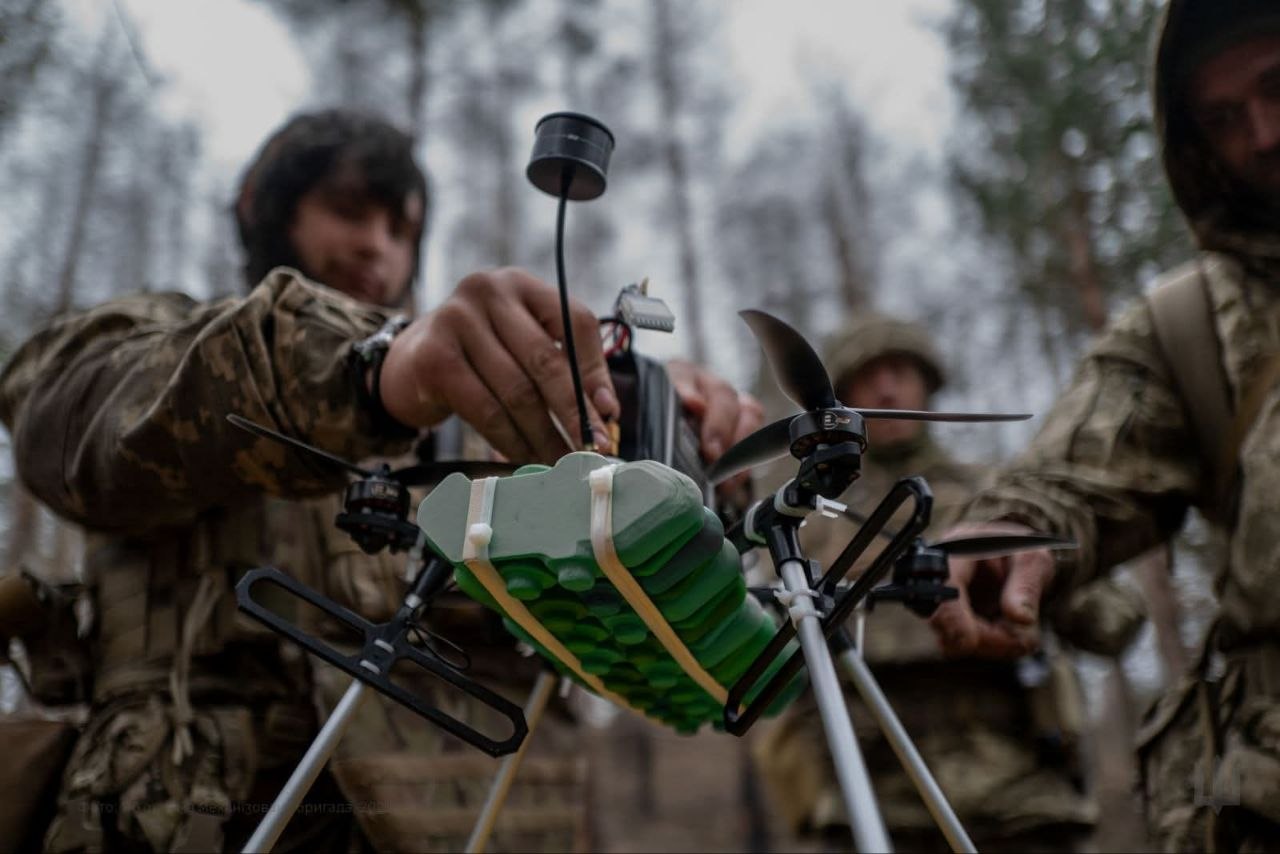
Deputy Head of the Presidential Office Pavlo Palisa told RBK-Ukraine that increased use of attack drones is one of the key reasons for growing losses in the Russian army. This is not a declaration — it is a conclusion based on concrete analysis of operations.
From Parity to Advantage
According to Palisa, in the first half of 2024, Ukraine was far from parity with Russia in the use of attack FPV drones. It was then that a sharp increase in their use by the enemy was recorded, and this directly affected the pace of Russian advancement along the front line.
The situation has changed. Now, according to Palisa's assessment, Ukraine has overall advantage in the use of attack UAVs — if you look at the overall balance across the front.
The Kursk Lesson: Fiber Optics as a Tactical Argument
Palisa separately discussed the analysis of Russia's counteroffensive operation in the Kursk direction. There, the adversary had significant advantage in fiber optic drones — cable-based FPVs that cannot be jammed by any electronic warfare system.
«Partly this is what provided the result they needed»
Pavlo Palisa, Deputy Head of the Presidential Office, in an interview with RBK-Ukraine
This admission is important: not numbers, not aviation — but a specific type of drone in a specific area tipped the tactical scales. Fiber optic FPVs do not depend on radio communication, so electronic warfare systems are ineffective against them. Russia understood this and used it in the Kursk region before Ukraine managed to respond symmetrically.
What Changed on the Front
According to CSIS data, Russia has lost approximately 1.2 million servicemen since February 2022, of which about 415 thousand in 2025. ISW recorded cases where one attack by approximately 500 people cost the adversary up to 405 casualties per day. The pace of advance at the same time — from 15 to 70 meters per day.
According to CEPA analysis, throughout 2025, Russia adapted: relocated equipment, artillery, and command nodes beyond the reach of most Ukrainian short-range drones — approximately 15–20 km from the front line. At the same time, Ukraine is increasing its long-range component: in summer 2025, drones struck Russian oil refineries at distances exceeding 1,800 km.
- FPV drones — dominate in the zone of direct contact, effective against infantry and light vehicles
- Fiber optic drones — immune to electronic warfare, Russia used them systematically in the Kursk region
- Long-range attack UAVs — strike logistics, fuel, and infrastructure deep in the rear
What This Means
Palisa does not speak of a turning point — he describes the mechanics. If superiority in a specific type of drone in a specific area already determined the outcome of the Kursk operation, then the question is not about the overall balance of UAVs, but about who faster saturates the necessary type in the necessary place.
If Ukraine maintains the pace of fiber optic FPV production and closes the gap that Russia exploited in the Kursk region — will this change not only casualty statistics, but also the dynamics in the specific directions where pressure is currently strongest?





