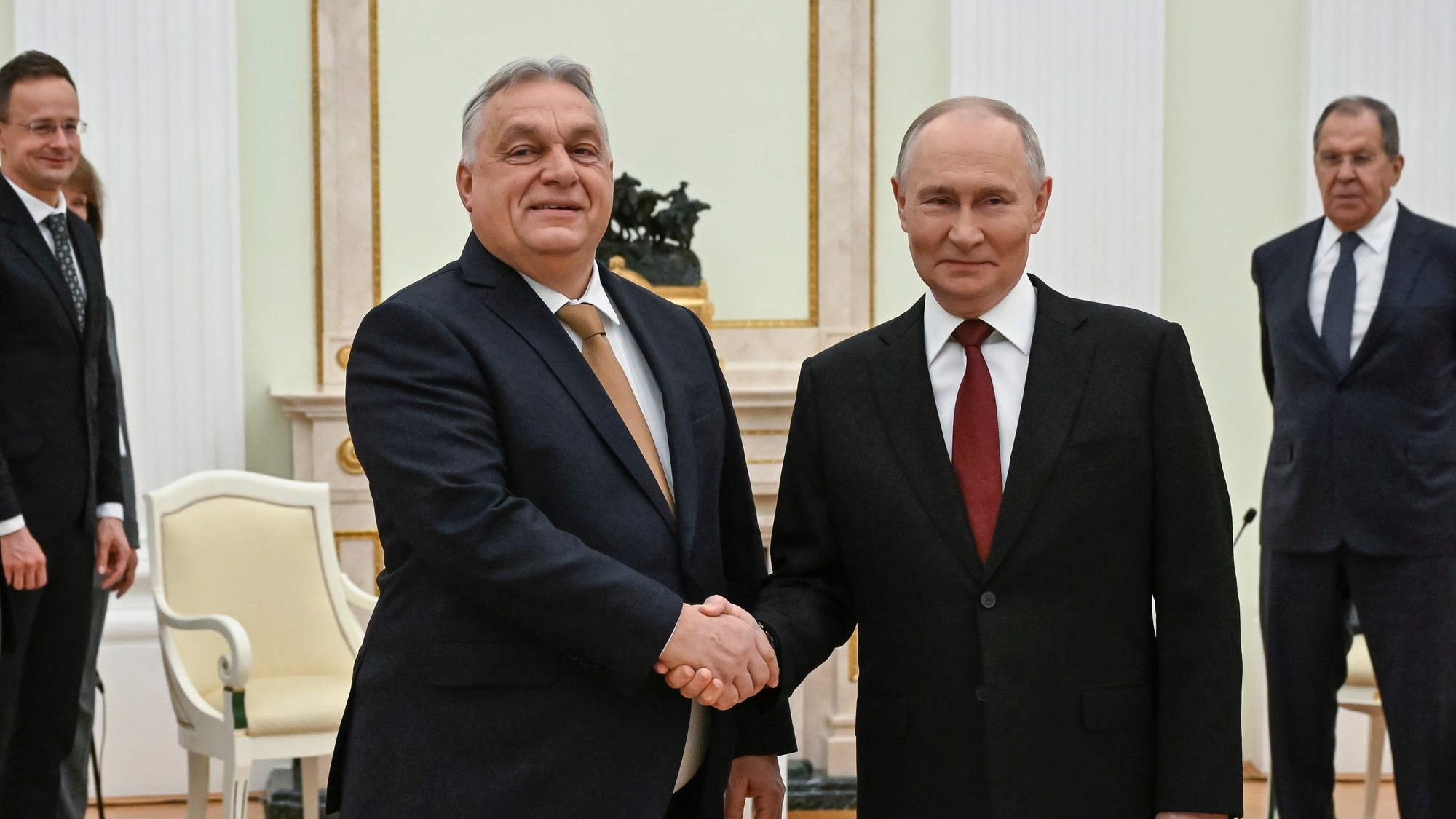
On December 9, 2024, the 16th meeting of the Russian-Hungarian intergovernmental commission on economic cooperation took place in Moscow. The meeting resulted in two documents that have not been published until now. The signatories were Hungarian Foreign Minister Peter Szijjártó and Russian Health Minister Mikhail Murashko. Politico obtained these documents and published their contents.
What's in the 12 points
The agreement covers energy, trade, industry, healthcare, agriculture, construction, culture and sports. In the energy section, cooperation in oil, gas and nuclear fuel is directly fixed — as well as the possibility for Russian companies to implement projects in Hungary in the field of electricity and hydrogen.
Separately, the agreement provides for the expansion of Russian language teaching in Hungarian schools, mutual recognition of diplomas and postgraduate exchange programs. The joint plan in sports is outlined for 2026–2027.
Key detail: in one of the documents, it is directly stated that rapprochement with Russia should not contradict Hungary's obligations as an EU member. This caveat is not a guarantee but a legal safeguard: there is no enforcement mechanism in the text.
Economic context: trade is falling — the plan aims to 'reverse' it
One of the points sets a specific task — "to change the negative dynamics of bilateral trade," which has been shrinking due to EU sanctions. According to the Oeconomus analytical center, in 2023 Hungary imported $6.19 billion worth of goods from Russia — and the figure continued to decline in 2024. Energy resources account for 95.2% of Russian imports into the country.
Hungary depends on Russia for approximately 95% of gas supply and 77% of oil — according to GIS Reports. This level of dependence means that any "revival" of trade essentially means increasing purchases of energy resources, which directly contradicts the EU's course to abandon Russian fuel by 2027.
Budapest's position
"Hungary's bilateral cooperation is guided by national interests, not by pressure from an extremely biased liberal media. Continue your biased work!"
— Peter Szijjártó in response to Politico's inquiry about the documents
Orbán has been blocking the strengthening of sanctions against Russia in the EU Council since 2022. In November 2025, he achieved a personal exemption for Hungary from American sanctions on gas and oil via TurkStream and Druzhba from Trump.
Timeout or systemic strategy
The document became public on the eve of parliamentary elections, in which Orbán faced real competition for the first time in 16 years. Opposition leader Peter Magyar called the agreement a "betrayal" — Orbán in response accused him of intending to drag Hungary into war.
It is notable that the document was signed by the foreign minister, while on the Russian side — by the health minister. The asymmetry of signatories' status — atypical for intergovernmental agreements of this scale — allows Budapest to avoid questions about how official the agreement is as the foreign policy of an EU member state.
In December 2025, the EU bypassed Hungarian and Slovak vetoes and froze Russian assets via Article 122 TFEU — a tool of qualified majority instead of unanimity. This is the first precedent for bypassing a block in sanctions policy. If Brussels applies a similar approach to energy embargoes, the caveat in the Hungarian-Russian plan about "compliance with member obligations" will turn from a formality into a real legal conflict.
Hungary received $250 million in transit fees for pumping 4.7 million tons of Russian oil through Ukraine in 2024 alone — that is, it benefited financially from the war even under sanctions. If the 12-point plan works, and the EU moves from words to a mechanism to enforce energy abandonment of Russia by 2027 — Budapest will face a choice between contracts with Moscow and membership in the common market.





