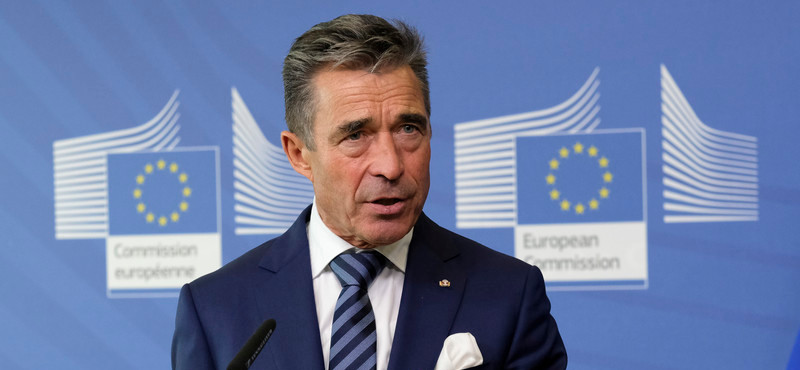
First symbolic coincidence: Anders Fogh Rasmussen unveiled the concept of the "Democratic Seven" (D7) on May 11, 2025 — one day before the Copenhagen Democracy Summit, which he himself founded. Not a coincidental choice of venue for a man who headed NATO from 2009–2014 and understands the weight of symbolic gestures.
The D7 is to include Australia, Canada, Japan, New Zealand, South Korea, the United Kingdom, and the European Union — a combined GDP of approximately $36 trillion, or 30% of the global total. According to Rasmussen, this weight makes it possible to "resist any pressure, even from global hegemons."
Not a club, but a concentric system
The key difference from previous ideas of "coalitions of democracies" is that the proposed architecture does not require unanimous consensus. D7 is conceived as an "vanguard," around which circles of associated members and partners form, joining individual initiatives by their own choice. This is precisely how, as Rasmussen explains in a column for LIGA.net, the "Coalition of the Determined" on Ukraine already works — launched by Prime Ministers Starmer and Macron in March 2025 and now uniting 34 countries. It operates outside NATO's consensus structure, but relies on NATO infrastructure, personnel, and planning.
The United States in this scheme is not a founder. Washington may join as an associated member within individual coalitions or, "if it changes political course," become a full participant in the core. The rupture is unprecedented: for the first time in 80 years, the architect of transatlantic security is publicly designing a system in which America is an option, not the axis.
Four parallel blocks
The concrete content of the proposal consists of four functional directions to work simultaneously:
- Defense mechanism — based on the experience of the "Coalition of the Determined" on Ukraine.
- Democratic technology initiative — shared standards, export controls, and investment in AI, quantum technologies, and space.
- Critical raw materials strategy — breaking China's monopoly on rare earth element processing.
- Coordinated global investment — an alternative to China's "Belt and Road" initiative.
It is precisely the technology and raw materials blocks that represent the most non-trivial part of the concept. NATO as an institution lacks the tools to coordinate semiconductor export controls or joint lithium mining. D7 claims this niche.
Where Ukraine fits in
Rasmussen directly calls the Ukrainian experience "critically important for forming a new alliance." From weapons logistics to coalition planning without a single command center — this model, in his words, is the prototype for D7. This is not merely a moral argument: Ukraine has become a testing ground for whether a decentralized coalition can hold a front against a nuclear-armed state.
"The authoritarian axis is consolidating. This is clearly visible on the battlefield in Ukraine, where not only Russians are fighting, but also North Korean soldiers and Iranian drones."
Anders Fogh Rasmussen, LIGA.net
The main practical gap in the concept is the absence of a decision-making mechanism. Rasmussen describes principles and goals but does not explain how seven different legal and parliamentary systems will make decisions about, for example, shared export controls or force deployment. The "Coalition of the Determined" so far exists as an informal forum — without a charter, without a budget, without a mechanism for sanctions for non-compliance.
If D7 remains a declaration of principles — it will add to the long list of "new security architectures" born in moments of crisis and quietly dissolved. But if by the end of 2025 at least three of the seven participants sign a legally binding document — if only in the technology or raw materials block — the concept will cease to be a columnist's idea and become a negotiating factor.





