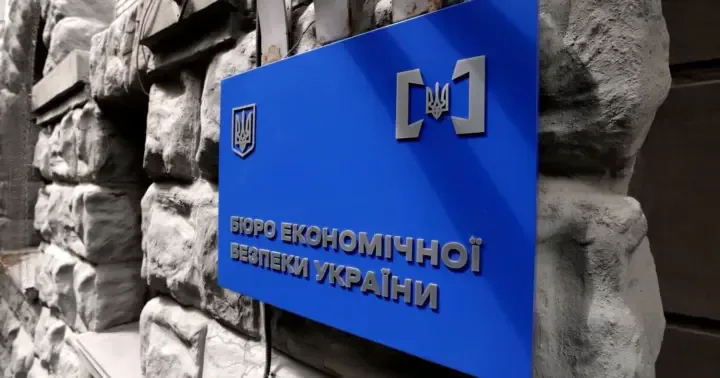
On May 28, the Office of the General Prosecutor confirmed the detention of two employees of the Bureau of Economic Security of Ukraine — a senior detective from the Kyiv territorial office and an analyst from the central apparatus. According to the investigation, both had turned their official powers into a source of income: the first traded in threats of criminal prosecution, the second in access to a fuel storage license.
How the scheme worked
The detective from the Kyiv territorial office demanded $15,000 from a man with a prior conviction in a counterfeit money case. An important element of the scheme — to organize meetings, he used official summonses for investigative actions. That is, a procedural tool intended for investigation was turned into a pressure mechanism. After receiving the first installment — $10,000 — no actual procedural actions took place. The detective was arrested while receiving the second payment.
The analyst from the central apparatus, who had previously worked in tax authorities before joining BEB, operated more cheaply: $2,000 for assisting an enterprise in obtaining a fuel storage license. A smaller amount — the same logic: access to administrative resources as a service.
This is not the first similar case. In early January 2025, a senior BEB detective was detained in Zakarpattia, who, through an intermediary — a local village council deputy — systematically collected bribes from entrepreneurs trading in excisable goods. Danylo Hetmantsev, head of the VR committee on finance, wrote directly at the time:
"The scheme could not have worked without at least the head of the regional BEB."
Danylo Hetmantsev, head of the parliamentary finance committee
What deputies are demanding — and where their authority ends
Following the new detentions, MP Vatras announced the need for a large-scale audit: an audit of criminal cases, checking the legality of their opening. But there is a fundamental clarification here, which the deputies themselves voice: "all of this is within the authority of the prosecutor's office." That is, parliament cannot conduct such an audit independently — it can only apply public pressure on the prosecution.
The question is whether the prosecutor's office has real motivation. BEB and OGP are formally different institutions, but many BEB cases are accompanied by prosecutors. An audit of cases would mean reviewing their own work as well.
The context of a reform that is not yet complete
Both detainees are a product of the old recruitment system: the analyst came from tax authorities, the detective worked in a regional office. According to ZN.UA, BEB remains critically understaffed — the 2024 reform law required attestation of all employees, but while staff prepare for tests and gather documents, the agency's resources are spent on internal reboot processes rather than investigations.
The competition for a new BEB director, where the final say belongs to international experts, has not yet been completed. Effective work of the agency is one of the IMF's beacons. But while procedures continue, mid-level detectives continue to work in the old logic.
- Detective from the Kyiv territorial office — demanded $15,000, qualification: Part 3, Article 368 of the Criminal Code (receipt of unlawful benefit in a large amount)
- Analyst from the central apparatus — $2,000 for assistance with a license; previously worked in tax authorities
- Detective from the Zakarpattia territorial office — systematic bribes from traders of excisable goods, detained in early 2025
An audit of BEB criminal cases is technically feasible. But if the prosecutor's office initiates a review of cases where it itself served as the procedural supervisor, the result depends not on the law, but on whether international partners are willing to make this a condition of further reform support.





