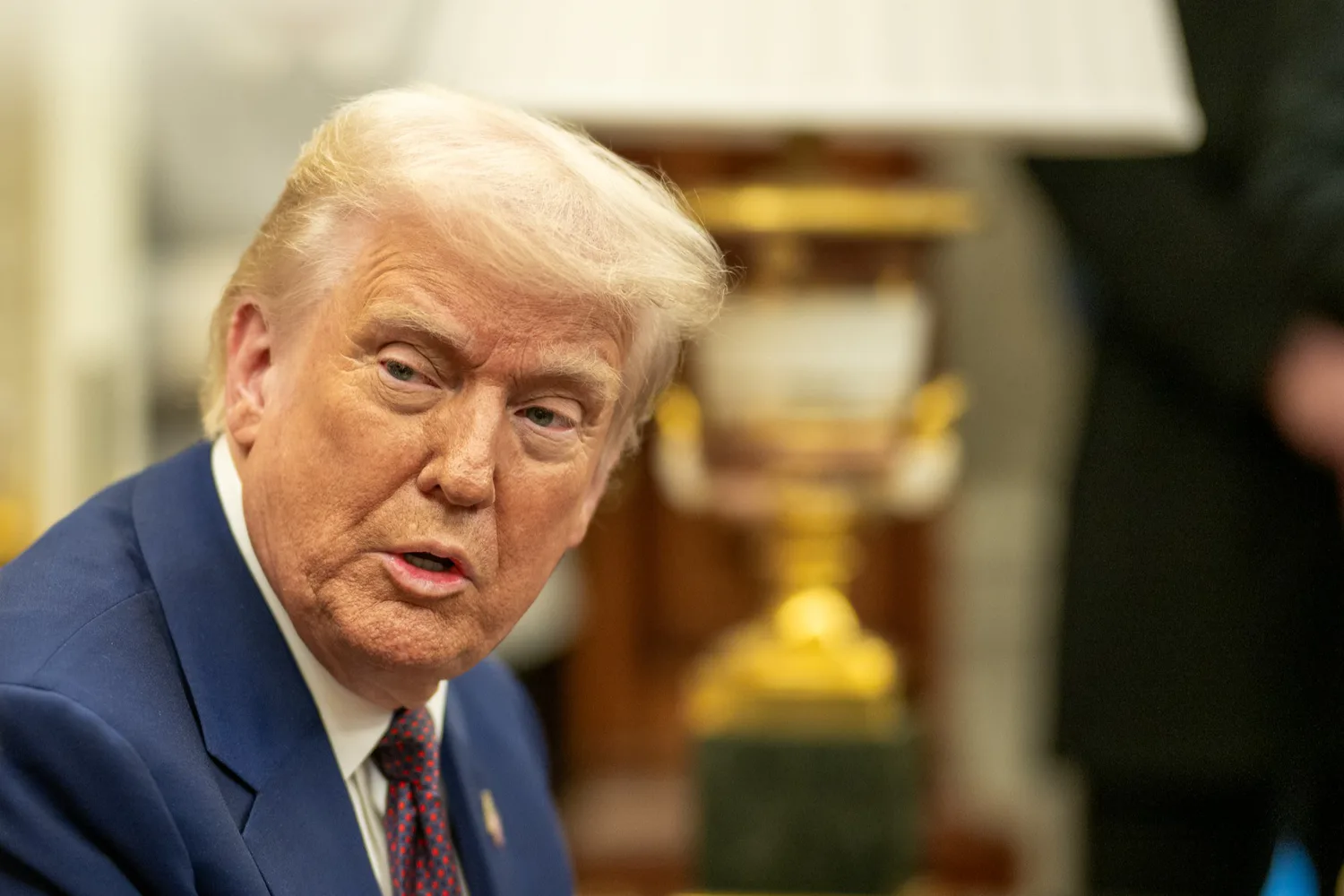
When White House officials, a few days before the G7 summit in Kananaskis (Canada, June 15–17, 2025), told Reuters about a "working session" between Trump and Zelensky, the caveat was already embedded in the phrasing: a bilateral meeting was not planned. As it turned out, it never took place — and for a reason that the briefing did not anticipate.
How it was prepared and what happened
The White House announced a packed schedule: separate meetings with the leaders of Egypt, Qatar, the UAE, France, and India, a joint working session with the Ukrainian delegation, a working lunch with leaders of tech companies specializing in artificial intelligence. The agenda looked broad — economic growth, supply chains, AI, energy security.
But by June 16, Trump left the summit early to return to Washington due to an escalation of the Israeli-Iranian conflict. According to Kyiv Independent and Atlantic Council, the planned bilateral meeting with Zelensky did not take place. Zelensky, in turn, also shortened his stay in Canada — due to a nighttime Russian missile strike on Kyiv — and canceled a planned press conference in Calgary.
The summit ended without a joint statement supporting Ukraine, without commitments to provide American weapons, and without a meeting between the presidents.
Kyiv Independent, on-the-ground reporting
What G7 did adopt — and what is missing
In the concluding summary, the G7 presidency recorded: Ukraine agreed to an unconditional ceasefire, Russia did not. Leaders would "examine all options" for pressure on Moscow, including financial sanctions. Approximately $300 billion in frozen assets of Russia's Central Bank remain under arrest — and G7 confirmed: the assets will be returned only after compensating Ukraine for damages.
Separately — critical minerals: leaders adopted a G7 action plan to diversify the production of strategic raw materials needed for digital and energy security. For Ukraine, this is directly linked to post-war reconstruction: the country has significant rare earth metal reserves, but access to them is blocked by war.
What this means in numbers
Economic context adds urgency to diplomatic symbols. According to the Kyiv School of Economics (KSE Institute), Ukraine's financial gap for 2025–2028 is approximately $53 billion — and that is only for maintaining macroeconomic stability, without full reconstruction. The IMF estimates financing needs for 2026–2029 at $65 billion.
Dragon Capital's chief economist Olena Bilan, in an updated forecast, emphasizes: the baseline scenario is the continuation of active hostilities. In this scenario, Ukraine's real GDP will slow to 1.5% in 2026 and to 0.5% in 2027. An alternative scenario — a prolonged ceasefire — provides moderate growth of 3.5% and 5% respectively, but only if two structural problems are solved: an electricity deficit and a shortage of labor.
Meanwhile, as the Center for Economic Strategy notes, in 2025 the United States essentially converted its military support for Ukraine into a commercial procurement scheme — making any informal agreements between Trump and Zelensky even more important than protocol documents.
A format without guarantees
The situation that unfolded in Kananaskis reflects a broader structural problem: G7 as a platform for coordinating positions increasingly depends on how willing the United States is to participate in joint documents. This time — it was not willing. The summit ended with a "shortened joint statement" without full approval from the American side, which became a precedent.
For Ukraine, this means that economic support in 2025 will rest primarily on the structure of the G7 ERA loan, backed by income from frozen assets ($50 billion, agreed as far back as October 2024) — rather than on new agreements from this summit.
If Trump and Zelensky do hold a bilateral meeting by the end of summer — the question is whether there will be something more concrete on the table than the formula "we will examine all options": in particular, the resumption of direct American military supplies and U.S. participation in a mechanism to monitor a possible ceasefire.







