As of 2025–2026, Europe spends €392 billion on defense — 43% more than in 2021. The figure is striking. But there is a detail usually lost in the headlines: 75% of these funds go to purchases outside the EU — mostly to the United States. The money is there, but there is a lack of its own industrial base capable of absorbing it.
Paper endures, projects stall
In February 2026, the European Parliament Research Service (EPRS) published an assessment of PESCO — the EU framework program for joint development of defense capabilities. The conclusion proved uncomfortable: most projects launched in 2017 remain in the "design" or "execution" stage — after nearly nine years of work.
In parallel, economists from the Bruegel Institute Ethan Kapstein, Javier Ospital, and Guntram Wolff discovered another structural bottleneck in March 2026: in key EU countries, fewer than 30% of defense contracts go to companies outside the top ten major contractors. Startups and small businesses, where real technological innovation today is concentrated — drones, AI, communication systems — are effectively cut off from government contracts.
"Defense procurement in Europe must adapt to encompass innovative startups and small firms — they are precisely what modern battlefield needs."
— Kapstein, Ospital, Wolff. Policy Brief 04/2026, Bruegel
This is not abstract criticism. According to the U.S. Army Research Service, as of mid-2025, 70–80% of combat losses — killed and wounded on both sides — are inflicted by unmanned systems. The technological revolution has already happened; the question is only who managed to rebuild production.
What Ukraine accomplished in three years
At the start of the full-scale invasion, Ukraine produced 3,000 to 5,000 FPV drones per year. In 2025 — approximately 3 million. Annual capacity already exceeds 8 million units, monthly output grew from 20,000 in early 2024 to 200,000 by year-end. More than 160 companies produce FPV drones.
Ukraine's overall defense-industrial potential, according to government estimates, reached $35–55 billion — this is 55 times more than at the start of the war. More than 70% of defense purchases in 2025, Kyiv made from domestic producers. Foreign financing of the Ukrainian defense-industrial complex grew from $600 million in 2024 to $6.1 billion in 2025 — primarily through the "Danish model," which allows partners to directly finance production in Ukraine.
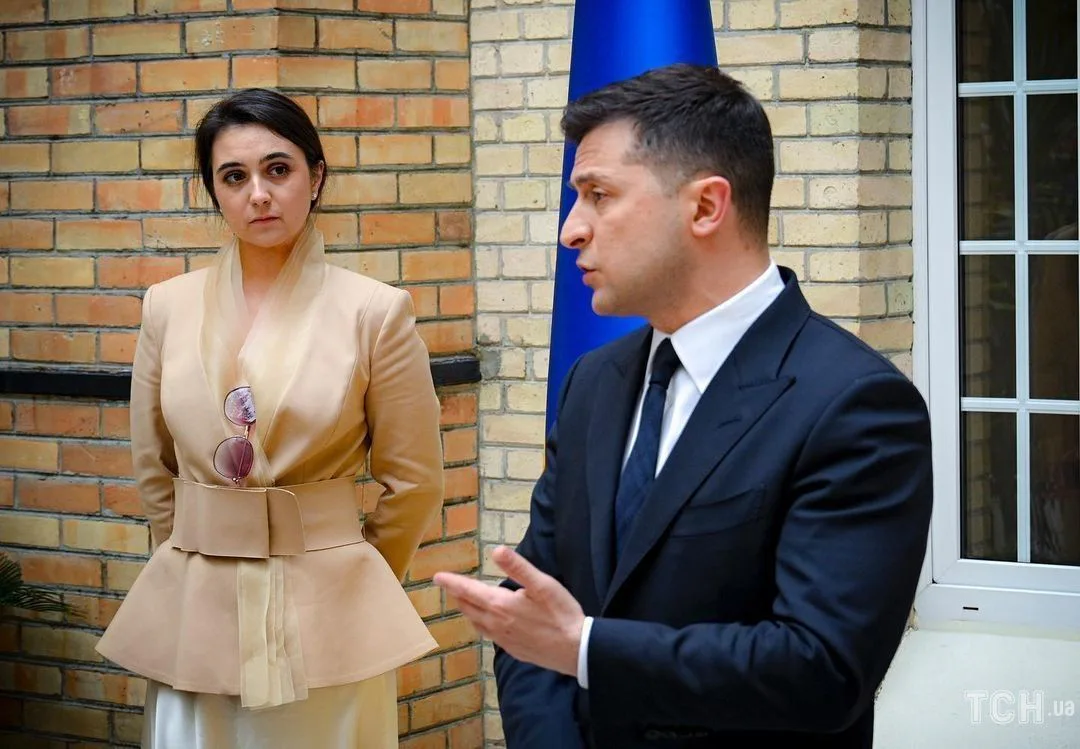
At the Eurosatory 2026 exhibition, Ukraine presented 80 defense companies — compared to 10 two years earlier. This is not a PR gesture: in early 2026, Zelenskyy announced the opening of ten Ukrainian defense export centers in Europe.
Where two deficits meet
The problem identified by Heidi Crebo-Rediker, senior fellow at the U.S. Council on Foreign Relations, is not the absence of a product: Ukraine has engineers and battle-tested technologies, but lacks capital, certification, and integration into NATO and EU procurement ecosystems. That is, Ukraine has an excess of proven innovation without market access; Europe has an excess of money without access to rapid innovation.
The EU is trying to bridge the gap institutionally. The European Defense Fund in 2025 allocated €1.07 billion for 57 joint R&D projects — with an emphasis on drones, autonomous systems, and AI. The EUDIS program provides another €1.5 billion for 2025–2027 for defense startups. The French innovation agency AID announced in February 2026 a joint grant program with the Ukrainian defense innovation cluster.
- €392 billion — EU defense spending in 2025–26, but 75% goes outside the bloc
- 8+ million FPV drones — Ukraine's annual capacity in 2026
- $6.1 billion — foreign financing of Ukrainian defense-industrial complex in 2025 (×10 per year)
- <30% — share of EU defense contracts going to non-top-10 contractors
The real question is not whether Europe recognizes changes on the battlefield — it does. The question is whether procurement rules will change faster than the budget cycle turns €392 billion into another contract with Rheinmetall or Boeing. If the share of small and medium-sized producers in EU defense contracts does not grow from the current 30% to at least 50% by 2027 — the "Danish model" will remain an exception, not a new norm.