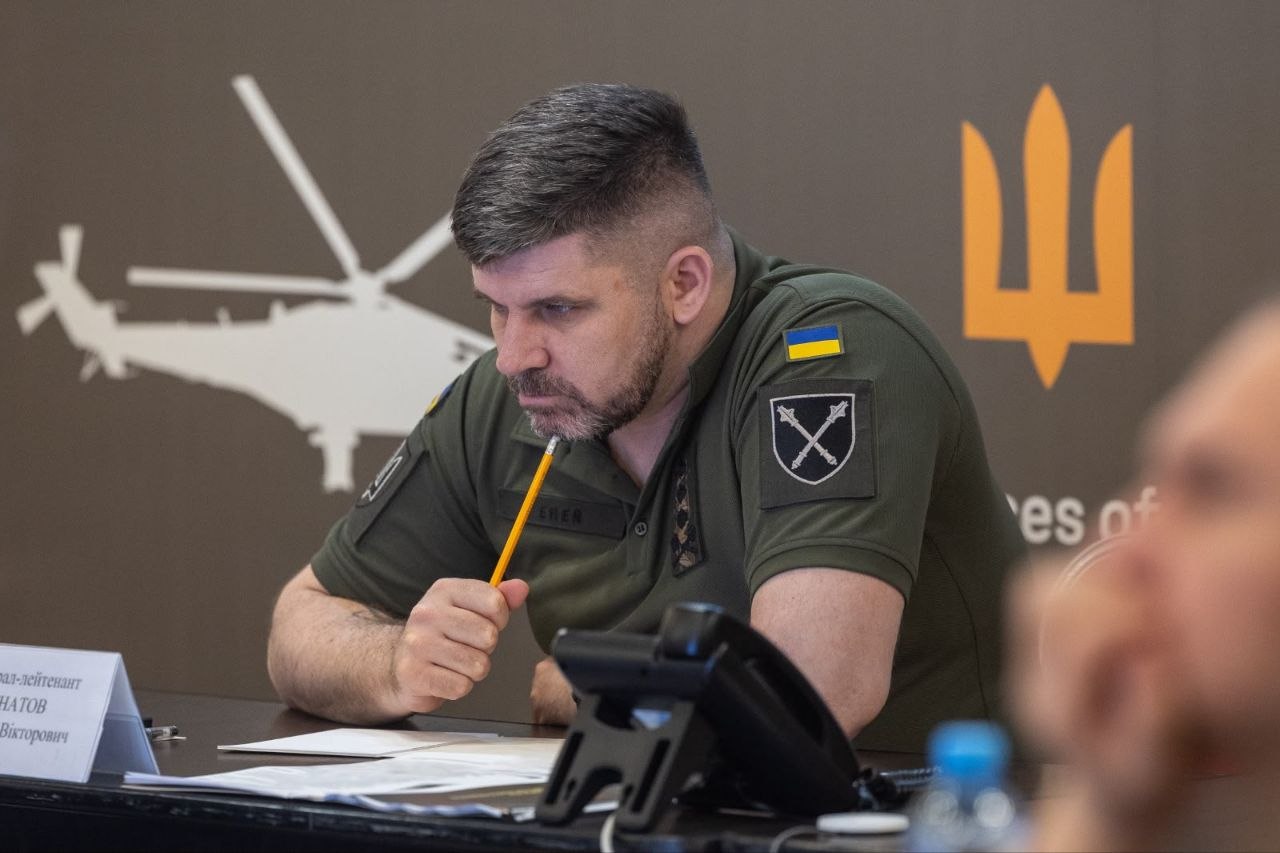
Chief of the General Staff of the Armed Forces of Ukraine Andrii Hnatov refuted the central thesis of former Defense Minister Mykhailo Fedorov in an interview with 24 Channel — that Commander-in-Chief Oleksandr Syrskyi gave the president an ultimatum regarding the minister's dismissal.
"I am 100% confident that such a situation did not occur even approximately"
Andrii Hnatov, Chief of the General Staff of the Armed Forces of Ukraine
According to Hnatov, he personally did not observe any personal conflict between Fedorov and Syrskyi — only professional disagreements over jurisdiction, which, in his opinion, arise between any adjacent government agencies.
What Actually Divided the General Staff and the Defense Ministry
The answer lies in the details that emerged after the resignation. Fedorov publicly admitted at a briefing on July 16: the reforms he proposed were blocked by the General Staff. At the same time, observers noted a contradiction in the former minister's own position: there was no specific legally prepared reform plan at the Defense Ministry — there were only initiatives. Hnatov, by the way, personally signed the contract proposed by the ministry — this contradicts the image of monolithic sabotage by the General Staff.
According to NV, Fedorov spent the first six months in active reform mode: he initiated an audit that revealed overspending of 300 billion hryvnias, introduced polygraph checks, and transferred part of procurement to open tenders. However, the first package of changes began to be implemented only in June — half a year after his appointment.
The Price of Public Conflict
Fedorov's statement about the ultimatum provoked protests: on July 17, more than 10,000 people gathered in Kyiv, with rallies spreading to more than a dozen cities and Warsaw. Zelensky did not change his decision. Syrskyi apologized publicly — but only formally, avoiding debate on the substance.
- Fedorov: Syrskyi "figured out how to split the country" and blocked reforms through intrigue
- Syrskyi: "my job is war," appointments are based on results, not loyalty
- Hnatov: there was no ultimatum, the conflict is only professional
All three versions do not contradict each other in facts — they contradict in the interpretation of the same events. This is the essence of the crisis: not a personal conflict between two officials, but the absence of a clear mechanism for delineating authority between the Defense Ministry and the General Staff during active war.
If the next defense minister takes office without a prescribed protocol of interaction with the General Staff — the same collision will repeat itself, regardless of who occupies the positions.







