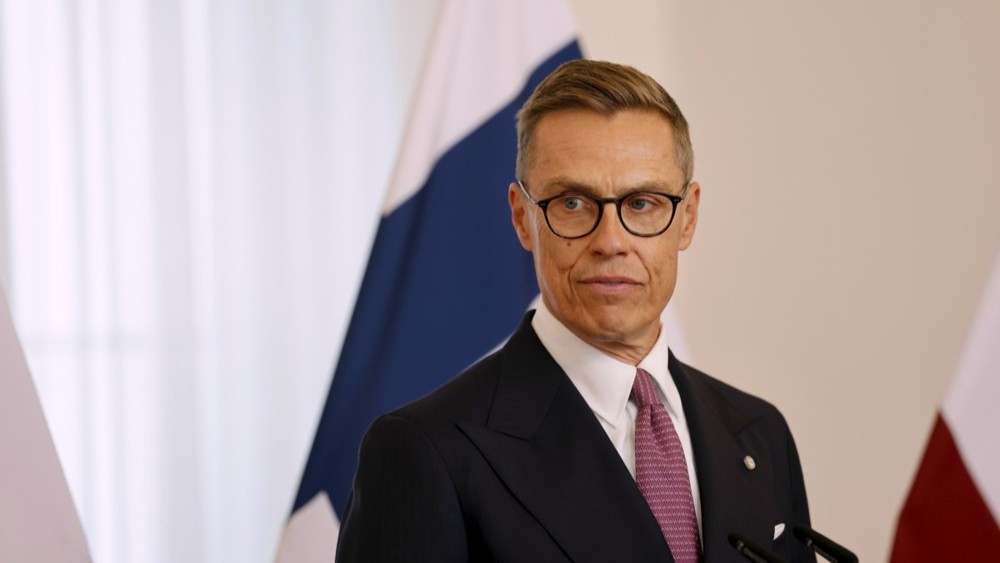
Alexander Stubb spoke at an energy conference with a thesis that sounds more like a provocation for discussion than a roadmap. The European Union, according to him, should transition from 27 to 40 states — and do so while the "window of opportunity" is still open.
"Now we need to think big and geographically. We need to expand or at least create membership mechanisms flexible enough to encompass a total of 40 states — or even non-European ones"
Alexander Stubb, President of Finland, CNBC
Stubb's list included Ukraine, Moldova, Georgia, Great Britain, Norway, Iceland, Turkey, Western Balkan countries — and Canada. The latter candidate sounds like a deliberate provocation at Trump's address: "Wouldn't it be wonderful if Canada became the 28th EU member instead of becoming the 51st US state?"
What's behind this
The idea did not emerge in a vacuum. Pressure from the Trump administration on allies and Russia's full-scale invasion prompted a number of countries to reconsider the value of EU membership. This is precisely what Stubb calls a "time-limited opportunity" — a window that may close after the war ends or an administration change in Washington.
Stubb directly appeals to the logic of scale: "European strategic autonomy is often based on scale, and the best European policy ever was enlargement". This is not a new thought — but it is rarely expressed with such geographical boldness.
What the figures and analysts say
The economic argument for enlargement does indeed exist. World Economic Forum analysts recall: Central and Eastern European countries grew on average 4% per year from the start of the negotiation process through 2008, and the accession process itself generated 3 million new jobs per six-year cycle.
Regarding Ukraine specifically, CEPS researchers note that free movement of labor and capital after accession could substantially close the labor resource deficit in receiving EU countries — and that Ukraine already has a higher level of higher education coverage than the EU average.
However, Capital Economics analysts cool the optimism: according to their estimates, Ukraine and most Western Balkan countries are unlikely to join the EU before the mid-to-late 2030s. For the Union itself, eastern enlargement would provide greater geopolitical rather than economic gains.
What is not said aloud
The European Commission did not respond to CNBC's request. This is characteristic silence: the official Brussels is currently negotiating with nine candidate countries and struggling to overcome internal contradictions over budget reform and the veto right. Turkey, which Stubb mentioned separately, has effectively frozen accession negotiations for over a decade.
The very idea of "flexible membership" that Stubb is promoting has no institutional framework yet. The Copenhagen criteria — a functioning market economy, rule of law, stable institutions — are the same for everyone, and EU treaties provide for no "simplified track".
If the EU truly wants to seize the geopolitical moment, a decisive test will not be the number of those willing on Stubb's list, but whether by 2026 there will be a concrete mechanism of "flexible membership" — without which the idea remains a beautiful speech at a conference.





