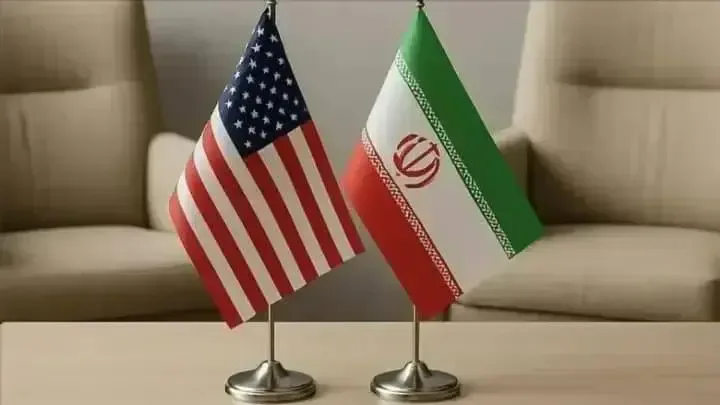
Pakistan's Prime Minister Shehbaz Sharif announced on Sunday on social media X that a peace agreement has been reached between the United States and Iran. According to him, both sides declared an "immediate and sustained cessation of military operations on all fronts, including Lebanon." Official signing is scheduled for June 19 in Switzerland. Trump confirmed the agreement on Truth Social. However, there is a vast gap between the declaration of peace and verifiable commitments.
What's in the document
According to the published terms of the memorandum, Iran opens the Strait of Hormuz for commercial shipping within 30 days — approximately 20% of the world's oil passes through it. In response, the US lifts its naval blockade of Iranian ports and commits not to impose new sanctions until a final agreement. The ceasefire lasts 60 days, during which technical negotiations should take place.
According to Iranian agency Tasnim, Tehran agrees to freeze uranium enrichment and the expansion of nuclear facilities, and commits to never producing nuclear weapons. The US allows Iran to dilute its existing highly enriched uranium reserves on its own territory rather than export them. Additionally, the document provides for the unblocking of approximately $25 billion in Iranian assets and the restoration of oil exports.
Any agreement that does not include inspection provisions will be an illusion of an agreement.
Rafael Grossi, Director General of the IAEA
What's left out
The main problem with the document is the absence of a verification mechanism. The IAEA has had no access to Iranian nuclear facilities since June 13: after US and Israeli strikes, Tehran passed a law prohibiting the agency's inspectors from entering the country. As a result, no independent assessment of Iran's nuclear program is currently possible.
The memorandum leaves aside the question of 440 kg of enriched uranium stored in Tehran: negotiations on these reserves are postponed for the 60-day period after signing. Neither a specific control mechanism for the nuclear program nor an equivalent of the Additional Protocol to the IAEA, which operated under the JCPOA, is spelled out in the document.
According to ABC News and NBC News, the agreement has been approved at high levels of the Iranian government — but Supreme Leader Mojtaba Khamenei has not yet signed it. This detail matters: the same level of Iranian leadership previously approved a draft memorandum in late May, after which Trump added new nuclear demands — and the process stalled.
- Strait of Hormuz — opens within 30 days of signing
- Uranium enrichment — frozen until final agreement, without a named inspection mechanism
- 440 kg of enriched uranium — remains in Tehran during the 60-day negotiations
- Sanctions — eased in stages subject to fulfillment of obligations
- Israel — formally not included in the agreement; Prime Minister Netanyahu expressed concerns to Trump about the conditions, particularly the cessation of hostilities against Hezbollah, according to Axios
Reactions from all sides
Pakistan, Qatar, Saudi Arabia, and Turkey welcome the agreement as a diplomatic breakthrough. Britain, Germany, and France support the ceasefire but insist on complete dismantling of the nuclear program, restrictions on ballistic missiles, and the return of inspectors. British Prime Minister Keir Starmer called the restoration of freedom of navigation through the Strait of Hormuz a priority.
The Iranian side has neither publicly confirmed nor denied the details of the document — official Tehran only stated that "it is premature to speak about the exact signing date." Meanwhile, security adviser Shamkhani characterized nuclear negotiations with the US as a "deceptive plan."
The memorandum is a framework, not an agreement. If during the 60-day negotiating window the parties fail to agree on a nuclear program verification mechanism acceptable to both Tehran and the IAEA, the signing in Geneva will prove to be merely another ceasefire with a time limit — not an end to the conflict.





