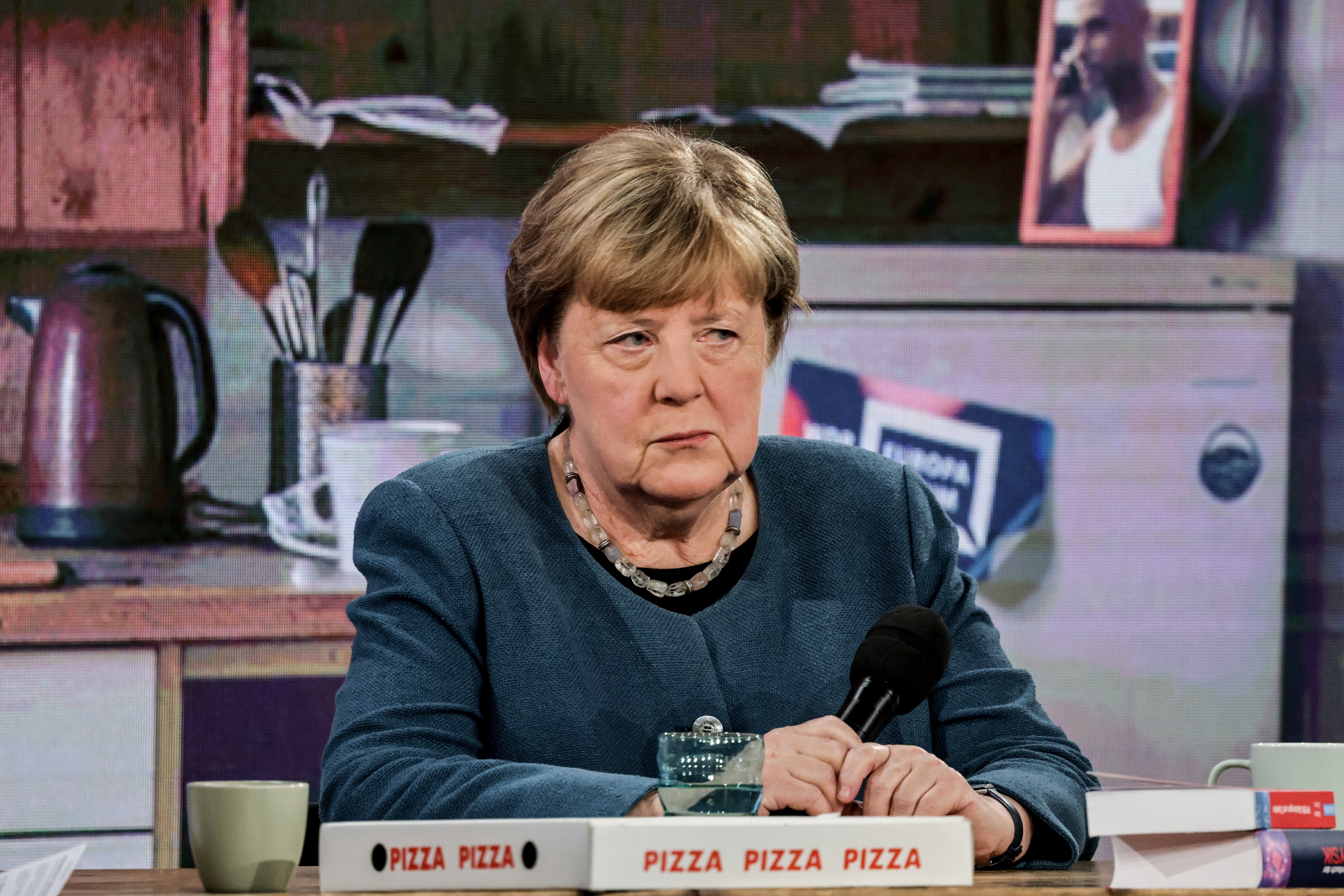
Angela Merkel served as Chancellor for 16 years and personally led the Minsk negotiations in 2014–2015. So when she says that the European Union is squandering its diplomatic influence, it is not abstract criticism. It is an assessment from someone who knows what a real negotiating room looks like.
What Merkel said
In an interview with broadcaster WDR, cited by Politico, the former German Chancellor stated that peace negotiations with Russia regarding Ukraine should be led by current officials from European states, not external mediators. She criticized the EU for failing to use its diplomatic potential to end the war.
"I believe the military support we have provided so far is absolutely correct. [...] But we must take this into our own hands" — and by "we," Merkel meant those currently in power.
Angela Merkel, WDR interview
According to Merkel, times have changed: Europe must now act as a real deterrent to Russia — building up its defensive capacity and supporting Ukraine while maintaining diplomatic channels. "We did not achieve success, but attempts to prevent the invasion were not a mistake," she said, commenting on her own pre-war policies.
Paradox: She herself is a candidate
While Merkel calls on current leaders to act, behind the scenes in the EU she herself is being considered as a potential envoy for negotiations with Moscow — precisely because of her personal contacts with Putin and Zelensky, according to Spiegel citing sources in European political circles. Other candidates mentioned include Finnish President Alexander Stubb and former Italian Prime Minister Mario Draghi.
Merkel's office confirmed that no official requests for such a role have been received. They declined to answer whether she would accept.
EU foreign policy chief Kaja Kallas took a hardline stance: it would be "not very wise" to allow the Kremlin to dictate the negotiator's candidacy. According to three EU diplomats, Kallas herself has effectively ruled herself out as a possible envoy due to her anti-Russian reputation. Munich Security Conference Chair Wolfgang Ischinger emphasized that a mediator must have broad support in the EU — particularly from Eastern Europe and the Baltic states.
Reaction from Eastern Europe
Reactions to Merkel's interview itself proved divided. Former Latvian Prime Minister Krišjānis Kariņš stated that "one cannot act in good faith with Putin" and accused Merkel of ignoring Baltic concerns. Estonia's Foreign Minister Margus Tsahkna noted: "Russia itself is responsible for this aggression" — rejecting any interpretation that places part of the blame on the West.
- Merkel personally led the Minsk negotiations in 2014–2015 — and critics consider them failed precisely because they did not stop the war but only postponed full-scale invasion.
- Putin proposed involving former Chancellor Gerhard Schröder in negotiations — a proposal rejected by both Berlin and Brussels.
- The biggest problem in choosing a negotiator, according to Politico, is not Russia's or Ukraine's position, but Europe's inability to agree on a single candidate.
Merkel's declaration that Europe "must take this into our own hands" contains no mechanism: no mandate, no format, no definition of who specifically should sit at the table. It is a diagnosis, not a plan.
If the EU does not agree on a candidacy with broad support — including from Eastern Europe — by the end of the month, when foreign ministers are to discuss the envoy question, Brussels risks remaining a bystander in negotiations that will determine the continent's security architecture going forward.





