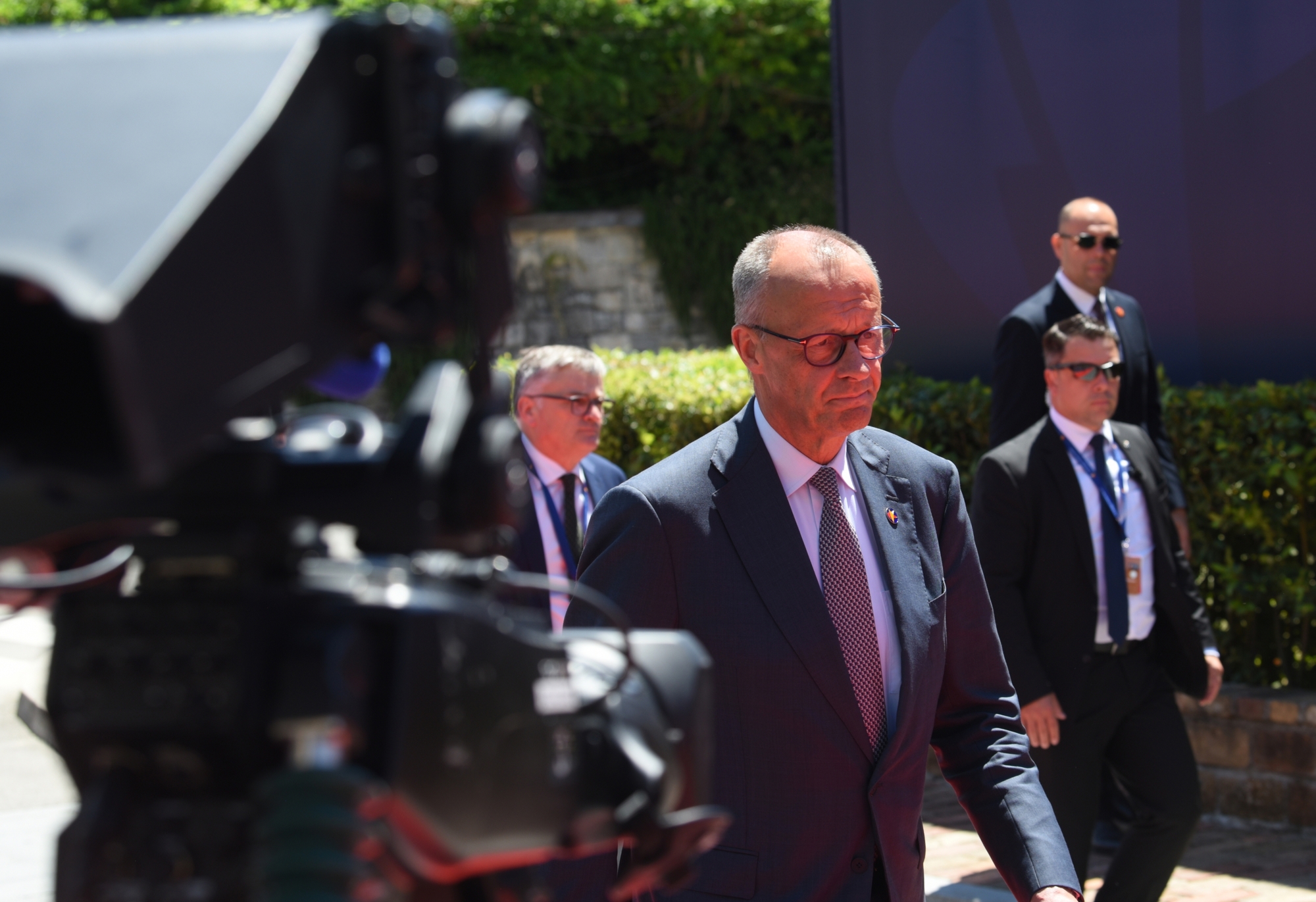
On June 5 at the EU-Western Balkans summit in Tivat (Montenegro), German Chancellor Friedrich Merz articulated what is usually discussed cautiously in Brussels: the problem of enlargement lies not only with candidate countries. "There are also gaps on the EU's side," he said, referring to a procedure that requires over 100 steps and unanimous approval from all member states for each of more than 30 negotiating chapters.
What Berlin and Paris Proposed
Before the summit, France and Germany sent a joint document to the European Commission and member states. Its essence is "staged integration": candidates gain access to EU programs, institutions, and the single market according to the reforms they have actually implemented, even before formal accession.
According to Merz, he and Macron came to Tivat together specifically with this idea. As Euronews reports, the document proposes that the European Commission develop concrete "building blocks" for each candidate country: privileged access to the single market and observer status in EU bodies — in exchange for progress on reforms.
"Enlargement remains one of the Union's most attractive instruments. But this policy needs a new impetus."
From the Franco-German document released on June 4
A crucial detail: achieved progress is reversible — if a country retreats from reforms or violates EU fundamental values, access can be revoked. This is a built-in pressure mechanism that the current methodology lacks.
Montenegro as a Test Case
Symbolically, the summit took place here: Montenegro is the only country in the region where the EU has already established a working group to prepare an accession treaty. The motto "28 by 28" (that is, the 28th member by 2028) is literally painted on the fuselages of the national airline's planes. However, as analysts note, the state of Montenegro's judiciary and public administration lags behind even Serbia — making its membership more of a symbolic precedent than an automatic success.
Ukraine and the Balkans in One Document
The Franco-German proposal covers not only the Balkans — it also concerns Ukraine and Moldova. This is important context: Brussels faces pressure to accelerate Kyiv's membership, while Balkan candidates who have met conditions for years feel sidelined. The staged model theoretically resolves this contradiction — but only if the "building blocks" are the same for everyone.
- Streamlining the procedure: consolidating some of the over 100 procedural steps, opening all negotiating chapters at once after the Commission's recommendation
- Access to the single market before full membership — as an incentive, not a gift
- Observer status in EU institutions at an intermediate stage
- Reversibility of any preferences in case of backsliding on reforms
The document has been submitted to the European Commission — but there is currently no specific mandate to develop a legislative framework. If the Commission does not receive it by year's end, the Franco-German initiative risks repeating the fate of previous "new impulses" — remaining merely a declaration on the margins of the summit.





