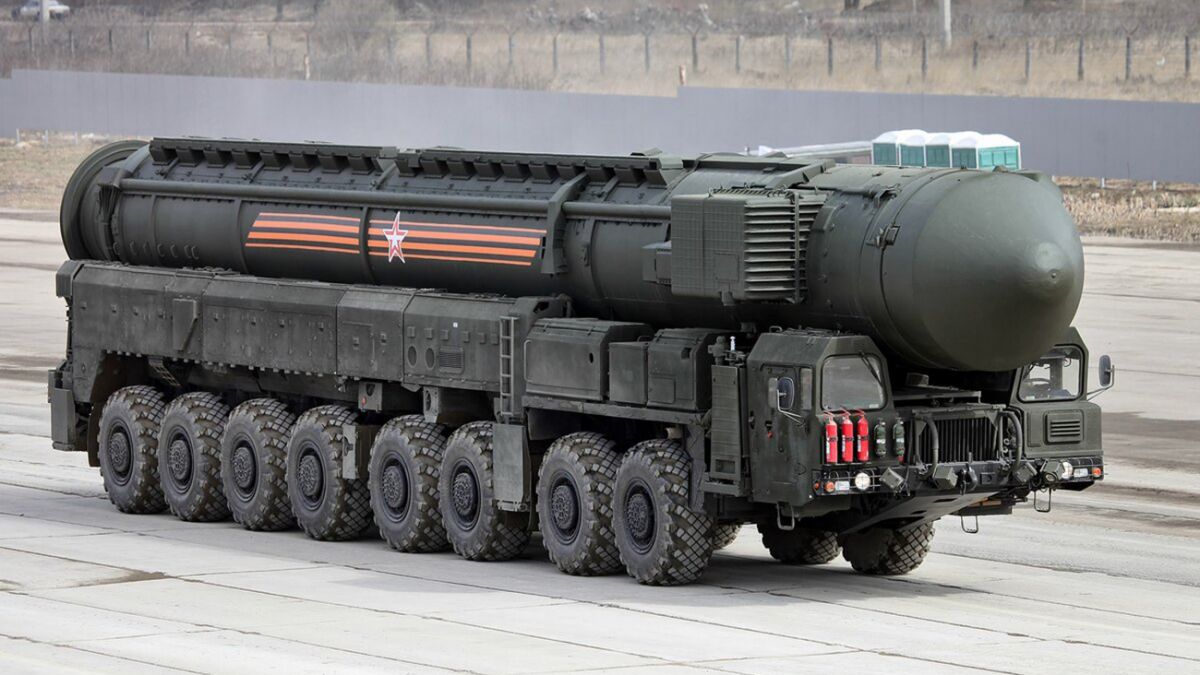
Russia is using hypersonic cruise missiles "Zircon" and medium-range ballistic missiles "Oreshnik" not to destroy critical infrastructure — but to influence the psychological state of society and demonstrate its capabilities to the West. This is how the Chief of the General Staff of the Armed Forces of Ukraine Andriy Hnatov characterized the logic of missile terrorism in an interview with LIGA.net.
"Oreshnik": three launches, zero damage, maximum propaganda
According to Hnatov, the occupiers have already used "Oreshnik" three times against Ukraine — once in 2024 and twice in 2026. All three launches were carried out from the Kapustin Yar test site. These strikes did not cause significant destruction, but the Russians actively use each launch in propaganda — primarily as a signal to Ukraine's partners in the West.
This conclusion is confirmed by the position of analysts. As the Jamestown Foundation notes, strikes by "Oreshnik" should be viewed as an intimidation tactic, rather than an attempt to achieve real military results. The first strike on Dnipro in November 2024, the second — on the Lviv region on January 9, 2026, was noted by ISW as demonstratively close to the borders of the EU and NATO.
"First and foremost, it's about Russian ballistics. Unfortunately, the means we have are insufficient. We have a constant, critical shortage of systems capable of shooting down enemy ballistic weapons. This is the biggest challenge today."
Andriy Hnatov, Chief of the General Staff of the Armed Forces of Ukraine, LIGA.net
"Zircon": from single launches to mass use
With "Zircon" — the dynamics are different. The first strikes on Sumy in August and November 2025 were isolated. But as early as February 3, 2026, Russia used four "Zircond" at once in a combined strike on energy infrastructure. Notably, it was then that air defense was able to intercept all four missiles for the first time — a precedent that had not happened before.
Colonel Yuriy Ignat, head of the communications department of the Command of the Air Forces of the Armed Forces of Ukraine, had previously pointed out that the tactic of using "Zircon" and "Oreshnik" is primarily demonstrative and psychological — aimed not only at Ukraine but also at the West. According to him, these missiles pursue goals that go beyond conventional mass strikes.
The scale of the threat is growing regardless of "exotic" weapons
Hnatov emphasized: despite attention to new types of missiles, the main challenge is in scale. A year ago, an attack with 300–350 drones per day was considered massive. Today, the number of targets during individual strikes is approaching a thousand. Russia is systematically increasing production capacity and setting appropriate tasks for the defense industry.
- "Oreshnik" cannot be intercepted — none of the systems available to the Armed Forces of Ukraine is capable of doing this.
- Against "ordinary" ballistics, Patriot is used — but missiles for it are in critical shortage.
- Commander Syrsky confirmed: Ukraine is developing its own anti-missile system as a deterrent, but no timeline was given.
- Budanov called "Oreshnik" rather a "demonstration missile": the real threat remains "Iskanders" and S-400s in ground strike mode.
It is notable that in June 2026, the Air Force already warned of "high probability" of another use of "Oreshnik" from "Kapustin Yar" — that is, the threat has not been eliminated, but is a regular background.
The question that remains open: if "Oreshnik" is indeed primarily a propaganda tool, will this logic change when Russia increases the number of missiles in combat readiness — and will Ukraine have time to receive interception systems before this happens?





