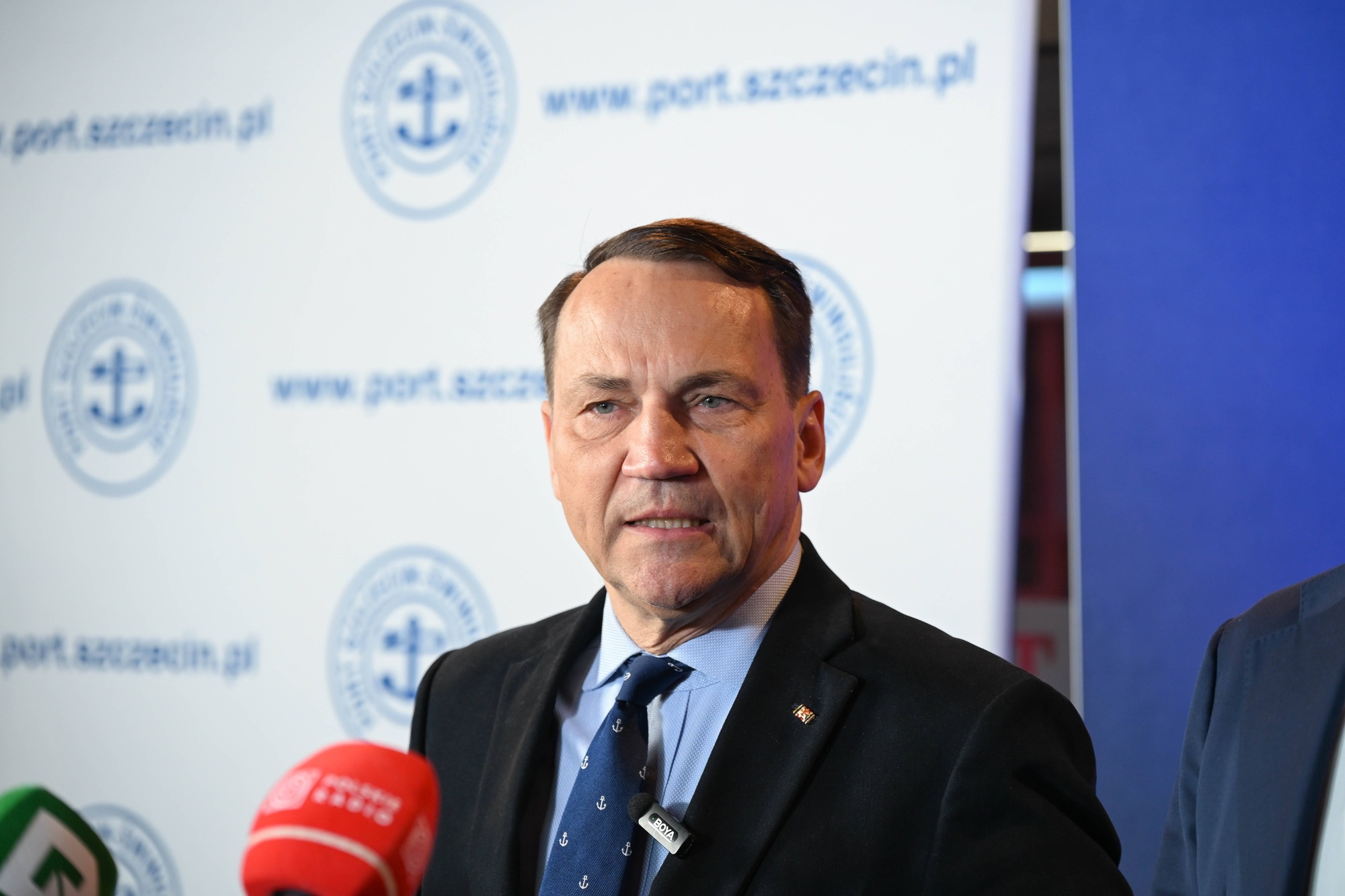
On June 8 in Warsaw, the Chapter of the Order of the White Eagle—Poland's highest state award—convened. On the agenda was a question that seemed unthinkable just two weeks earlier: whether to strip Ukrainian President Volodymyr Zelensky of the distinction he received in 2023 from then-President Andrzej Duda.
What triggered the crisis
The formal pretext was Zelensky's decree of May 26, signed for the 10th anniversary of the Special Operations Forces: the separate SSO center "North" was given the honorary title "Heroes of UPA." Polish President Karol Nawrocki—a historian and former director of the Institute of National Memory—reacted sharply. According to him, Zelensky "gave the best material and much oxygen to Russian propaganda" and "proved that Ukraine is mentally not ready for the European family."
On May 29, Nawrocki announced he would propose to the chapter to consider stripping the order. Soon after, Solidarity founder Lech Wałęsa demonstrated public solidarity—demonstratively removing the Ukrainian flag pin he had worn since the first day of the full-scale invasion.
Sikorski's argument: what about Schröder?
Polish Foreign Minister Radosław Sikorski chose a different tone. In a post on X, he formulated an awkward contradiction:
"I hope that after the decisions of the chapter and President Nawrocki, it won't turn out that former German Chancellor Gerhard Schröder, who takes money from Putin, remains a knight of the Order of the White Eagle, while he who fights against Putin is stripped of this title."
Radosław Sikorski, X
Earlier, Sikorski proposed an entirely different list of candidates for stripping of the order—from more distant history: Catherine II, Benito Mussolini, and former Polish Defense Minister Antoni Macierewicz. The rhetoric is clear: if the order truly carries moral weight, the logic of its revocation must be consistent.
Why Nawrocki may not reach the finish line
Polish legal experts point to a significant legal contradiction. Poland's Constitution assigns the awarding of orders to presidential prerogatives that do not require government countersignature—but says nothing about stripping someone of an award. Most legal scholars conclude that countersignature by the Prime Minister is required here. In other words, without Donald Tusk's signature, Nawrocki legally has no final say.
Even the chapter's decision is merely advisory. Poland's president is obligated to consider it but not to act on it. Article 36 of the law "On Orders and Decorations" provides for stripping an award only in two exceptional cases—including if the recipient "committed an act that made him unworthy of the order."
What lies behind the demarche
Analysts point to the context in which Nawrocki raised this issue. A few days before the chapter's meeting, on June 5-6, Kyrylo Budanov, head of the Main Intelligence Directorate, flew to Warsaw without prior announcement—and held meetings with the Deputy Foreign Minister, the coordinator of special services, and Poland's Defense Minister. Experts view the fact that the Ukrainian side initiated this as a signal: Kyiv understands the seriousness of the situation.
- The conflict occurs on the eve of the International Conference on the Recovery of Ukraine in Gdańsk (June 25-26).
- Negotiations about starting talks on Ukraine's EU accession are ongoing in parallel.
- Nawrocki—a president without a parliamentary majority—can use the "UPA case" to shift attention from less favorable topics for him.
As reported by ZN.UA citing analyst Piotr Katerynich, Moscow has been searching for precisely such cracks for years—and this time Kyiv provided the pretext itself.
What's next
If Nawrocki does sign a decree stripping the award—and Tusk countersigns it—this will become an unprecedented diplomatic move against an ally in active war. If Tusk refuses to sign, the crisis will transform from symbolic to constitutional—already within Poland itself.
The question that remains open: will Tusk's government agree to sign a decision that threatens Schröder with nothing—but symbolically equates Zelensky with those Warsaw considers enemies?





