For a Ukrainian manufacturer wanting to sell products to Germany or Poland without half the paperwork, the main question is not who said kind words at the briefing, but when the single market cluster will be opened. So far, the answer is not anytime soon, and not through Warsaw.
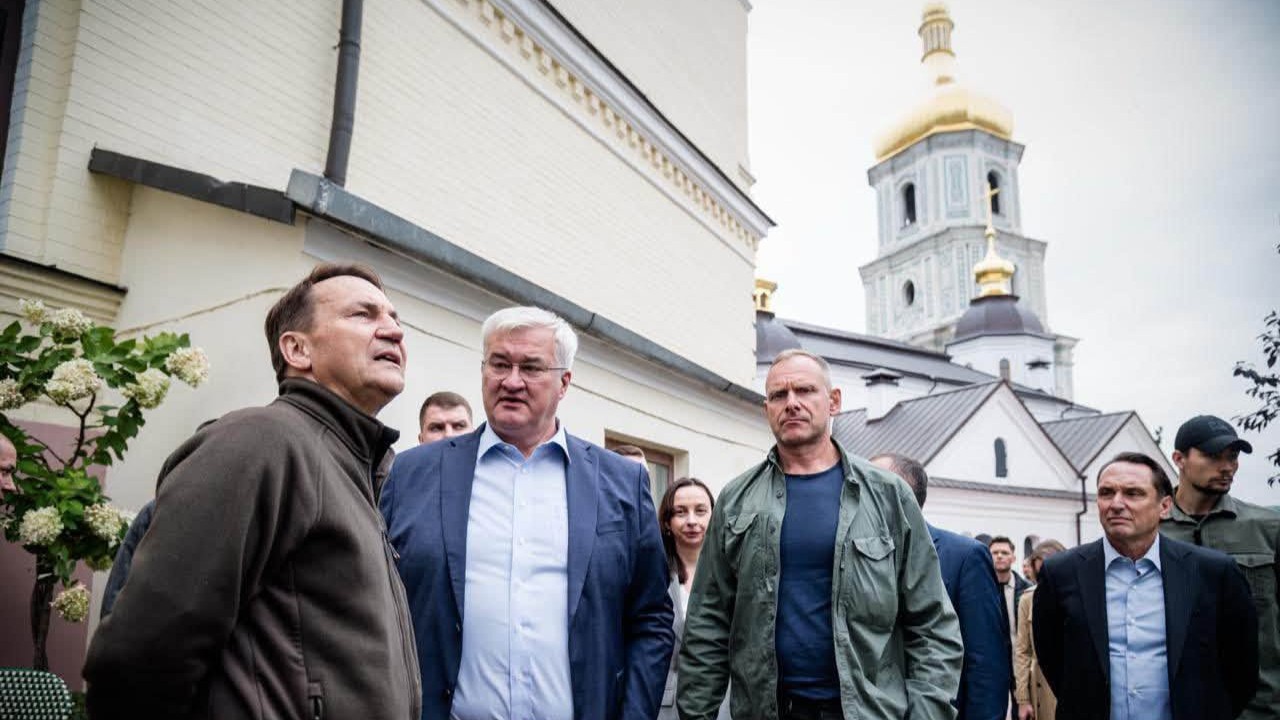
Polish Foreign Minister Radoslaw Sikorski at a joint briefing with Ukraine's Foreign Ministry head Andrii Sybiha stated that Warsaw will not stand in the way of advancing Ukraine's negotiation clusters to the EU.
"Negotiations on Ukraine's accession to the EU will not be easy, just as ours were not when we conducted them, but Poland will not block the advancement of negotiation clusters... in the opinion of the European Commission, Ukraine is already ready for negotiations," Sikorski said.
Two clusters opened, four stuck
Kyiv has already opened two negotiation clusters – "Foundations" and "Foreign Relations". However, these two have no direct bearing on how much exports to the EU will cost or how many Ukrainian goods will pass the technical barriers of the single market. That issue is addressed by cluster 2 – specifically on the single market, as well as cluster 3 – on economic and social policy. Both have been blocked by Hungary for several months now.
The EU Council working group on enlargement (COELA) on September 8 once again failed to approve the screening results of these clusters due to Budapest's position. Sources in the EU reported that the positions of member states have not changed and Hungary refuses to move forward. Financial Times wrote that the Hungarian Prime Minister's team demands not to accelerate the process.
This is the real conflict: not Poland against Ukraine, but one country against the consensus of the other 26. The European Commission, in response to a LIGA.net inquiry in the summer, wrote that it was ready to open all clusters, but the decision on the remaining four lies with member states, which were called upon to "move forward". So far, this appeal has not worked.
A workaround that depends not on Hungary, but on Kyiv
Sikorski proposed an economic move to the Ukrainian side that does not require unanimity among all 27 capitals: to complete the implementation of the Association Agreement, including the Deep and Comprehensive Free Trade Agreement.
"You can be part of the single market even before you join the European Union," the official said.
The difference is fundamental: access to the single market through the DCFTA is technical work by Ukrainian ministries and business on standards, not a political vote in Brussels where one veto is enough. For exporters, this means that part of the benefits of membership – simplified rules, fewer barriers – can be obtained before accession itself, if Kyiv manages to harmonize regulations faster than Budapest changes its mind about blocking the clusters.
Prime Minister Yulia Svyrydenko stated on September 12 that Ukraine is making good progress in European integration and will not deviate from this path. The question is only that progress on clusters and progress on actual market access are already two different tracks, and the second depends on Kyiv more than on Warsaw or Budapest.
If Ukraine manages to synchronize DCFTA technical standards by the end of the year, part of the economic benefits of membership will come before the political unblocking of the clusters. If not – it will have to wait until someone in Brussels finds a lever to influence Hungary's veto.







