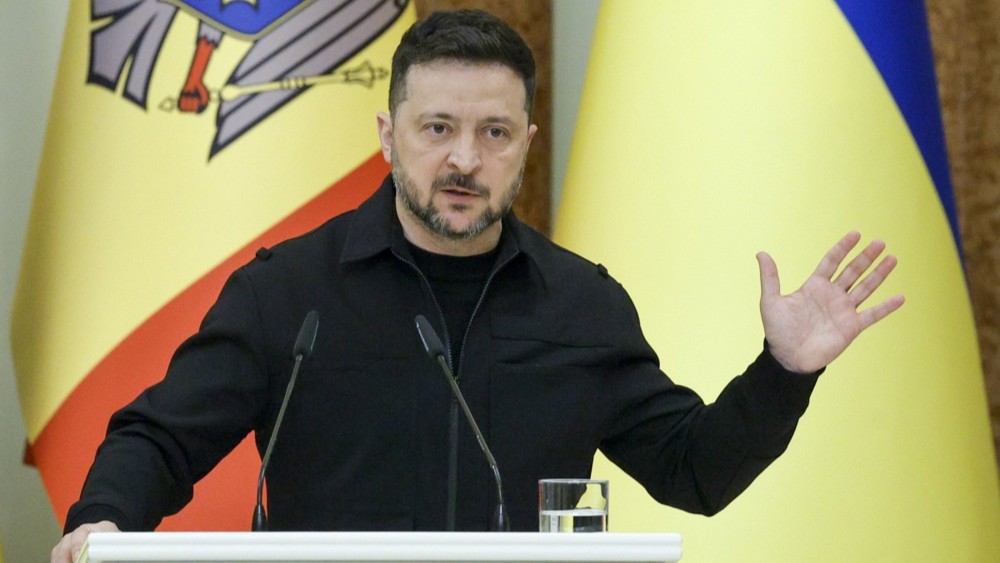
After an informal summit of EU leaders in Cyprus on April 23-24, President Zelenskyy made noticeably more optimistic statements about European integration than he had made several months earlier. "From our side, from the perspective of the authorities, government and parliamentarians — everything has been done," he said, adding that the opening of clusters could happen "from May 26 to June."
But what does this mean in practice — and is there a difference between "we have secured everything" and "we have agreed to open"?
What the European Commission recognizes — and what it doesn't say
European Commissioner for Enlargement Marta Kos announced all six clusters as "unofficially open" for Ukraine back in March. The wording is telling: it fixes technical readiness, but is not a legal decision to begin negotiations. As Kos stated, "Ukraine has met the conditions — now it is up to the member states."
"But today I would say: yes, Mr. President, we will open all clusters this year, and then we will close them."
Marta Kos, European Commissioner for Enlargement — on what seemed impossible to her just a few months ago
Kos's logic relies on the change of power in Hungary: it was precisely the veto of the previous Orbán government that blocked the formal opening of clusters. Following the electoral victory of the Tisza party and its leader Péter Magyar, Brussels is counting on the new Budapest authorities to lift the blockade. Kos herself stated on April 22 — on the eve of the Cyprus summit — that she expects progress during the Cypriot presidency, which lasts until the end of June.
What actually happened in Cyprus
Zelenskyy, who was initially supposed to join the summit remotely, flew there in person. According to Foreign Minister Andriy Sybiha, Cyprus "was a turning point" — but in a different context: it concerned unblocking the EU credit package of €90 billion and adopting the 20th sanctions package against Russia. Three states confirmed new contributions to the PURL program. The issue of clusters was also discussed — but no specific opening date was announced.
Zelenskyy himself outlined the goal: to open all six clusters in 2026, "if no new challenges arise." The European Commission, for its part, is counting on opening three clusters during the Cypriot presidency and all six by the end of 2026, already under the Irish presidency.
Where the real boundary lies
There is a substantial difference between technical readiness and formal opening of a cluster: the former is an assessment of legislation, the latter is a consensus decision of all member states. The opening of the first cluster in 2025 did not happen precisely because of this boundary: Hungary had the right of veto and used it.
- Three clusters the European Commission has already recognized as ready for opening.
- Hungary's new government has not yet been formed — and no official decision to lift the veto has been made.
- A mechanism to bypass the veto — reform of the consensus rule for enlargement — Brussels has never approved.
- A specific date for opening the first cluster is absent: Zelenskyy says "June," Kos says "during the Cypriot presidency."
According to Politico, at the summit itself, the next item after Ukraine — the question of the conditions and timeline for membership — caused disagreements: Estonia advocated for acceleration, while Croatia's prime minister essentially ridiculed the idea of Kyiv's quick accession.
If Hungary's new Madár government officially confirms lifting the veto by the end of May — the first cluster could be opened in June still during the Cypriot presidency. If coalition formation drags on or Budapest imposes new conditions, Zelenskyy's "June" will turn into "during the Irish presidency" — that is, autumn 2026 at best.





