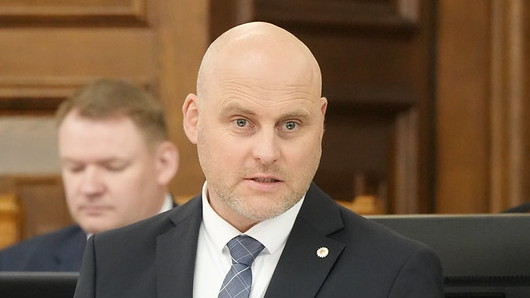
On July 15, the EU Committee of Permanent Representatives (Coreper) failed to agree on the 21st sanctions package against Russia. The reason is the objection of individual member states. Latvia's Prime Minister Andris Kubelis called the situation directly in his Reuters comment: some European Union countries are making big money from the war waged by Moscow.
"Some European countries are making big money from this. The question is whether you want to make money or do you want peace? You cannot have both at the same time".
Andris Kubelis, Prime Minister of Latvia, Reuters
Who is blocking and why
According to "Evropeyska Pravda," Kubelis expressed criticism primarily about Bulgaria and Greece. Athens blocked a key element of the package — the proposal to replace the price cap on Russian oil with a direct ban on transport services. The reason is the Greek shipping business, which has for years been transporting Russian energy resources and does not want to lose contracts.
The blocking mechanism is simple: the EU sanctions regime requires unanimous decision of all 27 member states. Any "reservation" from one country stops the entire package. This rule — and not any principled disagreements — is what holds the veto.
What is in the package and what is at risk
- Restrictions against the shadow fleet — approximately 1,300 tankers carrying oil in circumvention of sanctions
- New rules regarding the export of liquefied natural gas (LNG)
- Expansion of the "blacklist" of individuals and legal entities
- Freezing of negotiations on reducing the price cap on oil — the decision was postponed in parallel with the package
According to Kubelis, inaction on the shadow fleet and LNG trade directly finances the Russian war machine. The Latvian prime minister went further than rhetoric: he called the veto on sanctions "complicity in the deaths of Ukrainian soldiers and civilians."
Precedent or system
This is not the first failure. In September 2025, Hungary and Slovakia blocked the extension of individual sanctions, demanding the removal of six Russian businessmen from the "blacklist." In February 2026, Hungary and Slovakia stopped the 20th package — the EU failed to adopt it before the fourth anniversary of the full-scale invasion. Now — the 21st package, new participants in the blockade.
Each time diplomats find a "compromise" — that is, they soften or remove the most acute provisions. The question is how many times you can "soften" sanctions before they cease to be sanctions.
If Greece maintains its blockade of transport restrictions, Greek vessels will continue to service the shadow fleet — and no statement by Kubelis will change that. Will the European Commission dare to launch a mechanism to bypass unanimity or introduce secondary sanctions against shadow fleet operators from member countries? The answer to this question will determine whether the EU has any leverage tool other than persuasion.







