When the Verkhovna Rada adopted the law on honest lobbying in February 2024, one word quietly disappeared from the final text — "advocacy." Along with it vanished all provisions that were supposed to regulate this activity. The result: the law exists, the registry works, but an entire segment of organizations that systematically influence lawmaking remains beyond any control.
What changed from September 1st
On September 1, 2025, the Law "On Lobbying" came into force in Ukraine, and simultaneously NAPC launched the Transparency Registry — an open public platform that collects and discloses data on lobbying. The Registry became the first information and communications system to pass security authorization under new standards established in Ukraine — it was created with support from the British UK DIGIT project of the Eurasia Foundation.
With the law coming into effect, persons engaged in lobbying in their own or commercial interests are obligated to obtain the corresponding status. This can be done by natural persons with full legal capacity, legal entities registered in Ukraine, and foreign companies with representations in the country.
Where the law ends
But the architecture of the law has a built-in gap. By the second reading, the legislator clarified terminology and the scope of the law — in particular, the concept of "advocacy" and provisions that were supposed to regulate corresponding relations were removed. This means: public organizations, think tanks, industry associations and any structures that position themselves as "advocacy" organizations formally do not fall under the law — and are not obligated to disclose either beneficiaries or sources of funding for their campaigns.
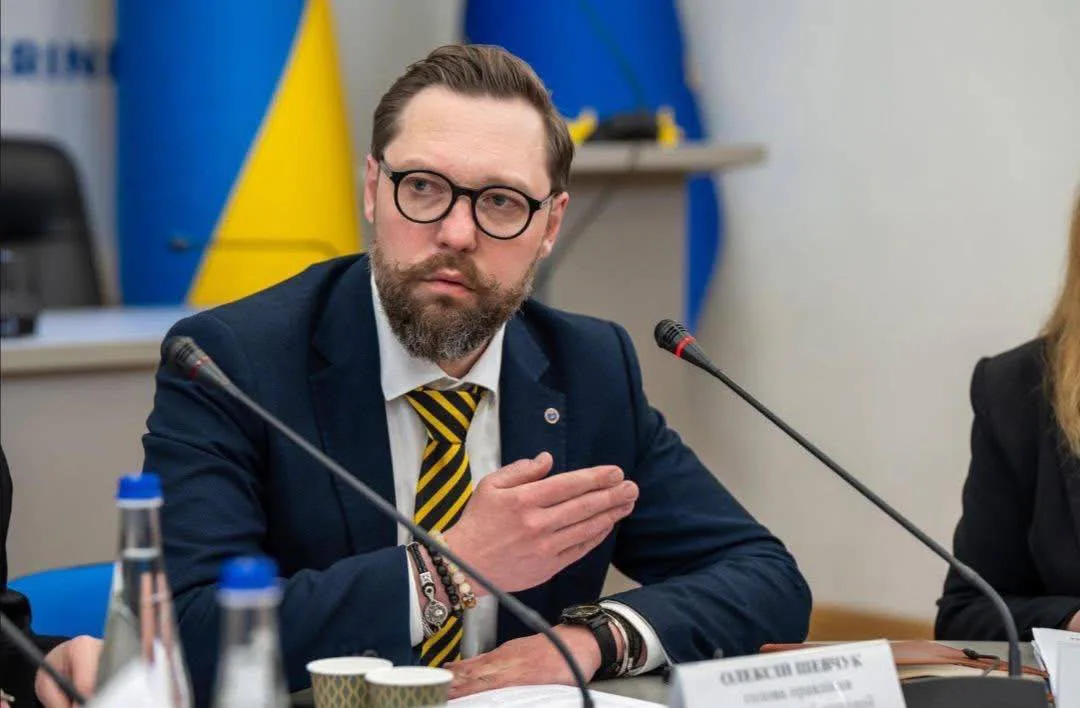
This is precisely the point that Alexei Shevchuk, chairman of the board of the National Association of Lobbyists of Ukraine (NALU), pressed on. According to him, any activity related to promoting legislative initiatives that change the structure of state authorities should be clearly defined and transparently declared — regardless of what it is called.
"Today in Ukraine, practically everyone who influences lawmaking processes, in one way or another, touches on national security and constitutional order issues — whether they realize it or not."
Alexei Shevchuk, chairman of the board of NALU
Conflict around the regulator itself
The problem is not only in the gap in the law — but also in who and how controls those who did register. NALU publicly called on NAPC to "cease pressure on the independent profession of lobbyists and move to open dialogue," emphasizing that lobbying regulation should be based on European transparency standards, not on "manual control of the market by a state body."
According to Shevchuk, neither the law on lobbying nor the rules grant NAPC the authority to hold lobbyists accountable. That is why, as he explains, a self-regulatory community is now being formed that will receive a separate economic activity code and will formulate quality standards for future Ukrainian lobbyists.
Practical problem
The situation looks paradoxical: Ukraine adopted a lobbying law partly as a requirement for opening negotiations on EU membership — law No. 10337 "On Honest Lobbying" was on the list of mandatory commitments for opening negotiations on Ukraine's accession to the EU. But removing advocacy from its scope means that a significant portion of actual influence on legislation remains in a legal gray zone — precisely when external actors have a special interest in shaping the Ukrainian agenda.
- The Transparency Registry covers only official lobbyists — organizations that choose "advocacy" status are not reflected in it.
- NAPC has no right to hold even registered lobbyists accountable — there is no enforcement mechanism in the law.
- The concept of "advocacy" was removed from the law text deliberately, despite objections from some public organizations during the consultation phase.
The lobbying law came into effect — but if advocacy structures do not come under the requirement to disclose beneficiaries, the transparency registry risks becoming a showcase for small players, while major influences continue to circulate beyond any accounting. The question is not whether the law will be expanded — but whether there will be political will to do so before the next round of EU negotiations reveals this gap first.