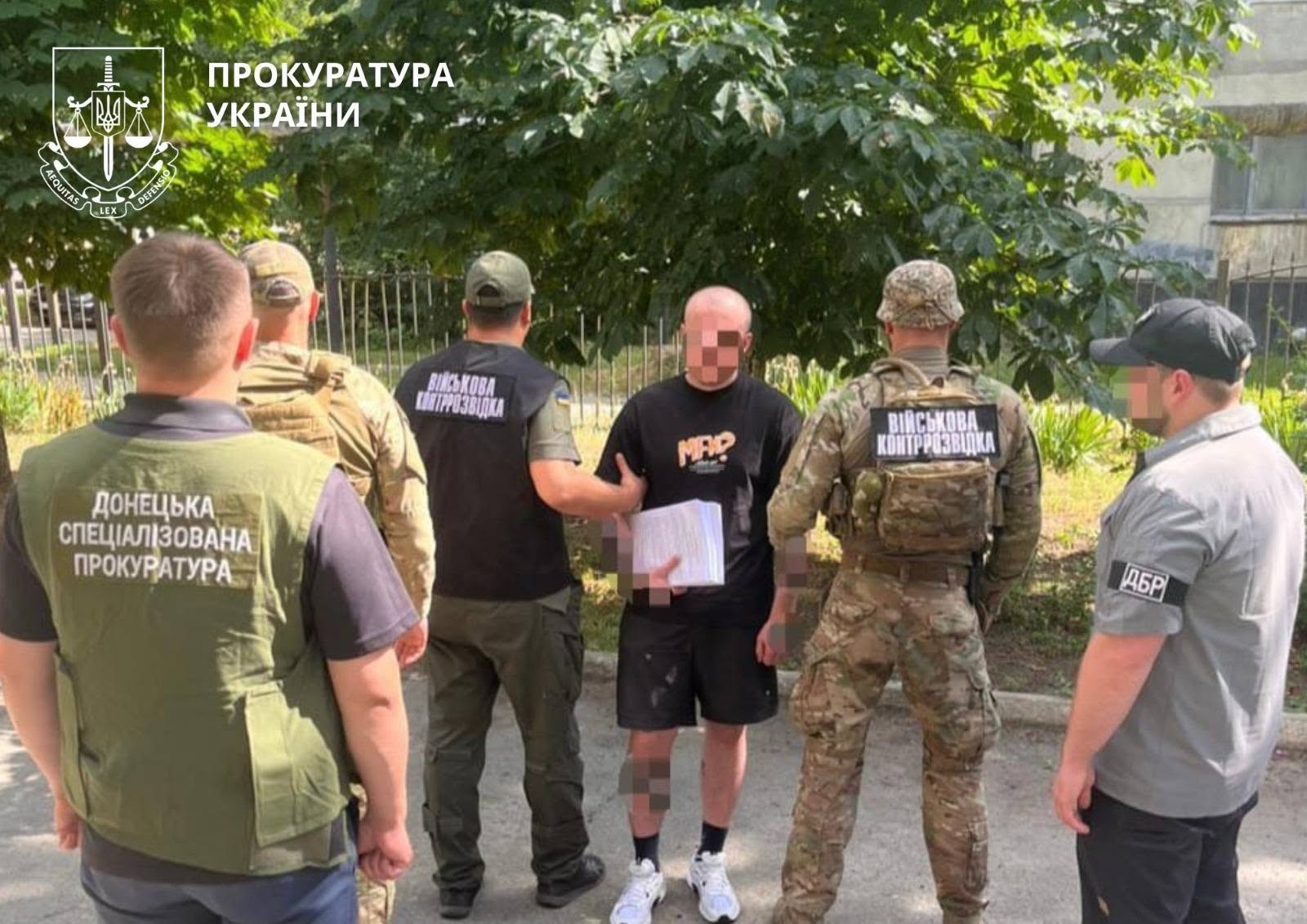
On July 3, the State Bureau of Investigation and the Donetsk Specialized Prosecutor's Office in the Defense Sphere of the Eastern Region announced charges against a fighter of the separate special forces unit "Azov" of the National Guard of Ukraine. According to the investigation, while in captivity, he deliberately collaborated with the administration of a Russian prison and representatives of Russian special services. The result was the death of his fellow soldier.
What he passed on and to whom
After being captured in September 2022, the suspect, according to the investigation, voluntarily expressed a desire to join the Wagner private military company — to receive lenient treatment from the occupiers. At the same time, he began passing information to the prison administration and Russian special services about specific Ukrainian prisoners of war: who they were, what positions they held, and what official duties they performed.
Among those he "handed over" was the head of the medical service of "Azov," Oleksandr Krokhmalyuk. According to the SBU, after the information was passed on, he "was systematically subjected to physical violence, torture, and other forms of cruel treatment." Krokhmalyuk died.
"A person who saved lives. A worthy fighter and my comrade-in-arms"
Sviatoslav "Kalyna" Palamar, Deputy Commander of the 1st Corps of the National Guard "Azov"
Krokhmalyuk's route: Azovstal → Olenivka → Taganrog → Kamyshin
Oleksandr Krokhmalyuk was taken prisoner from the Azovstal plant in May 2022. Then came Olenivka, where in July 2022 an explosion occurred in a barracks with prisoners of war, then Taganrog, then pre-trial detention facility No. 2 in Kamyshin in Volgograd Oblast. In September 2025, his body was returned to Ukraine as part of a body exchange in the "1000 for 1000" format. A forensic medical examination in Lviv recorded the cause of death: fractured ribs and blunt force trauma to the chest.
Evidence base: testimony of survivors
Key evidence in the case was the testimony of released Ukrainian military personnel who were held in the same prison as the suspect and were returned during exchanges. According to Gazeta.ua, their testimony confirms both the suspect's personal participation in mistreatment of prisoners of war — not just the transmission of information. The investigation appointed a series of expert examinations that confirmed instances of torture.
The SBU conducted an operation with the assistance of the Security Service of Ukraine and the leadership of the National Guard. The suspect is already at large in Ukraine, released during one of the exchanges.
Legal framework: what he is being tried for
Ukrainian law provides for criminal liability for the actions of prisoners of war who collaborated with the enemy and caused harm to other prisoners of war. This is not the first similar case: Ukrainian law enforcement has already considered cases of collaboration in captivity, but proving such accusations is a legally complex task due to the specific conditions of detention and the pressure that prisoners of war face.
This is where the key question of the case arises: if the court establishes that the suspect acted not under duress, but consciously and on his own initiative — will this verdict become a precedent for prosecuting collaboration directly in captivity? The answer will depend on whether the investigation can legally distinguish between survival under pressure and conscious betrayal.







