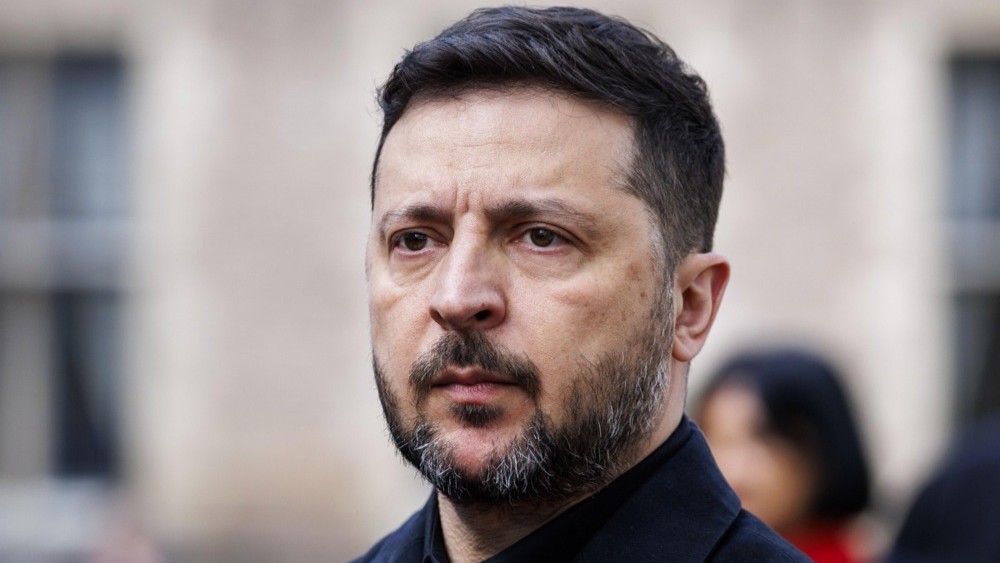
A Strike on a Building — and Talk of "Elections" in Moscow
President Volodymyr Zelensky spoke about elections not in his office, but at the site where another Russian attack had caused a residential building to collapse. He stated: Putin is striking Ukrainian cities to demonstrate strength before his own "elections" in Russia. This connection is not merely rhetorical: a statement made amid ruins carries weight that a press release cannot.
"These are Putin's elections, not ours," Zelensky emphasized, rejecting the very idea of voting during martial law. Under Ukrainian law, holding elections under martial law is prohibited. Presidential elections were supposed to take place in spring 2024, but following the full-scale invasion, martial law has been extended every 90 days.
Why This Became a Topic Now
In December 2025, pressure on Zelensky intensified sharply from an unexpected quarter. U.S. President Donald Trump stated in an interview with Politico that Kyiv is "using the war as an excuse not to hold elections," and warned: "This is no longer democracy." Trump had previously called Zelensky a "dictator without elections" — a formulation that the Kremlin has been using since 2024 to substantiate its claim about the "illegitimacy" of the Ukrainian leader.
"I am ready for elections — more than that, I am now asking and stating this openly — for the United States to help me, together with our European colleagues, ensure security for elections."
Volodymyr Zelensky, December 9, 2025, in response to Trump's statement
Thus Zelensky made an unexpected move: he agreed to elections on a condition that no one can fulfill right now — security guarantees from the United States and allies. According to his statement, as reported by NBC News, with these guarantees and legislative changes in place, parliament could prepare the procedure within 60–90 days.
What Putin Replied — and Where the Manipulation Lies
At his annual press conference on December 19, Putin stated that Russia is "willing to consider" a pause in strikes against Ukraine on the day of voting. As CNN reported, he framed this as a "gesture of goodwill" — despite the fact that Russia itself conducted "elections" in occupied Ukrainian territories, where voters were escorted to polling stations by soldiers. The international community condemned these "elections" as a farce.
Putin also added an additional condition: to allow millions of Ukrainians located on Russian territory and in occupied regions to vote. According to Wikipedia, he stated that Russia could "consider providing security" on the day of elections in Ukraine — "at least by refraining from strikes deep into the territory."
Practical Obstacles — No Less Than Legal Ones
Even if parliament changes the law, as CNN explains, logistical challenges remain critical:
- More than 5.9 million refugees abroad (UN data) and 4.4 million internally displaced persons — updating voter registers requires months.
- Only 75% of electoral infrastructure remains fit for use.
- No legal mechanism exists for conducting elections under martial law — Parliament only held its first meeting of the relevant working group on December 26.
Opposition leaders — Petro Poroshenko and Yulia Tymoshenko — confirmed in March 2025 after consultations with U.S. representatives: they are against elections during the war. A KIIS poll shows: 59% of Ukrainians believe elections are possible only after the war ends.
Who Benefits From This Discussion
The narrative about a "illegitimate Zelensky" is beneficial primarily to Moscow: it blurs responsibility for aggression and provides a pretext to avoid direct negotiations. Trump, by reproducing this message, objectively strengthens the Kremlin's position — regardless of his intentions. Zelensky, with his response ("ready if you ensure security"), turned the logic on its head: now the question is not whether he wants elections, but whether the United States is ready to guarantee security under missile strikes.
If Washington does not provide specific security guarantees by the end of winter, the discussion about elections will remain a tool of pressure on Kyiv — rather than a real step toward democratic renewal.







