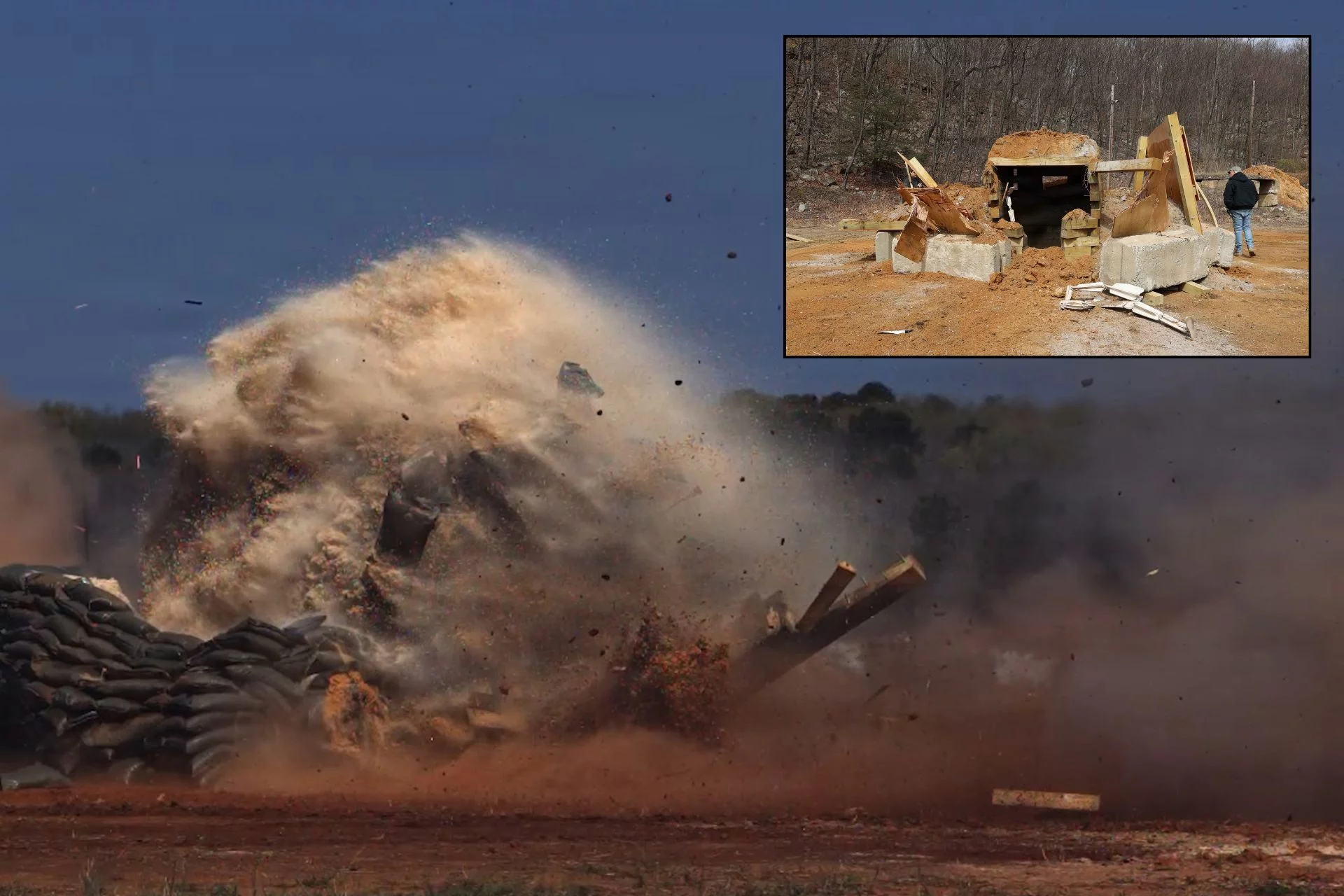
On April 22, 2026, British-American company Tiberius Aerospace announced the successful flight test of the Sceptre (TRBM 155HG) — the world's first 155-mm ammunition with a liquid ramjet engine, launched from a standard NATO howitzer. The tests were conducted at a range in New Mexico using a BAE Systems M777 howitzer.
What the tests confirmed
The key challenge for such systems is not range, but launch physics. During firing, the projectile withstands accelerations of approximately 18,000 g. The tests confirmed that after leaving the barrel, Sceptre successfully ignites the ramjet engine, transitions to stable aerodynamic flight, and performs course correction. The initial velocity after firing — approximately Mach 2.4 — is sufficient to start the ramjet without an additional booster.
"This is a fundamental shift in what artillery systems are capable of on the modern battlefield."
Tiberius Aerospace, press release, April 22, 2026
According to the company, Sceptre achieves ranges up to 150 km, develops speeds of about Mach 3.5, and operates at altitudes exceeding 65,000 feet (approximately 20 km) — above most electronic warfare systems. The CEP is less than 5 meters, even in GPS-denied environments, thanks to hybrid GPS/INS navigation with AI correction.
Technical specifications
- Launch mass: 47.5 kg, length — 155 cm
- Warhead: 5.2 kg payload
- Guidance: GPS/INS plus SAL (semi-active laser) and ARH (active radar seeker) options
- Compatibility: standard NATO 155-mm howitzers (M777, Archer, and others undergoing certification)
- Storage life: over 20 years
Where the line between projectile and missile is drawn — and why it matters
Sceptre occupies a niche between guided munitions like Excalibur (range up to 57 km, price ~$100,000) and HIMARS rockets. The ER GMLRS covers similar 150 km distances but requires specialized launch platforms and costs up to $500,000 per unit for export. Sceptre, according to Tiberius, costs less than 10% of a standard GMLRS price (~$168,000) — approximately less than $17,000, although the company has not publicly disclosed the exact price.
The manufacturing model is unconventional: Tiberius retains intellectual property but licenses production to third-party contractors in various countries. According to the CEO, the first customers are already identified, and serial deliveries are scheduled for late 2025–early 2026. Tests are conducted every three to four weeks.
Context for Ukraine
Ukrainian forces use the M777 — one of the main platforms being certified for Sceptre. The current range of howitzer fire is limited to 40–57 km even with Excalibur, while Russian S-300/S-400 systems and ammunition depots are positioned deeper in the rear. Sceptre theoretically bridges this gap without requiring additional launch platforms.
However, no confirmed agreements with Ukraine or official interest from the Ministry of Defense have been announced. The company does not name specific customers.
If Tiberius fulfills its promise of serial deliveries by late 2025–2026 and confirms the stated price, the question is straightforward: will countries using the M777 choose to buy expensive missile systems when a modernized artillery arsenal suffices — and will Sceptre withstand real combat conditions, not just testing at a range in New Mexico?